Call or Text Now
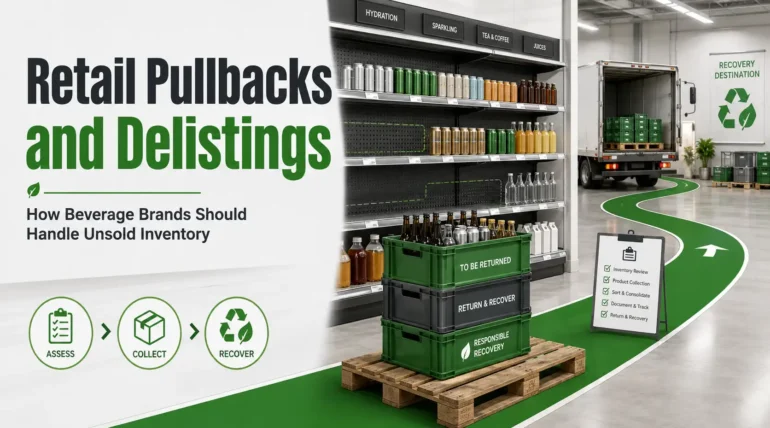
An official recall is not the only situation that leads to a warehouse full of product you can’t sell. A retail pullback can happen because of a packaging update, a missed seasonal window, or a distributor return. None of these are emergencies the way a recall is, but any one of them can leave you sitting on unsold beverage inventory with nowhere clear to send it.
The product itself is often fine. What is missing is a plan. Once a beverage can no longer move through its original retail channel, someone has to decide what happens next: hold it, redirect it, recover it, or route it out of the supply chain. That decision only gets harder, and more expensive, the longer nobody owns it.
This guide covers what retail pullbacks and delistings mean for a beverage brand, what unsold inventory really costs beyond the sticker price, and how you can move through assessment, documentation, and disposition before it becomes a bigger liability.
What Retail Pullbacks and Delistings Mean for Beverage Brands
Both retail pullbacks and retail delistings are commercial events that create unsold beverage inventory. However, they describe different events, and mixing them up slows down the response:
H3: Retail Pullbacks vs. Delistings vs. Product Withdrawals
- A retail pullback usually means a retailer or distributor is removing product from shelf or active rotation, sometimes temporarily, often due to weak velocity, a promotion ending, or a shelf reset.
- A retail delisting is more permanent: the SKU is dropped from that retailer’s assortment, whether because of poor sell-through or a strategic shift the brand had no say in.
- A product withdrawal or recall is a different risk category, tied to a quality, labeling, or safety concern, with its own regulatory and documentation requirements outside a routine commercial beverage delisting.
Getting this distinction right at the start shapes what documentation is needed, whether the product can still move through another channel, and how quickly a decision needs to be made.
1. Why Delisted Inventory Often Cannot Simply Go Back into Distribution
A common assumption is that delisted or pulled-back product can just be redirected to another retailer. Sometimes it can. Often it cannot, for reasons that have little to do with the beverage itself. For example:
- Packaging tied to a retailer’s private-label agreement may not be sellable elsewhere.
- Products nearing expiration lose shelf life the longer they sit in a warehouse.
- Some retailer contracts restrict where delisted product can resurface, particularly for exclusive formulations or co-branded packaging, and reintroducing aging inventory into a secondary channel can create more brand damage than the product is worth.
Any one of these factors can complicate straightforward redistribution, which is why teams often map out the broader logistics of managing beverage waste before assuming a resale path exists.
The Hidden Cost of Unsold Beverage Inventory
The most visible cost of unsaleable beverage inventory is the value of the product sitting unsold. That number gets attention because it is easy to calculate but it is rarely the full cost.
Warehouse space is not free, and product never meant for long-term storage often occupies space needed for active SKUs. Every time a load gets moved, reassessed, or reshuffled, that is labor and handling cost outside the original plan.
Transportation adds up too. The original distributor return trip, a transfer between facilities, or eventual movement to a recovery partner. Also, beverage retail returns rarely arrive as one clean shipment, which means the handling cost often multiplies across several smaller loads instead of a single pallet.
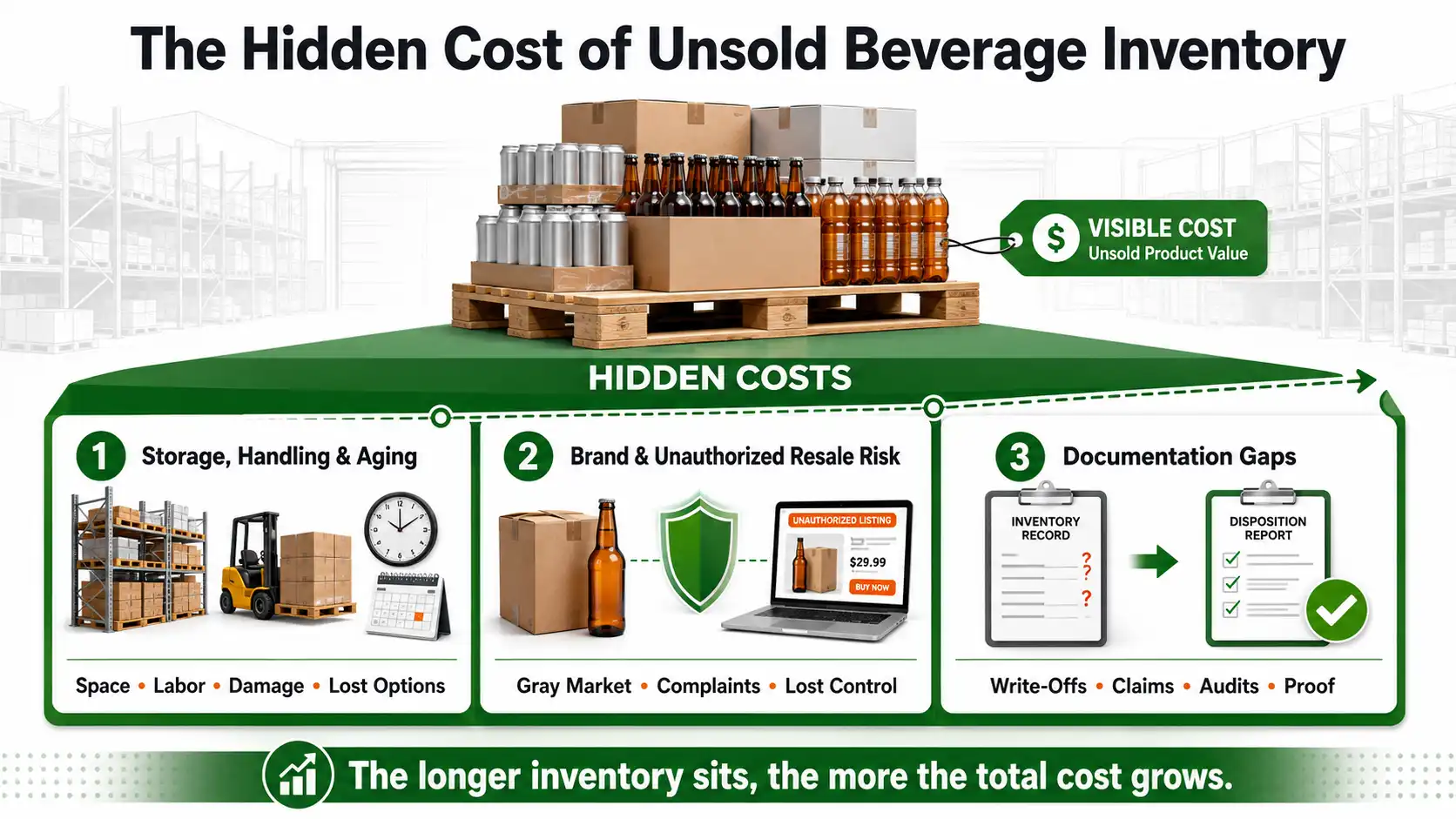
1. Storage, Handling, and Aging Inventory
Beverage inventory does not sit still well. The longer a pallet of returned beverage inventory stays in a warehouse, the closer it gets to expiration, and the more exposure it has to temperature swings, handling damage, and packaging wear.
This is why the assessment window matters. Product evaluated quickly can be resold, recovered or disposed of. Product that sits for months while ownership of the decision bounces between teams tends to lose those options one by one.
2. Brand Protection and Unauthorized Resale Risk
There is also a reputational dimension that is easy to underweight. Delisted or discontinued inventory that quietly resurfaces through a gray-market reseller or an unauthorized online listing can put a brand’s name on product it no longer controls the condition of. If that stock is expired or damaged, the resulting complaint lands on the brand regardless of how the product got there.
This is where brand protection product destruction enters the conversation as the deliberate choice for inventory that carries real resale or brand risk if it stays in circulation.
3. Documentation Gaps That Create Problems Later
Finance teams need records to write off inventory correctly. Insurance teams may need proof of disposition for a claim. Retailers occasionally ask for confirmation that returned product was handled appropriately, and audit teams want a clean paper trail showing what happened to product that never came back.
Gaps here rarely surface immediately. They show up months later, when someone asks for a record that was never created.
Building documentation in from the point of pullback saves real time, which is why it’s worth reviewing beverage disposal compliance requirements alongside internal recordkeeping practices.
What to Do Before Unsold Beverage Inventory Leaves the Supply Chain
Before calling a disposal or recovery partner, there is groundwork a brand’s own team can do that makes every downstream step faster and cleaner:
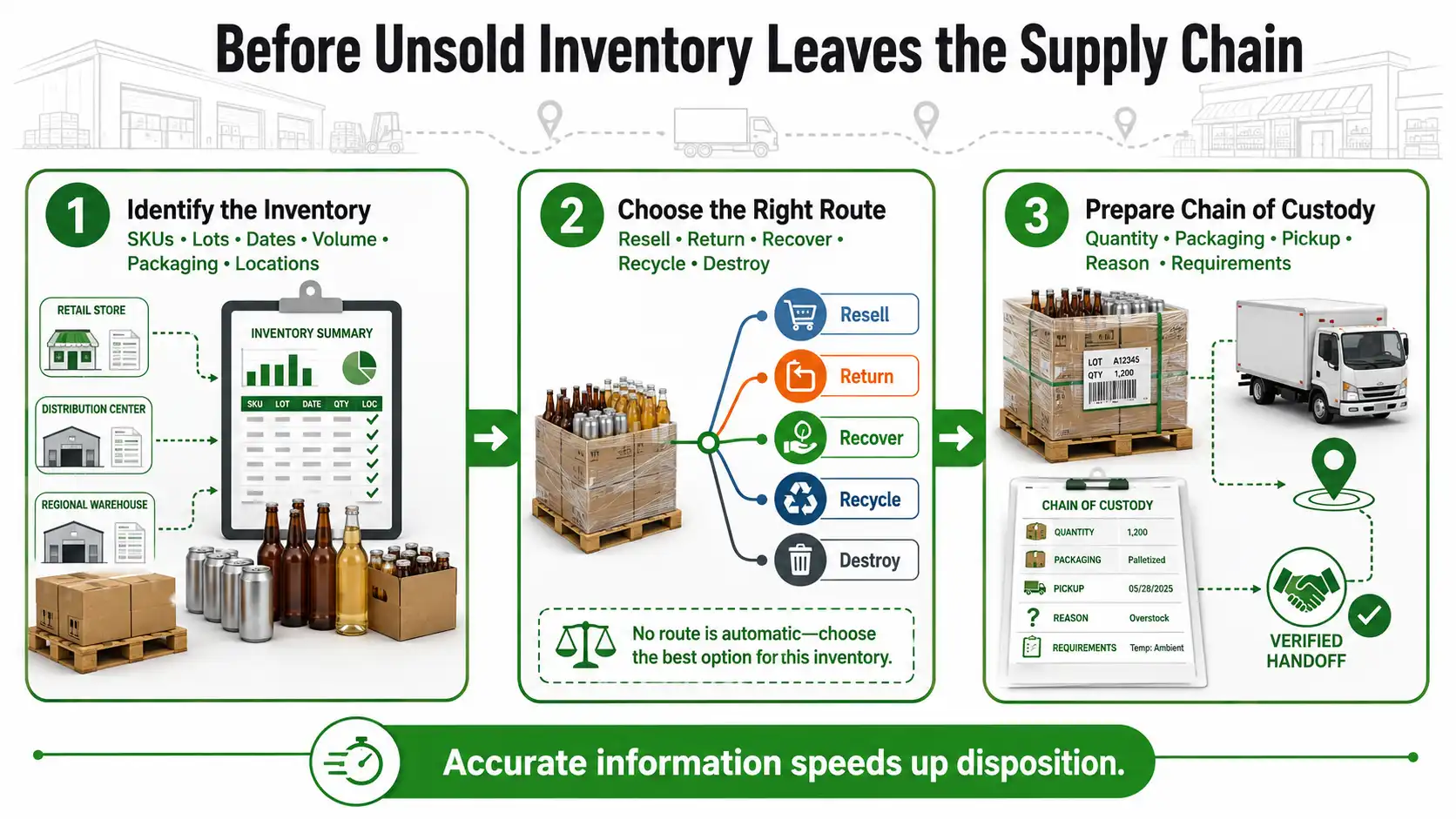
1. Identify Affected SKUs, Lots, Dates, and Locations
Start with the basics:
- Which SKUs are affected
- What lot codes and expiration dates apply
- How much volume is involved
- What’s the packaging format
- Where the product sits
Pulled-back and delisted inventory often arrives from multiple retail locations or distributor returns at different times, so the full picture can be scattered across several reports before anyone consolidates it.
2. Decide Whether Product Can Be Resold, Returned, Recovered, Recycled, or Destroyed
The routing question comes down to factors like:
Product condition
- Remaining shelf life
- Packaging restrictions
- Contractual limitations
- How much resale or brand risk the company will accept
Note: Whether you need to reroute product through a different channel, recycle it, or move toward beverage inventory disposal depends on specifics a checklist cannot capture. That’s why confirming requirements with the appropriate internal or regulatory team is worth the step.
3. Prepare Chain-of-Custody Information Early
Whatever route the product takes, a partner coordinating pickup, transport, destruction, recycling, or recovery needs accurate information to build a proper chain of custody: quantities, packaging type, pickup location, any regulatory considerations, and the reason the product left retail circulation.
Gathering this before making the call compresses the time between decision and disposition, and it is often the step that makes a full beverage container destruction process move faster.
Disposal, Destruction, and Recovery Options for Retail Pullback Loads
Not every pullback or delisting ends the same way. Here’s what you need to consider:
1. When Beverage Destruction May Be Required
Sealed containers near or past expiration, damaged or compromised packaging, or discontinued formulations still carrying obsolete labeling are common triggers.. So is inventory a brand cannot risk seeing resurface through unauthorized channels, and in these situations, beverage destruction tends to be the appropriate route.
2. Alcoholic vs. Non-Alcoholic Beverage Loads
Alcoholic beverage inventory tends to carry additional handling considerations that non-alcoholic products do not due to the regulatory oversight involved in producing, storing, and disposing of alcohol.
The general framework of assessment, documentation, and routing still applies, but brands working through delisted alcohol inventory should confirm specific requirements with their compliance team or the appropriate regulatory authority. For loads that fall into this bucket, alcohol disposal is the more targeted resource to work from. Non-alcoholic loads generally follow the same framework without the alcohol-specific requirements, and Shapiro supports brands across the non-alcoholic beverage industry with the same documentation and routing.
3. Packaging Recovery After Product Separation
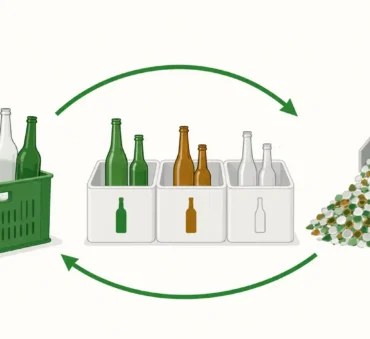
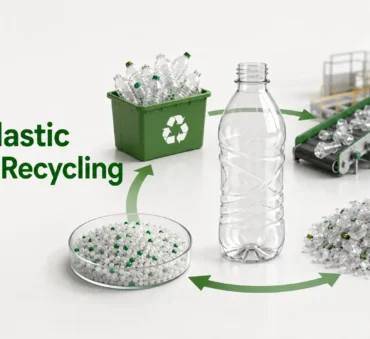
When a beverage load moves toward destruction, the packaging around it does not automatically become waste. Cartons, glass, PET, aluminum, labels, caps, and pallets can often be separated and routed toward recycling or material recovery once the liquid product has been handled, particularly for high-volume loads where packaging represents real recoverable value.
How Beverage Brands Can Plan Ahead for Future Delistings
Everything above is about handling a pullback or delisting that has already happened. The more useful long-term move is treating that scenario as a planned contingency rather than a surprise every time it comes up.
1. Build an Exit Plan Before Retail Expansion
Every SKU a brand puts on shelf has some probability of eventually coming off it. Building a rough exit plan before expanding into a new account and what happens to unsold product if the relationship doesn’t work out, saves scrambling later.
2. Align Sales, Operations, Finance, and Compliance Early
Disposition decisions often stall because they sit with a single team that does not have the full picture.
Sales knows the retailer relationship, operations knows where the product is, finance knows the write-off implications, and compliance knows what documentation the situation calls for.
If you get these functions talking before a pullback happens, you can move through the next one faster.
3. Keep Records That Support Brand Protection and Internal Reporting
Product counts, lot and expiration data, storage locations, the routing decision made for each load, and any certificate of destruction should live somewhere accessible, not scattered across email threads. These records give you a clean answer if a retailer or regulator asks what happened to a specific batch.
Working With a Partner for Unsold Beverage Inventory
Not every brand has the bandwidth to handle the whole process of handling unsold products, especially when a pullback or delisting spans multiple locations. That is where a partner experienced in beverage inventory disposal earns its place in the plan.
1. What to Share Before Scheduling Pickup or Review
Coming prepared makes the conversation move faster: product type and packaging format, total volume, current location, lot codes and expiration dates, why the product left retail circulation, any documentation already known, and the general timeline.
2. How Shapiro Supports Beverage Brands
Shapiro works with beverage brands, distributors, and CPG operations teams to coordinate the next step for unsold beverage inventory. This includes arranging compliant beverage destruction, handling alcohol-specific requirements, managing documentation and chain of custody, or coordinating transportation, recycling, and recovery pathways. Shapiro does not own every downstream processing facility involved, but coordinates compliant handling from pickup through final disposition.
If your team is managing beverage inventory after a pullback, delisting, distributor return, or discontinued SKU decision, contact us and we can help review the load and coordinate the next step.
FAQ
1. What is a retail pullback in the beverage industry?
A retail pullback is when a retailer or distributor removes a beverage product from shelf or active rotation, often temporarily, due to weak sell-through, a promotion ending, or a shelf reset. It does not necessarily mean the product is unsafe.
2. What is the difference between a retail pullback, a delisting, and a recall?
A pullback is typically temporary. A delisting permanently removes a SKU from a retailer’s assortment. A recall or product withdrawal is a separate, more serious category tied to a safety or labeling concern, with its own regulatory requirements.
3. What should beverage brands do with unsold inventory after a delisting?
Identify the affected SKUs, lots, expiration dates, and locations, then assess whether the product can be resold, returned, recovered, recycled, or needs documented disposal based on its condition and any restrictions.
4. Can unsold beverages be recycled or recovered instead of destroyed?
In some cases, yes. Routing depends on condition, packaging, remaining shelf life, and brand risk tolerance. Destruction is one option among several, not the automatic outcome.
5. What documentation is needed when beverage inventory is destroyed?
Brands generally want a certificate of destruction and a documented chain of custody covering the product from pickup through final disposition, along with internal records of lot numbers, quantities, and the reason it left retail circulation.
6. When should a beverage brand contact a disposal or destruction partner?
As soon as a pullback or delisting is confirmed and the affected inventory is identified. Earlier contact preserves more routing options than waiting until product has aged in storage.
our expert

Peter W. Klaich Director, Agriculture/Animal Health
Peter Klaich is a leading expert within the agricultural recycling and animal health market arena, known for leading National Sales at Skip Shapiro Enterprises since June 2016. He focuses on advancing sustainable recycling solutions and waste management practices across the agricultural industry.