Call or Text Now
866-99-RECYCLE
Shapiro provides commercial food waste recycling services for businesses managing food scraps, packaged food, organics, surplus inventory, and other inedible food streams that can no longer remain in the standard sales or disposal workflow. For businesses evaluating food waste recycling companies, we design practical programs for collection, logistics, downstream routing, and beneficial reuse, with service options for recurring organics programs, one-time projects, and multi-location operations.

Commercial food waste recycling is the process of collecting inedible food scraps, packaged food, organics, production residuals, and unsaleable food products and routing them into a more beneficial outlet than landfill whenever the material profile allows. Depending on the stream, that outlet may involve anaerobic digestion, composting, feed or by-product recovery, depackaging with material separation, or another approved pathway designed to recover value from the material and reduce disposal pressure.
Food scraps, packaged products, or production residuals are reviewed and separated based on stream type, packaging, and handling needs.
Depending on the material, the load may go to anaerobic digestion, composting, feed / by-product recovery, depackaging, or another approved downstream channel.
Recovered material is managed through the outlet that best fits its composition, location, and operational constraints.
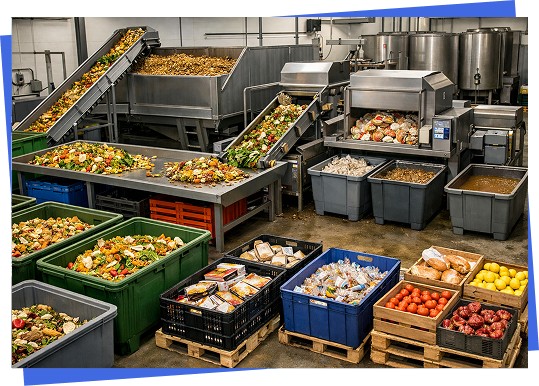
Our food waste recycling services are built for businesses that generate recurring or project-based organic waste and need a more structured, scalable, and practical way to manage it. Some buyers need a partner for a steady flow of food scraps. Others need help with packaged food, surplus inventory, or a more complex one-time project that cannot be handled through a simple disposal vendor.
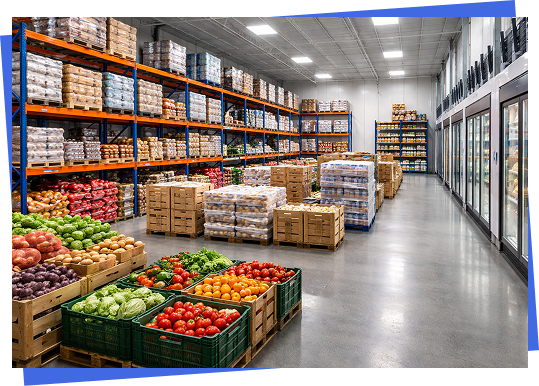
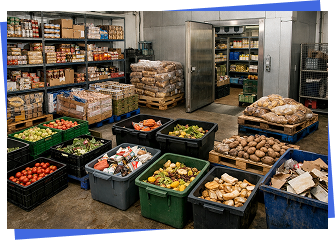
We help businesses manage a wide range of food waste streams, from inedible organics and packaged food to production residuals and unsaleable inventory. Each stream is reviewed based on material type, packaging, and handling requirements to determine the most appropriate downstream solution.
Produce waste, bakery waste, dairy waste, protein residuals, mixed organics, and inedible food scraps from retail, hospitality, foodservice, or institutional operations.
Food manufacturing residuals, by-products, off-spec product, and line-related waste streams that need a more structured handling approach.
Out-of-code or unsaleable packaged food, subject to stream review, packaging type, depackaging requirements, and downstream eligibility.
Spoiled inventory, surplus loads, damaged products, and food that can no longer remain in regular channels.
For businesses, food waste recycling is not only an environmental choice. It can also reduce landfill dependency, improve handling of recurring organic streams, create a more organized process for packaged and mixed materials, and support internal sustainability goals with a service model that is easier to manage.
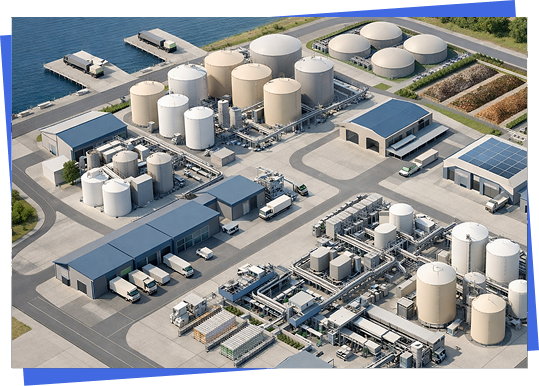
The Linden Renewable Energy Project is revolutionizing food waste recycling as the nation’s largest food waste-to-renewable natural gas facility. Skip Shapiro Enterprises is proud to be a part of this initiative, which is a collaboration between SJI, RNG Energy Solutions, and Captona. Scheduled to become fully operational in March 2026, this $440 million project will play a crucial role in the state’s energy supply and will transform how businesses handle organic waste.
By converting up to 1,475 tons of food waste daily into renewable energy, the Linden Project will provide a timely, sustainable solution that meets stringent state regulations while reducing environmental impact.
The Linden Project is setting a groundbreaking standard for renewable energy production in the US with its ability to:
Ready to take the first step toward
sustainable waste management?
Stream review and program design
We review the waste stream, packaging, volume, frequency, location, and operational requirements to determine the right service model for the material.
Collection and logistics coordination
Once the service model is defined, Shapiro coordinates collection timing, transportation, and routing based on the site’s needs, packaging format, and program timeline.
Recycling and downstream routing
Based on the material, food waste may be directed to anaerobic digestion, composting, depackaging, feed or by-product recovery, or another approved outlet.
Reporting and ongoing program support
We provide reporting, documentation, and ongoing coordination to help manage the program effectively and support long-term operational needs.
Stream review and program design
We review the waste stream, packaging, volume, frequency, location, and operational requirements to determine the right service model for the material.
Collection and logistics coordination
Once the service model is defined, Shapiro coordinates collection timing, transportation, and routing based on the site’s needs, packaging format, and program timeline.
Recycling and downstream routing
Based on the material, food waste may be directed to anaerobic digestion, composting, depackaging, feed or by-product recovery, or another approved outlet.
Reporting and ongoing program support
We provide reporting, documentation, and ongoing coordination to help manage the program effectively and support long-term operational needs.
Anaerobic Digestion
Appropriate organic streams can be converted into biogas / renewable energy and nutrient-rich outputs through digestion processes.
Depackaging and Separation Workflows
Packaged food may require separation of the organic material from outer packaging before the recovered material can move into the right outlet.
Composting
Certain food scraps and organics can be processed into compost or soil-amendment products.
Other Approved Reuse Pathways
Depending on the material profile and location, additional beneficial outlets may be available.
Other approved reuse pathways
Depending on the material profile and location, additional beneficial outlets may be available.
Animal feed or by-product recovery
Some streams can be recovered for productive downstream use when permitted and appropriate.
Shapiro supports more than collection by helping businesses manage food waste programs with greater clarity and control. From stream review and service coordination to routing decisions, reporting, and program adjustments, the focus is on making recurring or project-based needs easier to manage internally.
Need a more practical way to manage food scraps, packaged food, organics, or unsaleable inventory? Contact Shapiro to discuss your material type, packaging, volume, location, and service goals, and our team can recommend a food waste recycling program built around your operational needs.
Commercial food waste recycling is the process of collecting inedible food scraps, packaged food, organics, surplus inventory, and other unsaleable food materials and routing them into a more beneficial outlet than landfill whenever possible. Depending on the stream, the right outlet may involve anaerobic digestion, composting, feed or by-product recovery, depackaging, or another approved pathway.
Common recyclable streams include produce waste, bakery waste, dairy waste, meat and protein residuals, mixed organics, production residuals, and many forms of packaged food that can be reviewed for stream-specific handling. The exact fit depends on material type, packaging, contamination, and location.
In many cases, yes. Packaged food can often be reviewed for handling and routing, especially when a depackaging or material-separation step is part of the workflow. Whether a packaged stream is a fit depends on the packaging format, contamination level, downstream outlet requirements, and project logistics.
No. Composting is only one possible outlet. Some streams are better suited to anaerobic digestion, some may qualify for feed or by-product recovery where appropriate, and some packaged materials may need depackaging before the organic fraction can move into the right channel.
For businesses with recurring waste, the process typically starts with a review of the waste stream, packaging, volume, and service needs. From there, collection schedules, transportation, and routing are coordinated based on the site’s operational requirements and the most appropriate downstream outlet.
Yes. Shapiro can support both recurring food waste recycling programs and one-time projects, depending on the material, volume, packaging format, and timeline. This allows businesses to choose a service model that fits either ongoing operational needs or a specific removal project.
After pickup, the material is reviewed and routed to the downstream pathway that best fits its composition, packaging, and recovery potential. That may mean digestion, composting, depackaging, feed / by-product recovery, or another approved outlet.
Timing depends on the material, packaging, location, volume, and whether the need is recurring or project-based. Shapiro can review the requirements and recommend the most practical next steps based on the specifics of the stream.
Shapiro supports food waste recycling services through a nationwide network, with service availability shaped by location, stream fit, and program requirements.
Shapiro can support program coordination, service adjustments, and reporting where applicable to the service model. This helps businesses manage food waste programs more clearly and efficiently over time.
Yes. More complex streams can be reviewed based on material profile, packaging, handling requirements, and downstream fit to determine the most practical routing approach.
To scope the right service model, it helps to know the material type, packaging format, estimated volume, pickup location, service frequency, and any timing or operational constraints. If the stream is packaged, mixed, or unusual, those details are especially important.
Yes. Shapiro can support both single-site and multi-location businesses, with service models coordinated around the needs of each location, waste stream, and operating footprint.
About
Founded in 2007, Skip Shapiro Enterprises, LLC is America’s leading organic waste solutions company. We provide superior solutions for unsaleable finished products, liquid waste, supermarket waste, agricultural streams, byproduct and ingredient waste and are dedicated to 100% landfill diversion/recycling and beneficial reuse.
Contact Info

2026 © Copyright, Shapiro. All Rights Reserved. Privacy Policy | Terms & Conditions
 Nancy
Nancy
Hi there! Can I help you?