Call or Text Now
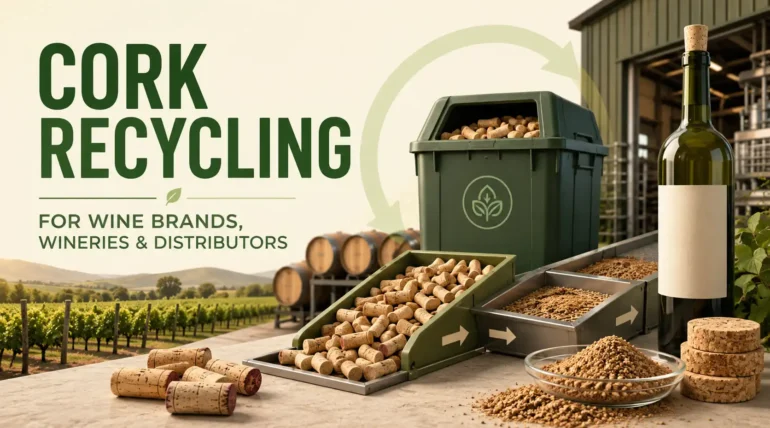
Search “where to recycle corks” and you’ll land on the same answer every time: a wine shop drop-off bin, which is essentially a retailer partnered with a cork collection program.
However, this solution is built for a household saving up a bottle at a time, not a wine producer or retailer. At that scale, cork doesn’t trickle in. It shows up by the case, pulled from returned shipments and wine that never made it to a shelf, with no consumer bin built to absorb any of it.
That’s why commercial cork recycling runs on entirely different logistics.
This guide breaks down natural versus synthetic cork, how commercial collection and sorting actually work, and where cork fits into managing unsaleable wine inventory.
Are Wine Corks Recyclable? Natural vs. Synthetic Cork
The answer depends on what the cork is actually made of:
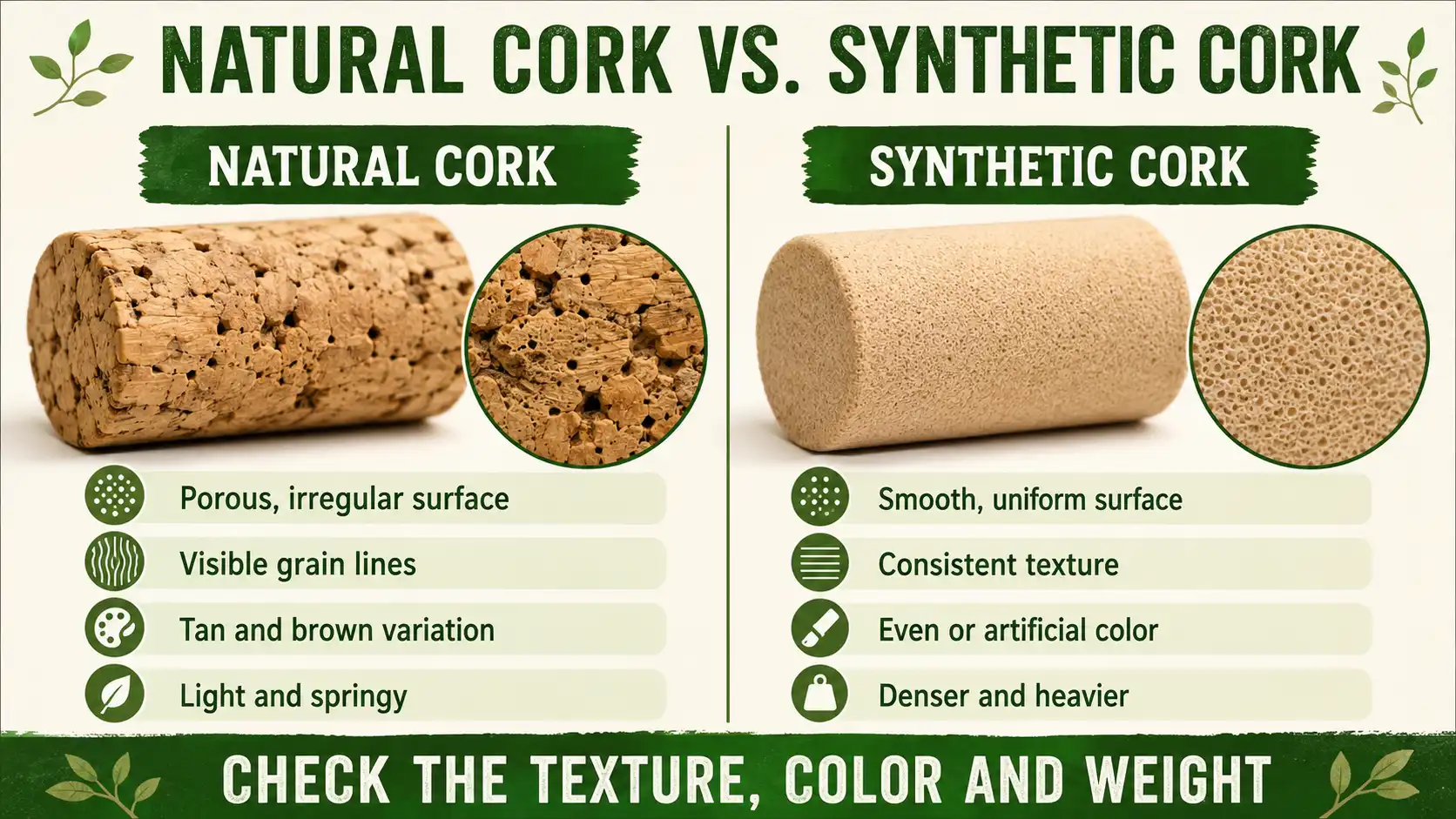
- Natural cork: Harvested from the bark of the cork oak tree, this is a biodegradable and compostable type of cork. It is also the material that specialty cork collection programs are built to accept.
- Synthetic cork: Molded from plastic polymers to mimic the look and feel of the real thing, this is a different material entirely, and most cork-specific recycling streams are not equipped to take it.
That distinction matters before a single wine case ever leaves your facility, because mixing the two cork types undermines a batch before it reaches anyone who could process it.
1. How to Tell Natural Cork from Synthetic
A quick visual and tactile check usually settles it.
- Texture: Natural cork has a porous, slightly irregular surface, visible grain lines, and a light, almost springy weight in the hand. Synthetic cork looks noticeably more uniform, with a smoother, denser texture and a bit more heft, since it is essentially a solid piece of foamed plastic rather than compressed bark cells.
- Color: Natural cork tends to run in shades of tan and brown with natural variation from piece to piece, while synthetic corks are often more consistently colored, sometimes in shades that natural bark simply does not produce.
Training your staff to catch these differences at the point of collection saves a step later and keeps a batch from being disqualified for contamination.
2. Why Synthetic Cork and Screw Caps Can’t Be Recycled the Same Way
Synthetic cork is a plastic product, which means it does not break down the way natural cork does, and it generally is not accepted by the specialty processors that turn natural cork into new material.
Metal crew caps sit in their own category, recyclable in principle but through standard metal recycling channels, not a cork program.
That doesn’t mean synthetic or screw-cap closures have no path forward. It means that path runs through general recycling and, in the case of the wine itself, through the broader question of how a brand handles closures, glass, and alcohol disposal.
How Commercial Cork Recycling Works
This is where the picture changes the most from what a consumer search turns up. Wine cork recycling at a household level means dropping a handful of corks into a jar for months before a trip to a partner retailer. On the other hand, wine brands and distributors need to establish a working commercial cork recycling process from end to end.
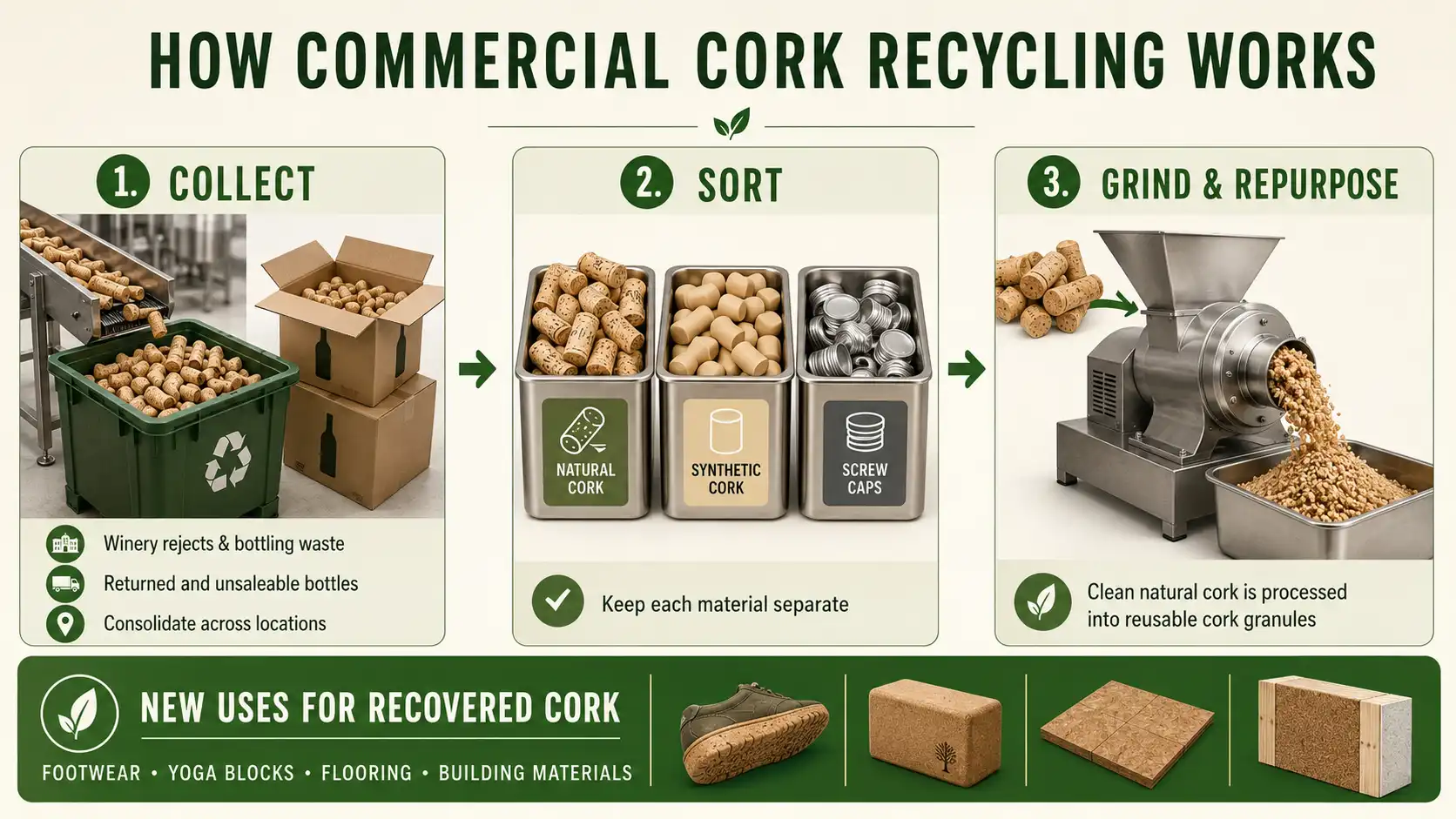
1. Collection at Wine Brand, Winery, and Distributor Scale
A winery generates cork waste continuously, from quality control rejects, bottling line trim, and corks pulled from bottles during testing or rework. A distributor or multi-location wine brand adds another layer, since corks from returned inventory and unsaleable bottles can arrive from several sites at once.
Building a collection process that consolidates that volume, whether through internal bins that feed a central pickup point or coordinated collection across locations, is what actually separates an effective commercial program from an ad hoc effort to save corks in a box by the loading dock.
2. Sorting Natural Cork from Synthetic and Screw Caps
Once cork is collected, sorting comes before anything else can happen to it. A load that mixes natural cork with synthetic closures and stray screw caps limits what that batch can become downstream, since processors generally need a clean, single-material stream to work with.
This is also where the earlier identification step pays off. A team that trains staff to separate natural from synthetic at the point of collection is protecting the value of the batch before it ever leaves the building.
3. Where Recycled Cork Actually Goes
Collected and sorted natural cork gets ground down and repurposed into an entirely new set of products, including footwear components, yoga blocks, flooring underlayment, and other building materials that use cork’s natural cushioning and insulating properties.
ReCork, one of the best-known names in this space, reports having collected more than 130 million natural wine corks to date. That illustrates just how much usable material moves through cork recovery channels industry-wide, even before a winery or distributor’s own volume enters the picture.
How Cork Fits into Broader Wine Inventory Recovery
Cork waste rarely shows up on its own. It tends to travel with the rest of a bottle that could not be sold, which is why cork disposal and wine disposal almost always connect back to a larger inventory waste stream.
1. Cork From Recalled, Expired, or Unsaleable Wine
A meaningful share of the cork a wine brand deals with does not come from bottles that were opened and enjoyed. It comes from bottles that were recalled, expired, damaged in transit, or otherwise pulled before they reached a consumer. Each of those bottles still carries a cork, and that cork represents a real, recurring volume stream that a one-time consumer drop-off model was never designed to absorb.
2. Coordinating Cork Alongside Bottles, Labels, and Packaging
Cork recovery works best as part of a coordinated beverage waste management process rather than a task handled in isolation. Glass, labels, capsules, and cork all need to be pulled apart and routed to their own downstream paths. This is also where cork recovery overlaps with a brand’s broader approach to sustainable beverage packaging, since decisions about bottle materials all feed the same end-of-life picture.
Existing Cork Recycling Programs and Where They Stop Short
Consumer-facing cork recycling programs are real, and they work well for what they are built to do. However, they are not meant to recycle wine corks on a commercial scale.
1. Consumer Drop-Off Cork Recycling Programs
ReCork and a network of partner wine shops, bars, restaurants and kitchens run the best-known cork collection program in the U.S., giving individual wine drinkers a place to drop off corks saved up over time. For consumers looking for where to recycle corks as a single household, those retail partner locations are a legitimate starting point.
2. The Bulk and Commercial Gap These Programs Don’t Solve
What a retail drop-off bin was never built to handle is a winery’s production-line volume or a distributor’s returned inventory arriving across multiple sites. Those programs are designed around slow, individual accumulation, not a facility generating cork waste every shift. That gap, bulk volume with no consumer-scale collection path to absorb it, is exactly where a coordinated commercial approach needs to take over.
Working With a Partner for Commercial Cork and Wine Packaging Recovery
Closing the gap comes down to having a coordination partner who can handle cork alongside the rest of an unsaleable wine stream, not manage it as a separate, disconnected task.
Skip Shapiro Enterprises coordinates the collection, sorting, and routing of cork and other packaging materials to the specialized processors equipped to handle them, working alongside wine producers and distributors in the alcoholic beverage industry who manage this volume as part of a broader wine and alcohol disposal strategy.
For unsaleable wine that needs documented, compliant handling once recovery is not an option, our beverage destruction services provide that next step. If your team is generating cork volume that has outgrown a drop-off bin, contact us and we can help map out a collection process that fits your operation.
FAQ
1. What is the difference between natural and synthetic wine corks?
Natural cork comes from the outer bark of the cork oak tree and is biodegradable, with a porous texture and natural color variation. Synthetic cork is a molded plastic product built to imitate that look and feel, but it does not break down the same way and generally is not accepted by cork-specific recycling programs.
2. Is there a cork recycling program for wineries and distributors?
Consumer programs like ReCork exist for individual drop-off, but they are not built around commercial volume. Wineries and distributors generating cork at that scale typically need a coordinated collection process instead of a retail drop-off model.
3. Where can I recycle wine corks in bulk?
Bulk cork volume from a wine producer generally needs to move through a coordinated collection and sorting process built for ongoing volume across a facility or multiple locations, rather than an individual retail collection bin designed for occasional household use.
4. What happens to cork after it’s collected for recycling?
Once sorted, natural cork is ground down and repurposed into new products, including footwear materials, flooring insulation, and other building materials that make use of cork’s natural cushioning properties.
5. How does cork recycling fit into managing unsaleable wine inventory?
Cork removed from recalled or expired wine represents a real and recurring volume stream. Coordinating cork recovery alongside glass, labels, and other packaging as part of a broader wine disposal and recovery process tends to produce a cleaner, more complete result than handling cork on its own.
our expert

Peter W. Klaich Director, Agriculture/Animal Health
Peter Klaich is a leading expert within the agricultural recycling and animal health market arena, known for leading National Sales at Skip Shapiro Enterprises since June 2016. He focuses on advancing sustainable recycling solutions and waste management practices across the agricultural industry.