Call or Text Now
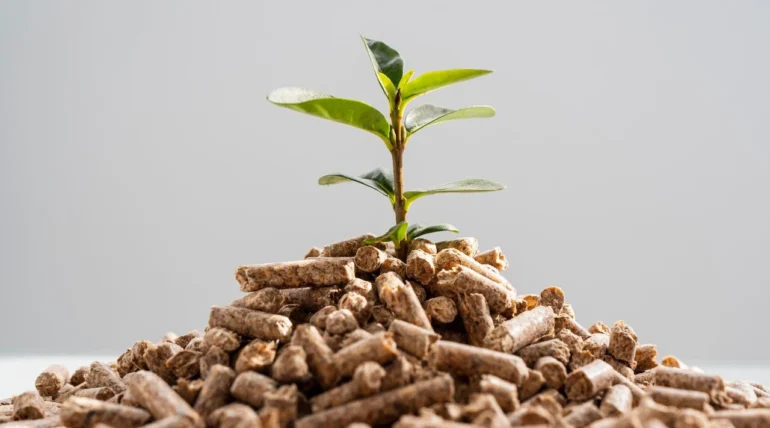
Biomass energy works by converting organic materials into heat, electricity, fuel, or gas through biological or thermal processes. In practical terms, that means food waste, beverage waste, agricultural byproducts, liquid organics, and other biodegradable materials can be collected, prepared, and routed into systems that produce usable energy instead of going straight to landfill.
This matters because the infrastructure around biomass is still growing. EPA’s latest food-waste digestion data says its final 2024 survey identified 313 U.S. anaerobic digestion facilities processing food waste, while the American Biogas Council reported that 70 new U.S. biogas projects came online in 2025, representing more than $2 billion in investment and pushing the national total to nearly 2,600 facilities.
In this article, we’ll focus on the process: how biomass energy is made, which conversion methods are used, what outputs they create, and where biomass fits into commercial waste management. Let’s get started.
Biomass energy in a nutshell
Biomass energy works by converting organic material into usable energy. The basic path is:
What biomass energy means in practical terms
Biomass energy is energy made from organic material. That can include food scraps, agricultural residues, wood waste, wastewater solids, and other biodegradable streams that still contain recoverable energy.
The reason biomass still matters is scale. EIA says biomass accounted for about 5% of U.S. energy consumption in 2023, or roughly 4,978 TBtu, and DOE’s 2024 Billion-Ton Report says the U.S. could support more than 1 billion tons per year of future biomass production capacity under certain scenarios while still meeting food, feed, fiber, and export needs.
The biomass energy process, step by step
The easiest way to understand how biomass energy works is to follow the material from waste stream to usable output. Let’s walk through all 5 steps.
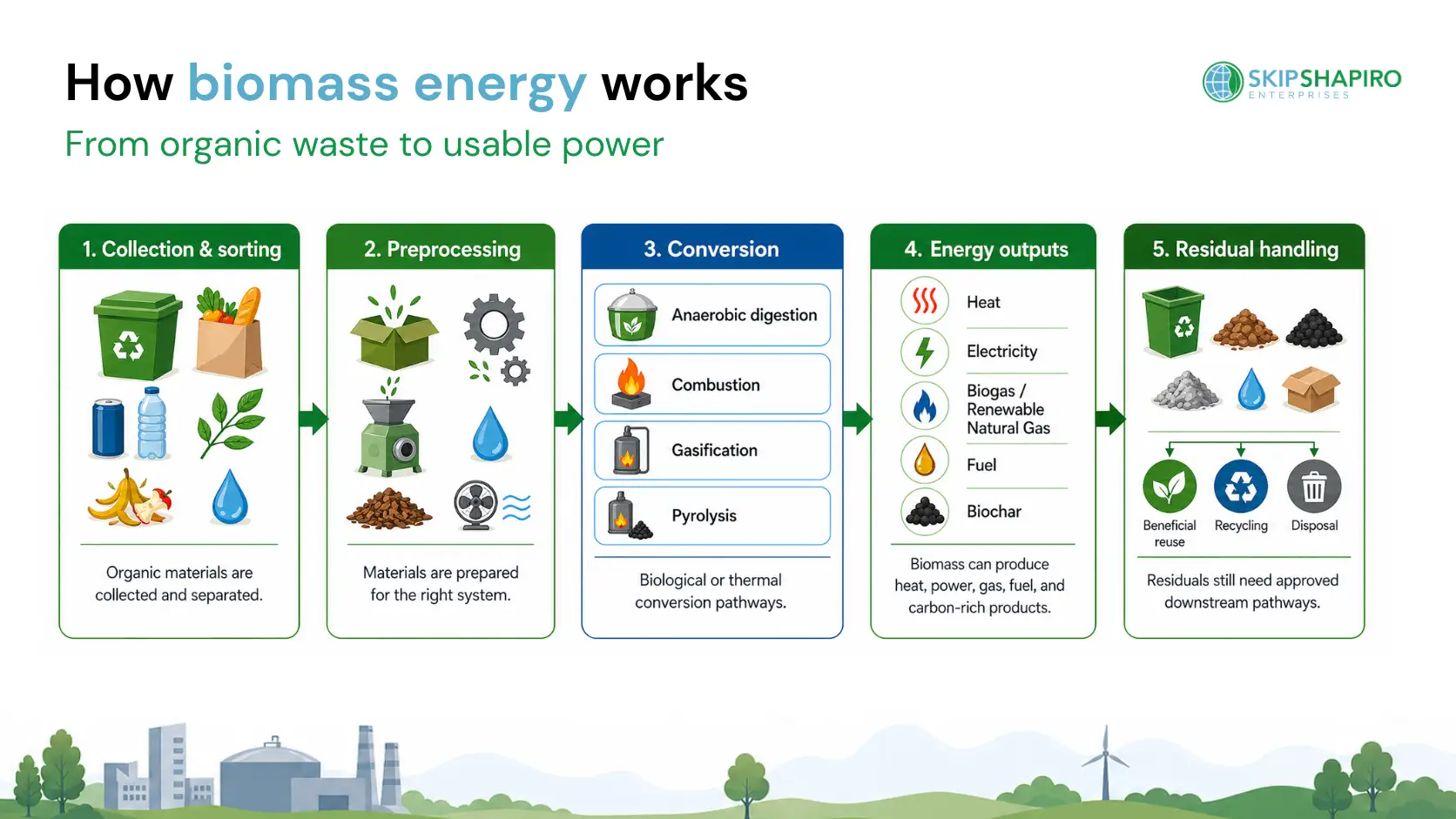
1. Organic material is collected and sorted
The process begins with feedstock. Organic material has to be identified, separated, and collected in a way that preserves its value. For Shapiro-relevant streams, that can mean packaged or unpackaged food waste, expired beverages, agricultural residues, wastewater solids, or organic byproducts from processing facilities. Poor separation at this stage makes the entire process harder.
2. Feedstock is prepared for the right technology
Once material is collected, it usually needs preprocessing. That may include depackaging, grinding, drying, size reduction, contamination removal, moisture balancing, or blending with other materials. EPA’s digestion data project specifically tracks facility operations such as de-packaging / preprocessing, which shows how important this middle step is in real-world biomass energy production.
3. Biomass is converted through biological or thermal treatment
This is the core of the process. Some biomass streams go through anaerobic digestion, where microbes break down organic matter without oxygen and generate biogas. Others go through thermal methods like combustion, gasification, or pyrolysis, where heat turns the feedstock into energy-rich outputs. The right method depends on moisture content, material consistency, contamination risk, and the intended end use.
4. The output becomes heat, electricity, biogas, biomethane, biochar, or fuel
Biomass does not produce just one thing. Depending on the system, the output may be:
- direct heat
- steam-driven electricity
- Biogas
- upgraded biomethane / renewable natural gas
- syngas, bio-oil
- Biochar
EIA notes that biogas, also called biomethane or renewable natural gas, can be produced through anaerobic digestion and used in the same ways as fossil natural gas once it is properly treated.
5. Residuals are handled through approved recycling or disposal pathways
Energy conversion is not the end of the story. Digestate, ash, char, wastewater, packaging residuals, and contaminants still need a compliant next step. That is where biomass energy connects directly to beneficial reuse, recycling, and broader waste-management workflows rather than standing alone as a purely technical process.
Main ways biomass is converted into energy
Different feedstocks work better in different systems. The method matters because it determines what the output is, how wet the feedstock can be, and how much preprocessing is required.
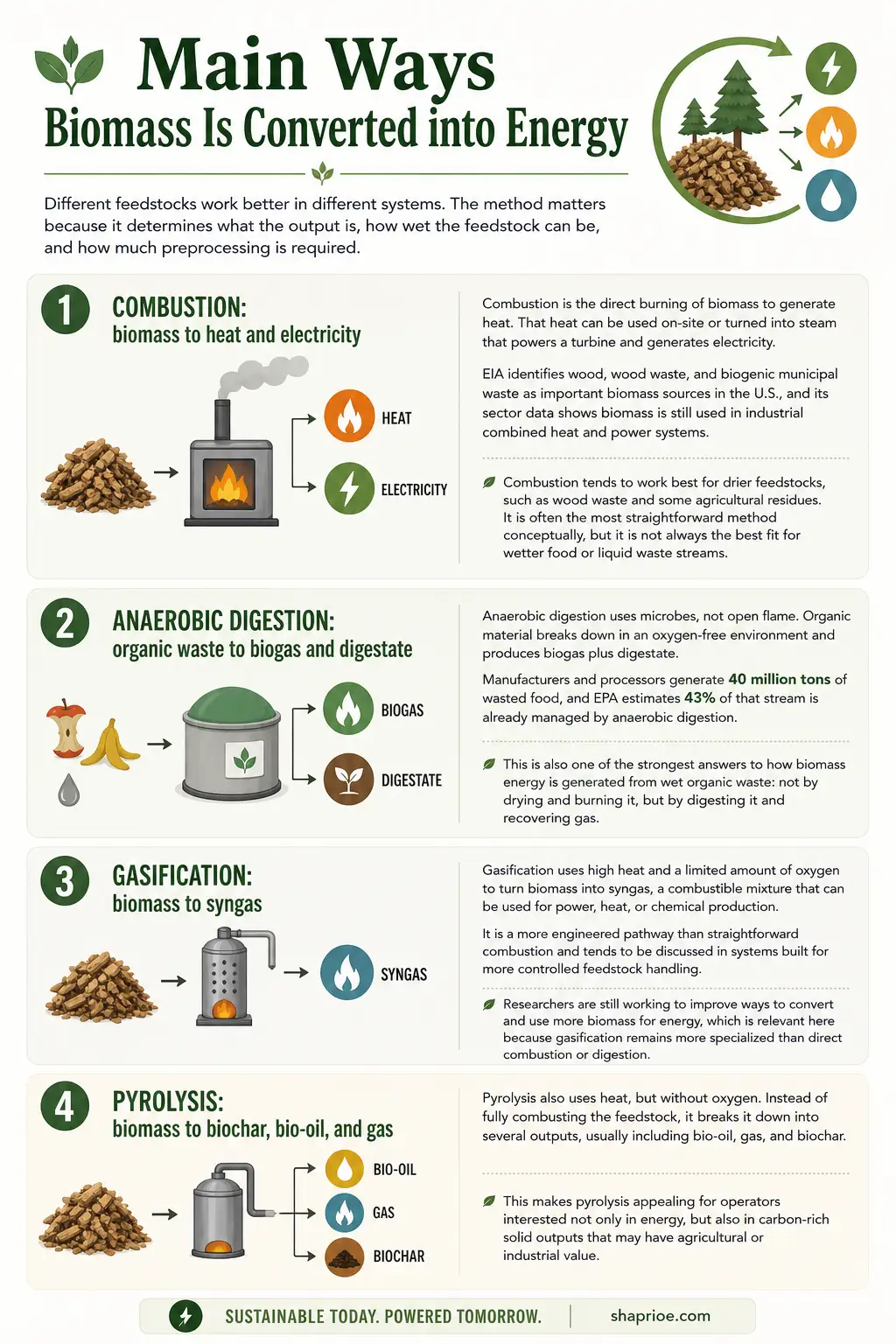
1. Combustion: biomass to heat and electricity
Combustion is the direct burning of biomass to generate heat. That heat can be used on-site or turned into steam that powers a turbine and generates electricity. EIA identifies wood, wood waste, and biogenic municipal waste as important biomass sources in the U.S., and its sector data shows biomass is still used in industrial combined heat and power systems.
Combustion tends to work best for drier feedstocks, such as wood waste and some agricultural residues. It is often the most straightforward method conceptually, but it is not always the best fit for wetter food or liquid waste streams.
2. Anaerobic digestion: organic waste to biogas and digestate
Anaerobic digestion uses microbes, not open flame. Organic material breaks down in an oxygen-free environment and produces biogas plus digestate. This is one of the most relevant pathways for food waste, beverage waste, wastewater biosolids, dairy waste, and other high-moisture feedstocks. EPA’s current digestion data underscores how central this pathway is to food-waste diversion. Manufacturers and processors generate 40 million tons of wasted food, and EPA estimates 43% of that stream is already managed by anaerobic digestion.
This is also one of the strongest answers to how biomass energy is generated from wet organic waste: not by drying and burning it, but by digesting it and recovering gas.
3. Gasification: biomass to syngas
Gasification uses high heat and a limited amount of oxygen to turn biomass into syngas, a combustible mixture that can be used for power, heat, or chemical production. It is a more engineered pathway than straightforward combustion and tends to be discussed in systems built for more controlled feedstock handling.
Researchers are still working to improve ways to convert and use more biomass for energy, which is relevant here because gasification remains more specialized than direct combustion or digestion.
4. Pyrolysis: biomass to biochar, bio-oil, and gas
Pyrolysis also uses heat, but without oxygen. Instead of fully combusting the feedstock, it breaks it down into several outputs, usually including bio-oil, gas, and biochar. This makes pyrolysis appealing for operators interested not only in energy, but also in carbon-rich solid outputs that may have agricultural or industrial value.
Quick comparison table: main biomass conversion methods
| Method | Best-Suited Feedstocks | Main Outputs | Best Fit |
|---|---|---|---|
| Combustion | Drier wood and agricultural residues | Heat, steam, electricity | Heat/power from relatively dry material |
| Anaerobic digestion | Food waste, beverage waste, manure, biosolids, wet organics | Biogas, digestate | Wet organic waste and landfill diversion |
| Gasification | Prepared dry biomass | Syngas, heat, power | Engineered waste-to-energy systems |
| Pyrolysis | Prepared dry biomass and some residues | Bio-oil, gas, biochar | Energy plus carbon-product recovery |
We have simplified this table on purpose: the real choice depends on contamination, moisture, hauling, permitting, and the desired end market for the output.
Which waste streams can work as biomass feedstock?
Not every organic material works the same way in a biomass system. The best feedstock depends on the conversion method, moisture level, contamination risk, and the kind of output the operator wants to produce.
For businesses, that means the real question is not just whether a material is organic. It is whether that specific waste stream is suitable for digestion, combustion, gasification, or another energy pathway.
1. Food and beverage waste
Food and beverage waste is one of the most practical biomass feedstocks because it is often rich in biodegradable material. High-moisture streams are especially relevant to digestion systems. EPA’s current anaerobic digestion project notes that facilities processing food waste can accept streams such as beverage processing industry waste, food-processing waste, fats, oils, and greases, retail food waste, and source-separated organics.
This is where Shapiro’s angle is strongest: expired packaged beverages, food production waste, dairy liquids, and other organics that need a better outlet than landfill.
2. Agricultural residues and byproducts
Agricultural residues, manure, crop leftovers, and other byproducts can also serve as feedstock. The American Biogas Council’s 2026 report says 631 operational U.S. biogas capture systems are tied to agriculture, and agriculture remained a major source of new projects in 2025.
3. Liquid organic waste and wastewater streams
Some biomass systems work especially well with liquid or semi-liquid organic waste. EIA explains that biogas is produced in anaerobic digesters at sewage treatment plants and at dairy and livestock operations, which shows how relevant wet streams are to this pathway.
4. Forestry and yard organics
Wood waste, yard trimmings, and forestry residues are more often tied to combustion, gasification, or pyrolysis because they are generally drier than beverage waste, food sludge, or wastewater solids. They still belong in the biomass conversation, but usually on a different technology track.
Where biomass energy fits into commercial waste management
Biomass energy is not just a renewable-energy topic. It is also a commercial waste-routing topic. Businesses need to know not only whether biomass is possible, but whether it is the best outlet for the material they actually have.
A beverage manufacturer with large volumes of expired liquid product may be looking at anaerobic digestion or another wet-organics outlet. A company with woody agricultural residues may be a better fit for combustion, gasification, or biochar solutions. A food processor dealing with packaged organics may first need food waste solutions, beverage destruction, or liquid waste disposal before any energy pathway becomes realistic. The process only works if the waste stream is prepared for it.
Examples of biomass energy in practice
Here are a few simple examples:
- Expired beverages and liquid food waste may be routed toward digestion systems that produce biogas.
- Agricultural byproducts can be used in farm-based or regional biomass systems.
- Wastewater solids can feed digestion systems that generate energy while reducing landfill reliance.
- Wood and dry residues can be used in heat-and-power systems or thermochemical conversion processes.
When biomass energy is not the right outlet
Biomass energy can be a strong outlet, but it is not automatic.
It tends to make sense when:
- the feedstock is consistent
- contamination can be controlled
- hauling distances are reasonable
- a conversion facility actually accepts the material
- the output has a viable use or market
It makes less sense when:
- the stream is too mixed or too contaminated
- the moisture profile does not match the intended technology
- preprocessing costs outweigh the recovery value
- a simpler reuse or recycling pathway would deliver a better result
EPA’s current data makes that point clearly. Of the 40 million tons of wasted food generated by manufacturers and processors, EPA estimates 43% is managed by anaerobic digestion. But of the 66 million tons generated in retail, food service, and residential sectors, only 1% is managed by anaerobic digestion, while 75% is landfilled or incinerated. In other words, technical potential and real-world routing are not the same thing.
How Shapiro helps businesses route organic waste toward beneficial reuse
For many businesses, the challenge is not understanding that biomass exists. It is figuring out whether their specific material can move toward beneficial reuse instead of default disposal.
That decision depends on the waste stream itself, the available outlet, contamination risk, hauling realities, and what happens to the residuals after energy production. In some cases, the best answer may involve digestion, biogas, biochar, or another biomass pathway. In others, the better route may be agricultural recycling, liquid waste disposal, beverage destruction, or a more localized renewable-energy outlet such as Linden NJ Renewable Energy Project.
Need a better outlet for food, beverage, or organic waste? Talk to Shapiro about recycling and beneficial reuse options.
FAQs
1. How does biomass energy work in simple terms?
Biomass energy works by collecting organic material, preparing it for the right technology, converting it through digestion or heat-based treatment, and then using the output as heat, electricity, gas, or fuel. The remaining material still needs a compliant next step.
2.
What is the most common way biomass is converted into energy?That depends on the feedstock. Combustion is common for drier materials like wood residues, while anaerobic digestion is a leading route for wet organic waste such as food waste, beverage waste, manure, and wastewater solids.
3.
Can food and beverage waste be used for biomass energy?Yes. Food and beverage waste can work well in biomass systems, especially anaerobic digestion. EPA specifically lists beverage processing waste and food-processing waste among the feedstocks accepted by digestion facilities that process food waste.
4.
What is the difference between anaerobic digestion and combustion?Anaerobic digestion uses microorganisms to break down wet organic waste without oxygen and produces biogas plus digestate. Combustion burns biomass directly to produce heat and often steam-generated electricity. One is biological; the other is thermal.
5. What happens to leftover material after biomass energy production?
Residuals do not disappear. Depending on the system, a business may still have digestate, ash, char, packaging contamination, or wastewater to manage. That is why biomass energy is part of a larger waste-routing decision, not the end of the story.
our expert

Peter W. Klaich Director, Agriculture/Animal Health
Peter Klaich is a leading expert within the agricultural recycling and animal health market arena, known for leading National Sales at Skip Shapiro Enterprises since June 2016. He focuses on advancing sustainable recycling solutions and waste management practices across the agricultural industry.