Call or Text Now

If you manage beverage operations, you’re likely facing increasing pressure to improve sustainability efforts.
With the global sustainable packaging market projected to reach USD 448.53 billion by 2030, now is the time to embrace eco-friendly packaging solutions that align with industry trends.
However, adopting sustainable beverage packaging comes with complications. Choosing a recyclable material is only part of the decision — you also need to understand how that material performs at end of life, what infrastructure exists to process it, and how your packaging choices affect downstream waste management operations.
This detailed guide helps operations managers, sustainability officers, and business owners address these challenges by exploring different types of beverage packaging, disposal requirements, and emerging revenue opportunities.
Key Takeaways
- Traditional waste management systems weren’t designed to handle recyclable or compostable materials like bio-resins, polymers, and multi-layer composites, creating a disconnect that is reshaping the economics and logistics of beverage product destruction.
- Regulatory compliance is essential for companies handling recyclable food packaging, requiring certification, documentation, and audits to avoid costly penalties and protect brand reputation.
- Aluminum and glass remain leading sustainable beverage packaging materials, offering full recyclability, reduced emissions, and efficient resource use.
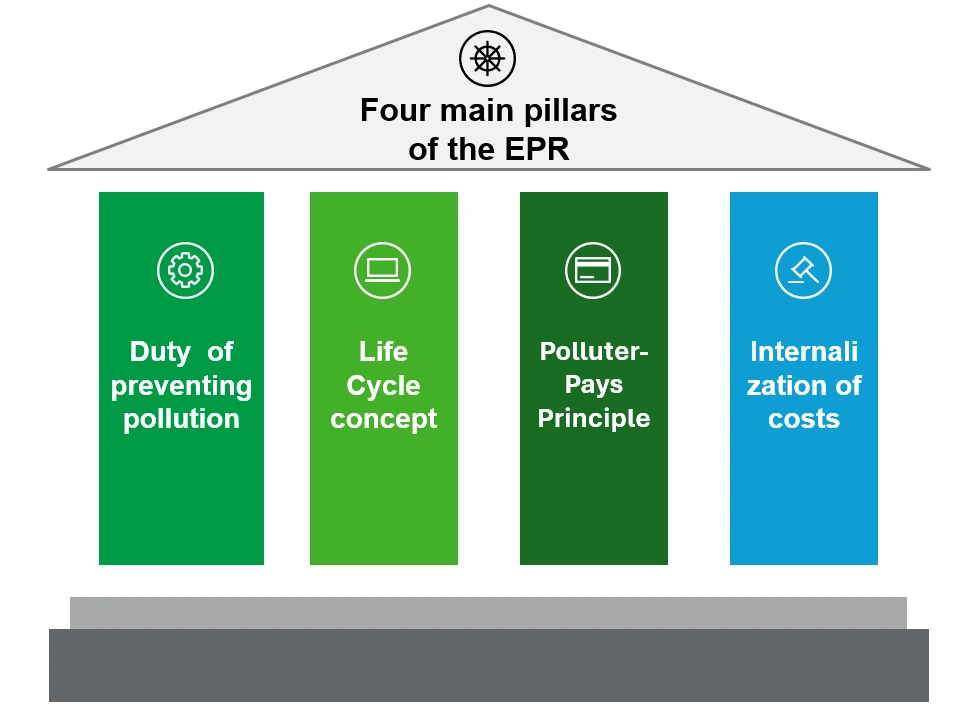
- Extended Producer Responsibility (EPR) programs shift the cost and responsibility of managing end-of-life products from taxpayers to producers, ensuring more sustainable packaging and waste management practices.
Why Sustainable Beverage Packaging Requires New Destruction Approaches
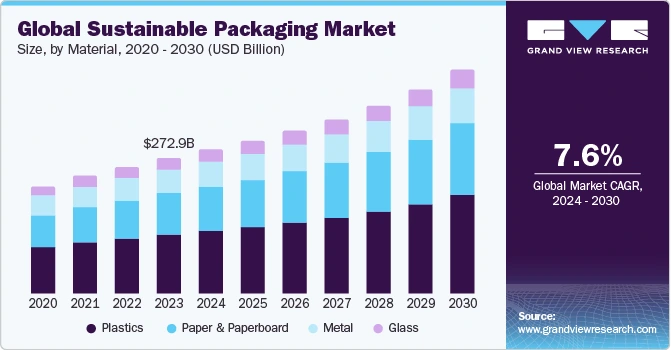
Market growth in sustainable packaging is expected to be driven by bans on single-use plastics, extended producer responsibility (EPR) laws, and incentives for using environmentally friendly packaging materials.
However, sustainable packaging is only as effective as its end-of-life pathway in real-world conditions. The issue? Packaging sustainability isn’t determined at the point of production alone — it’s determined by what actually happens to the material at end of life. A packaging format that’s theoretically recyclable or compostable is only as sustainable as the infrastructure that exists to process it in practice.
Traditional waste management systems weren’t designed to handle sustainable beverage packaging such as bio-resins, polymers, and multi-layer composites. This disconnect is reshaping the economics and logistics of product destruction across the beverage industry.
For Operations Managers: Sustainable materials can introduce longer processing times and added steps compared to traditional packaging, requiring updated workflows and training. Knowing these details before selecting a packaging format helps avoid costly surprises downstream.
Five Types of Beverage Packaging Creating New Destruction Challenges
Each sustainable beverage packaging format has a different end-of-life profile.
Let’s look at key types of beverage packaging that should be on your radar:
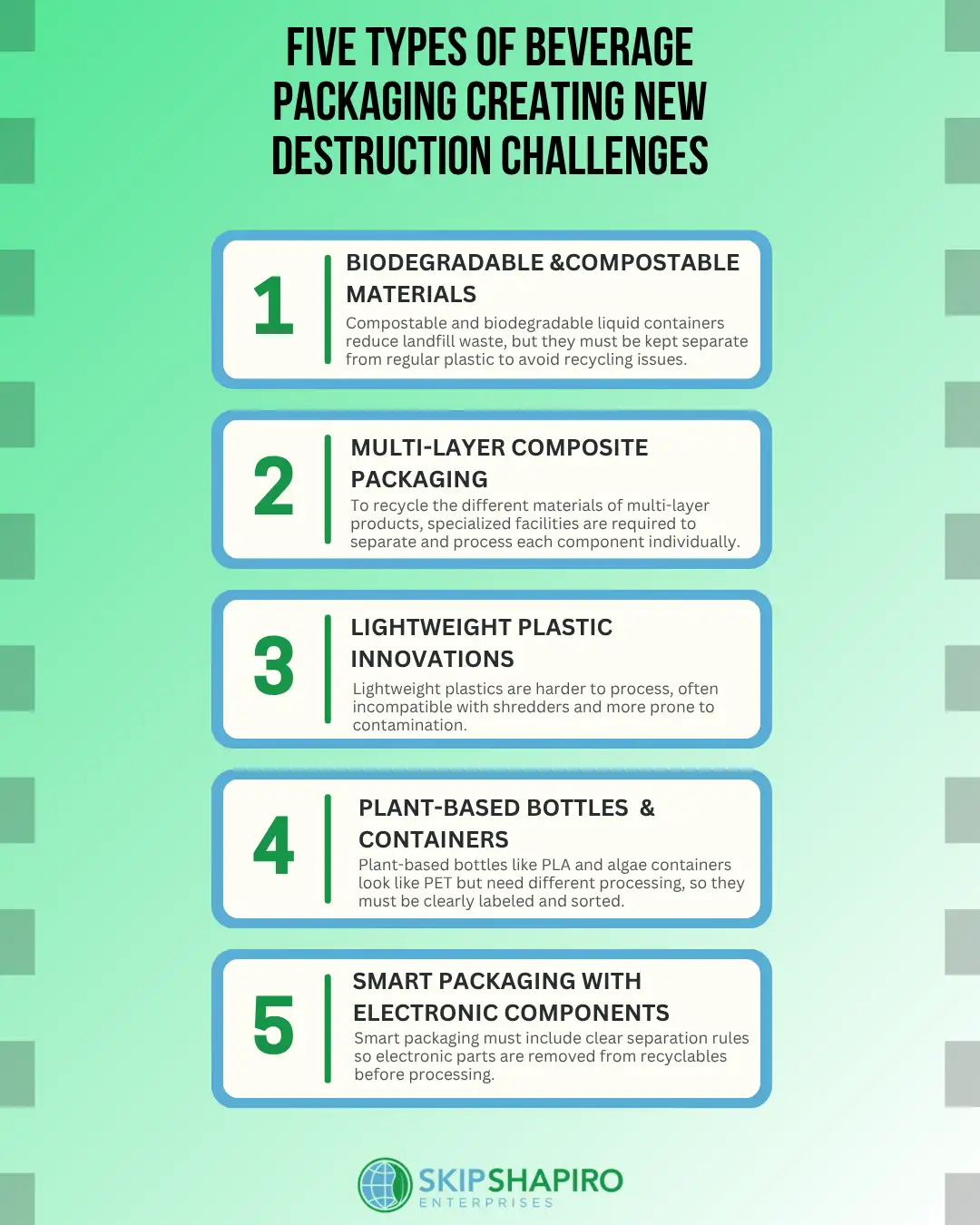
Let’s take a look at key types of beverage packaging that should be on your radar:
1. Biodegradable and Compostable Materials (PLA, PHA, Cellulose)
While compostable and biodegradable containers for liquids help reduce landfill dependency, they must be kept separate from conventional plastic to prevent recycling challenges.
As stated by the EPA: “Compostable plastics are not intended for recycling and can contaminate and disrupt the recycling stream if intermixed with petroleum-based plastics that are non-compostable.”
This means beverage companies adopting compostable packaging need to ensure their logistics and waste management workflows keep compostable materials segregated from conventional plastics — both in-house and across their distribution chain.
2. Multi-Layer Composite Packaging
Multi-layer packaging is difficult to recycle, as the different layers of materials make it hard to separate. Take Tetra Pak, for instance—its combination of paperboard, polymers, and aluminum ensures product protection but complicates recycling due to the need for distinct processing methods.
To successfully recycle the different materials of multi-layer products, specialized facilities are required to separate and process each component individually.
3. Lightweight Plastic Innovations
Without fundamental redesign and innovation, about 30% of plastic packaging will never be reused or recycled. To address this issue, lightweight plastic—or low-density plastic—has emerged. The challenge?
Lightweight plastics present processing challenges, including shredding equipment incompatibility and a higher risk of contamination due to their thin, flexible walls.
4. Plant-Based Bottles and Containers
Plant-based bottles, such as PLA bottles and algae-based containers, closely resemble PET materials in appearance but differ in processing requirements. As a result, they demand clear identification and sorting instructions, since limited infrastructure, food residue contamination, and consumer confusion often lead to improper recycling.
Beverage companies using plant-based formats should provide clear identification and handling guidance to anyone in the downstream waste chain.
5. Smart Packaging with Electronic Components
Smart packaging is used to extend shelf life, monitor freshness, display information on quality, and improve product and customer safety. However, electronic components such as QR codes, RFID tags, and freshness sensors must be recycled carefully to avoid mixing electronics with conventional packaging waste.
This requires clear separation protocols to be built into your waste management workflow from the outset.
End-of-Life Handling Requirements by Packaging Type
| Material | Separation Required | Temperature Requirements | Processing Time | Relative Cost |
|---|---|---|---|---|
| Biodegradable / Compostable | Must be kept separate from petroleum-based plastics to avoid contamination | Industrial composting conditions (e.g., ~131–160 °F) | Longer than conventional plastics | Significantly higher than standard |
| Multi-Layer Composite Packaging | Each layer must be separated | Varies by component | Considerably longer due to complexity | Higher due to specialized processing |
| Lightweight Plastic Innovations | Requires proper sorting; thin-walled plastics need special handling | Generally like standard plastics, but may require lower or controlled heating | Processing slower due to equipment compatibility issues | Potentially higher than standard plastics due to increased contamination risk |
| Plant-Based Bottles & Containers | Must be clearly identified and sorted separately from PET streams | Processing may require specialized conditions | Longer if infrastructure not fully adapted | Higher because of niche infrastructure and sorting needs |
| Smart Packaging with Electronic Components | Electronics must be removed/separated before recycling | Varies (may involve e-waste protocols rather than standard thermal) | Longer due to disassembly and separation steps | Much higher due to dual waste stream (packaging + electronics) |
Compostable Food & Beverage Packaging: Compliance and Certification Requirements
What destruction requirements should you know about?
Here’s a quick overview:
1. Industrial Composting Requirements for Beverage Containers
Commercial composting, a large-scale process that supports environmental sustainability, handles everything from liquid extraction and contamination screening to temperature-controlled composting.
To promote rapid decomposition of compostable food packaging, the temperature range of the compost pile should be between 131 and 160 degrees Fahrenheit.
With such specific requirements, composting facilities become the best pathway for commercially packaged compostable beverage containers — home composting is not a viable end-of-life option at commercial volumes.
2. Certification Verification and Compliance Documentation
Food and beverage regulatory compliance is a key consideration for companies handling compostable food packaging.
For instance, the BPI Certification program is a third-party verification of ASTM standards for compostable products in North America. Specifically, ASTM D6400 establishes standards for identifying products and materials that will compost satisfactorily in commercial and municipal composting facilities.
In addition to national standards, there are numerous state-specific regulations that companies must follow—often involving extensive documentation such as chain-of-custody tracking and annual compliance audits.
When adopting compostable formats, you should also verify that your waste management partners can provide the documentation needed to demonstrate compliance — not just process the material.
Recyclable Materials: The Value Case for Aluminum and Glass
Waste management in the beverage industry is complex, but that doesn’t mean there isn’t a significant opportunity to enhance sustainability.
Two key materials for recyclable food packaging are aluminum and glass.
1. Aluminum and Glass
Aluminum makes beverage cans lighter, easier to ship, and infinitely recyclable.
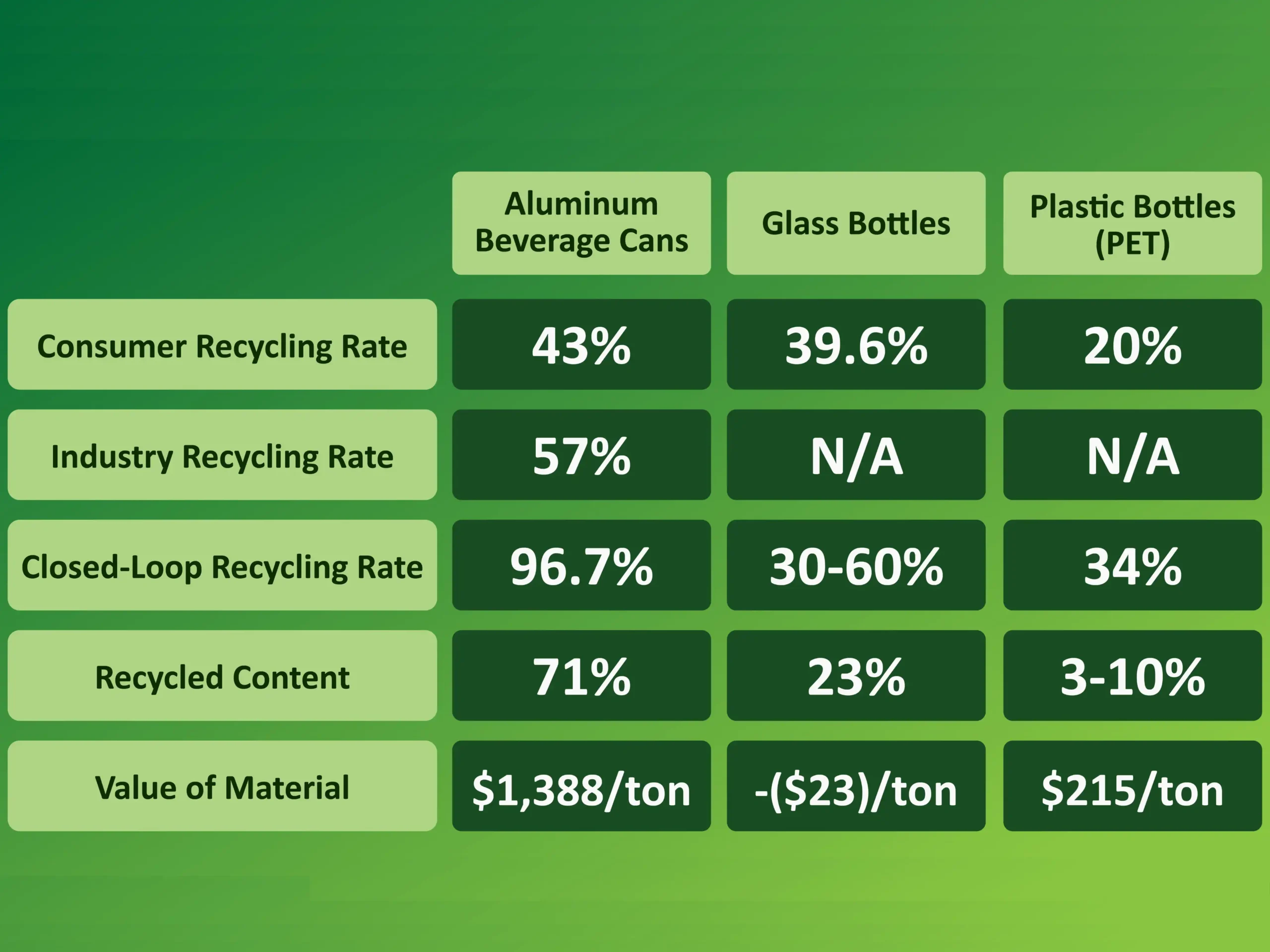
In 2018, the total recycling rate of aluminum containers and packaging was 34.9%, of which the most recycled category of aluminum was beer and soft drink cans.
In fact, aluminum cans are the most recycled beverage container, with billions of used cans recycled by the U.S. aluminum industry each year, making them a leading solution for sustainable beverage packaging.
Glass is another 100% recyclable and reusable material, thereby saving resources and energy. In addition, product innovations that reduce the thickness and weight of glass packaging can lower CO₂ emissions by around 4%–5%.
If you’re evaluating packaging formats from a sustainability standpoint, aluminum and glass bottle recycling offer the clearest end-of-life pathways—established infrastructure, strong recovery markets, and, in aluminum’s case, the potential to generate value that offsets handling costs.
The image below compares the recycling rate of aluminum, glass, and plastic (PET).
2. The Challenge: Lightweighting and Material Recovery
The push for lighter, more sustainable packaging has created a growing tension between innovation and infrastructure. While advancements in aluminum and plastic design have made containers thinner and more resource-efficient, these innovations also pose challenges for recycling systems.
Lighter materials can be more difficult to sort and process, often reducing their recovery value. Many facilities require costly equipment upgrades and sufficient processing volumes to make recovery economically viable. In addition, transportation logistics, storage needs, and handling requirements add further complexity.
Balancing material innovation with the infrastructure needed to recycle it effectively remains a key challenge in advancing circular packaging solutions.
Regulatory Evolution: What Beverage Companies Need to Track
1. EPR Programs
Extended Producer Responsibility (EPR) programs are now active in seven states, including California, Colorado, Oregon, and Maine. The goal of EPR is to hold producers accountable for the end-of-life management of their products, making businesses responsible for paying the costs associated with that process.
If your company operates in an EPR state, you need to understand your reporting obligations and ensure your waste management partners can support EPR documentation requirements.
2. FDA and TTB Requirements for Sustainable Materials
Food contact regulations ensure that packaging materials used in food and beverage products meet strict safety and compliance standards. New materials must undergo FDA Food Contact Substance (FCS) notifications and migration testing—especially bioplastics—to confirm they don’t transfer harmful substances.
Alcohol producers face additional requirements, including TTB labeling approvals and proper documentation for any product destruction needed to support tax credit recovery.
For global brands, compliance extends beyond U.S. borders, with EU standards like REACH and PPWR influencing domestic practices and shaping how companies manage destruction, labeling, and material traceability worldwide.
What to Look for in a Waste Management Partner for Sustainable Packaging
As sustainability goals evolve, beverage destruction partners play a critical role in helping brands manage the growing complexity of sustainable beverage packaging.
1. Essential Capabilities for Processing Modern Beverage Packaging
When evaluating partners for processing compostable packaging for liquids, it’s important to assess a full range of operational and compliance capabilities:
- Multi-material processing infrastructure: Your partner should be equipped to handle five or more material types, operate efficient liquid separation systems, and use precise material identification technology.
- Facility network and capacity: They should have nationwide coverage with at least 200 facilities, along with specialized equipment to ensure consistent performance and business continuity.
- Compliance and documentation systems: They should offer real-time tracking, material-specific Certificates of Destruction, seamless integration with EPR systems, and maintain a spotless regulatory compliance record.
- Material recovery pathways: Experienced waste management companies support beneficial reuse programs, partner with renewable energy initiatives, and provide flexible capacity for seasonal fluctuations or emergency responses.
- Volume considerations: They should specify minimum and maximum throughput by material type, provide seasonal flexibility, and maintain rapid emergency/recall response capabilities.
Note: The handling requirements for managing recalled, expired, or off-spec packaged product go beyond standard recycling — they involve documented removal from commerce with chain-of-custody controls. That’s a separate workflow from packaging recyclability, covered in our beverage waste management guide.
2. Total Cost of Ownership: Beyond Per-Container Pricing
When evaluating providers for processing biodegradable packaging for food and other materials, it’s important to look beyond per-container rates and consider the true total cost of ownership.
- Direct destruction costs: Consider base processing fees, material-specific premiums, and transportation logistics that can significantly affect total expenses.
- Compliance costs: Factor in documentation, certification verification, audit support, and penalty avoidance—areas where partners with proven compliance systems can help minimize risk.
- Opportunity costs/benefits: Advanced recovery programs and renewable energy initiatives can generate material recovery revenue and renewable energy credits.
- Risk mitigation value: Nationwide facility networks provide redundancy, liability protection, and brand safety through certified disposal. Shapiro’s locations exemplify how strategic coverage supports business continuity.
For business owners: Many clients see significant long-term cost savings through improved material recovery, renewable energy integration, and stronger compliance practices.
Futureproofing Your Packaging and Waste Management Strategy
You shouldn’t just stay aware of current trends—you also need to plan what’s ahead. Here’s what you need to know:
1. Emerging Technologies and Infrastructure Needs
Emerging technologies are redefining how companies manage material destruction, sustainability, and compliance. Key developments include:
- Smart packaging: QR codes, RFID tags, and freshness indicators are improving traceability and transparency while introducing new e-waste disposal protocols and data privacy considerations during destruction.
- Advanced bioplastics: Innovations like PHA and algae-based materials require updated processing methods, specialized handling, and equipment modifications to ensure compliant and efficient destruction.
- Edible packaging: Edible packaging, such as films and coatings designed for consumption, reduces the need for extensive destruction infrastructure but still requires strict FDA compliance oversight.
- Infrastructure investment priorities: Businesses are prioritizing automated sorting and identification systems, modular processing equipment, digital tracking integration, and expansion of geographically diverse facilities to enhance sustainability and operational efficiency.
2. Regulatory Shifts to Anticipate: Plan for 2026–2030
Expect major regulatory shifts, including the expansion of state EPR programs to 15+ states, the introduction of federal packaging standards, and accelerated international harmonization aligning U.S. policies with global sustainability frameworks. Beverage companies that build flexibility into both their packaging choices and waste management partnerships now will be better positioned to adapt without operational disruption.
3. Your 90-Day Action Plan
Interested in getting started?
Here’s a 90-day implementation plan:
- Phase 1: Audit (Days 1–30): Assess your current packaging mix and volumes, evaluate existing destruction partner capabilities, identify compliance and documentation gaps, and determine the true total cost of ownership.
- Phase 2: Evaluate (Days 31–60): Develop Request for Proposal (RFP) criteria for sustainable packaging destruction, assess partner capabilities, perform cost-benefit analyses by material type, and evaluate long-term scalability.
- Phase 3: Implement (Days 61–90): Finalize partner selection or renegotiation, integrate documentation systems, train staff on new requirements, and establish an ongoing monitoring framework to ensure compliance and operational efficiency.
Conclusion
Sustainable beverage packaging is as much an operational decision as it is an environmental one.
Material choice affects how packaging is sorted, processed, and recovered at end of life — and that affects cost, compliance, and your organization’s ability to meet sustainability commitments in practice. Packaging changes such as a rebrand or label update can also leave obsolete beverage packaging to manage.
Understanding these implications, staying ahead of regulatory requirements like EPR, and working with waste management partners equipped to handle your specific materials are the steps you can take to make your sustainability packaging commitments genuinely achievable.
Contact us today to learn how we can support your packaging waste management and sustainability operations across the non-alcoholic beverage industry.
FAQs about Sustainable Beverage Packaging
1. How do I verify my waste management partner can handle the packaging materials we’re considering?
Request documented processing capabilities, recent compliance records, and examples of successful handling of similar materials. Ask specifically whether they can process your packaging formats at your volume levels — capabilities that exist in theory aren’t always available at commercial scale in your region.
2. What happens if sustainable beverage packaging is processed incorrectly?
Incorrect processing can lead to regulatory non-compliance, environmental contamination, loss of recoverable materials, and financial penalties. Additionally, this can also result in failed audit documentation — particularly relevant for EPR reporting or TTB-related product destruction records.
3. How do multi-layer beverage containers like Tetra Pak get separated during processing?
Multi-layer beverage containers are separated during destruction through specialized depackaging and hydropulping systems that use water and mechanical agitation to break down the layers, allowing fibers, plastics, and aluminum to be isolated and processed through their respective recycling or recovery streams.
4. Do aluminum beverage cans generate enough revenue to offset processing costs?
In many cases, yes—aluminum beverage cans often generate enough recycling revenue to partially or fully offset destruction costs, thanks to their high market value, strong demand in secondary markets, and the material’s ability to be endlessly recycled without quality loss.
5. How does packaging format affect compliance documentation requirements?
Different materials trigger different documentation obligations.
Compostable packaging requires certification verification and composting compliance records. Alcohol products in any format require TTB documentation for any destruction event. EPR-regulated materials require producer reporting in applicable states.
Working with a waste management partner who can provide material-specific documentation for each format simplifies this significantly.
our expert

Peter W. Klaich Director, Agriculture/Animal Health
Peter Klaich is a leading expert within the agricultural recycling and animal health market arena, known for leading National Sales at Skip Shapiro Enterprises since June 2016. He focuses on advancing sustainable recycling solutions and waste management practices across the agricultural industry.