Call or Text Now
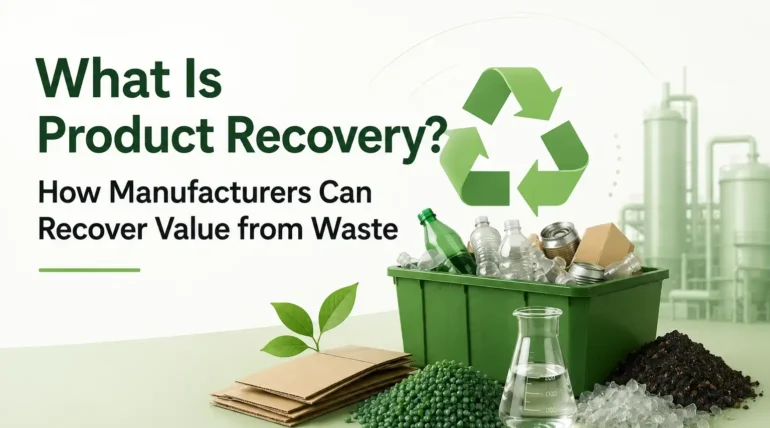
Every production line eventually generates product it cannot sell as intended. A batch misses spec. A pallet gets damaged in transit. Inventory expires before it reaches a shelf. Treated as ordinary trash, that product is a straight loss.
Approached through product recovery, it becomes a source of reclaimed material, energy, or revenue instead. Product recovery is the practice of reclaiming usable material, components, or value from unsellable product rather than routing it straight to a landfill.
This guide covers what product recovery looks like in manufacturing, how the process and reverse logistics behind it work, why the investment tends to pay off, and what it looks like in food and beverage production.
What Is Product Recovery?
Product recovery means reclaiming the highest-value use of a product or material rather than simply diverting it away from a landfill.
It goes further than the two default routes: standard recycling (which breaks materials down into raw inputs) and disposal (which removes product from circulation entirely). Instead, recovery asks what can still be reclaimed, whether that is the product itself, its components, its packaging, or the energy inside it, before any of it is treated as waste.
Product recovery in manufacturing typically starts the moment a batch is flagged as unsellable, whether because of a quality failure, an expiration date, a labeling error, or simple overproduction.
The goal is to capture value a company already paid to produce. A recovery mindset treats an off-spec batch as an asset that still has somewhere useful to go, not a liability that has to be hauled away.
Product Recovery and Lean Manufacturing Principles
Product recovery has roots in lean manufacturing thinking. Lean philosophy centers on eliminating waste (known as Muda) and continuously refining processes through kaizen.
Under that lens, unsellable or defective product is not an unavoidable cost of doing business. It is a solvable inefficiency, the same as a slow changeover or a bottlenecked line.
Manufacturers that build recovery into their lean manufacturing principles tend to catch these inefficiencies earlier and recapture more value from them.
Where Product Recovery Fits in the Eight Wastes
Lean’s eight wastes framework maps onto recovery in three places:
- Defects account for off-spec or damaged product that never should have left the line.
- Overproduction covers stock built faster than demand can absorb.
- Excess inventory describes product that ages out before it sells.
Each is a different route to the same outcome: usable product that needs a recovery path instead of a trip to the dumpster.
How the Product Recovery Process Works
The product recovery process generally follows four stages, though specifics vary by material and industry. What separates an efficient product recovery operation from a wasteful one usually comes down to speed, yield, and cost control at each stage.
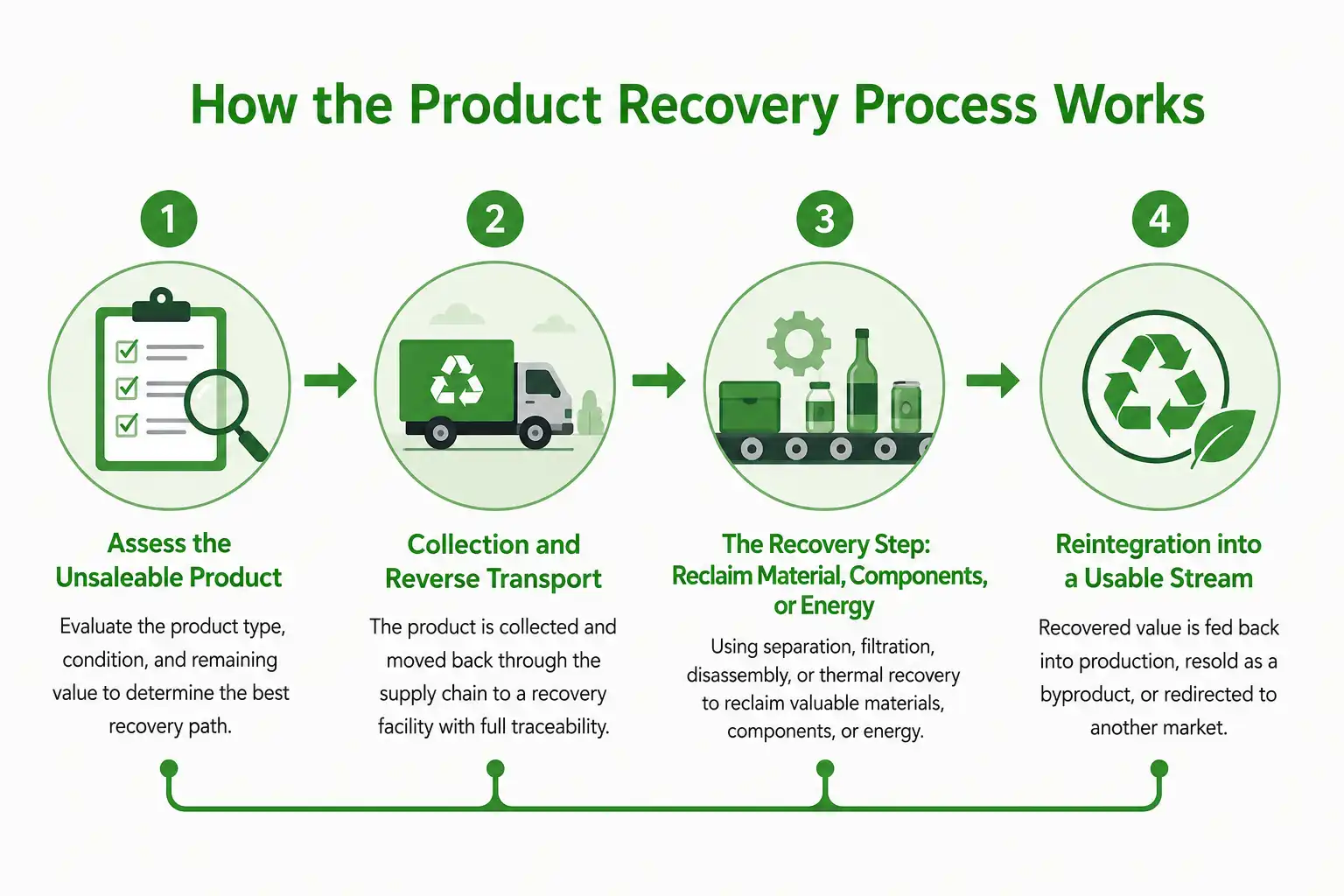
Stage 1: Assess the Unsaleable Product
Before anything moves, the flagged batch gets evaluated against the same categories lean manufacturing already tracks:
- Is it a defect, expired stock, damaged packaging, or excess inventory?
- Does it still contain material, components, or energy worth reclaiming?
This assessment decides whether the item enters a recovery stream or heads straight to disposal.
Stage 2: Collection and Reverse Transport
Once flagged for recovery, product moves backward through the supply chain toward a facility equipped to process it, under basic chain-of-custody handling to keep the material traceable.
Stage 3: The Recovery Step, Reclaiming Material, Components, or Energy
This is where the actual reclamation happens, through separation, filtration, disassembly, or thermal recovery, depending on the product.
Packaging and containers often carry their own recoverable value alongside the product itself, which is part of why some manufacturers pair recovery efforts with beverage container destruction when liquid and packaging need to be separated and handled through different downstream paths.
Stage 4: Reintegration into a Usable Stream
Whatever gets reclaimed re-enters a usable stream, resold as a byproduct, fed back into production, or redirected to an entirely different market. This step closes the loop and sets up the ROI and sustainability conversation that follows.
Types of Product Recovery Equipment in Manufacturing
Common product recovery equipment for reducing waste and improving yield spans a range of systems, and the right combination depends heavily on the material being reclaimed. The major categories include:
- Depackaging and separation systems, which strip product from its packaging so each stream can be processed on its own
- Liquid-solid separation equipment, used to split solids from liquids in slurries, sludges, or other process byproducts
- Filtration and centrifugation systems, which remove contaminants or separate components by density to recover a cleaner usable material
- Crushing or shredding equipment, which breaks down solid product or packaging into a form suitable for further processing
- Distillation and alcohol recovery systems, common in beverage and spirits production for reclaiming usable alcohol content
- Anaerobic digestion and energy recovery systems, which convert organic material into biogas or other usable energy instead of sending it to landfill
- Baling and packaging recovery equipment, used to consolidate and prepare packaging materials like cardboard, film, or containers for their next usable stream
Note: Most manufacturers work with a specialized equipment provider to determine which combination fits their line, since no single system handles every material or waste stream.
Reverse Logistics and Product Recovery
Reverse logistics product recovery describes the backward flow of returned, excess, or unsaleable product moving through the supply chain toward a recovery destination, the mirror image of the forward flow of goods to customers. Where forward logistics is built around speed to shelf, reverse logistics is built around sorting, evaluating, and routing product to whichever downstream path, recovery, resale, or disposal, recovers the most value.
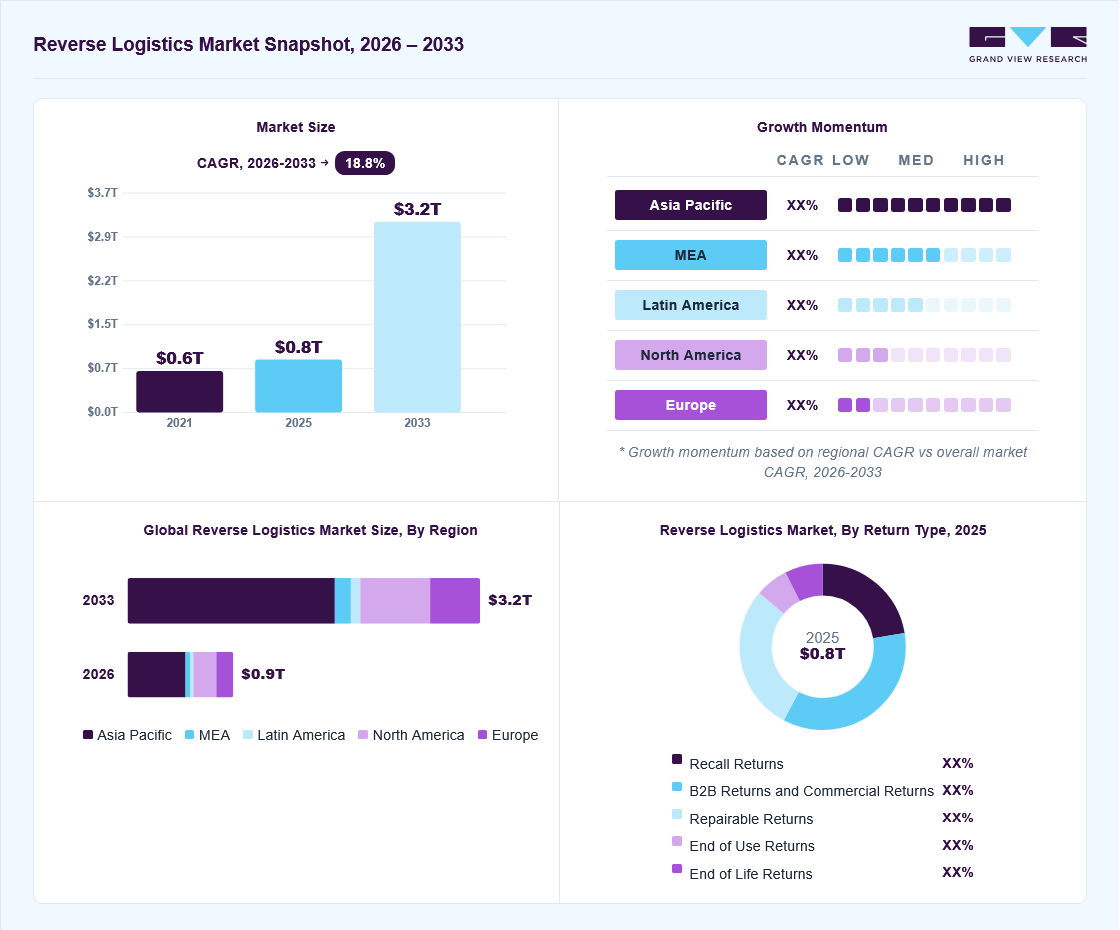
This is a substantial and growing market in its own right. The global reverse logistics market was estimated at over $823 billion in 2024 and is projected to grow at a compound annual rate of 17.4% through 2033, driven largely by rising return volumes and tightening sustainability expectations across supply chains.
Why Product Recovery Pays: ROI and Value Recovery
The business case for recovery is straightforward. It converts what would otherwise be a write-off into reclaimed value, reduces the cost and liability tied to disposal, and can offset the capital cost of a recovery system over time as reclaimed material or energy flows back into usable channels.
The benefits of product recovery systems extend beyond the balance sheet too. Fewer loads sent to landfill means less exposure to rising disposal costs and stricter waste regulations, and a documented recovery process gives compliance teams a clearer paper trail to point to.
On the question of product recovery system return on investment, broader research on waste reduction backs up the math. Research on food-loss reduction consistently points to meaningful operating savings from waste prevention and recovery initiatives.
That said, the actual return on any specific product recovery program hinges on several variables working together: the value of the reclaimed material, contamination levels, transportation distance, processing fees, recovery yield, avoided disposal costs, and the strength of available downstream markets.
At a basic level, the estimated value of a recovery effort can be framed as:
Recovered material value + avoided disposal costs − transportation and processing costs = estimated recovery value
This framework offers a solid starting point for evaluating a program’s potential, though actual figures will vary significantly based on the specifics of your project.
Sustainability and the Circular Economy
Recovery diverts material away from landfill and reduces how much virgin raw material a manufacturer needs to pull from the ground or the field. That is the practical definition of a circular system: material stays in use rather than becoming waste.
Circular Economy Product Recovery
Circular economy product recovery treats packaging the same way it treats product. When sustainable beverage packaging materials are reclaimed and reintroduced into new packaging or other manufacturing streams, they never become waste. They become an input again.
Product Recovery Examples in Food and Beverage Manufacturing
Food and beverage manufacturing generates some of the clearest product recovery examples in industry, largely because the sector produces unsellable product at real scale.
The food and beverage manufacturing and processing sector generated roughly 40 million tons of wasted food in 2019 alone, and manufacturers account for close to 19% of the surplus food generated across the entire U.S. food system, valued at nearly $42 billion.
Expired stock, off-spec batches, damaged packaging, recalled product, and distributor returns all represent recoverable volume rather than automatic loss, which is why evaluating reducing food waste in manufacturing helps you build recovery into your strategy instead of treating disposal as the default.
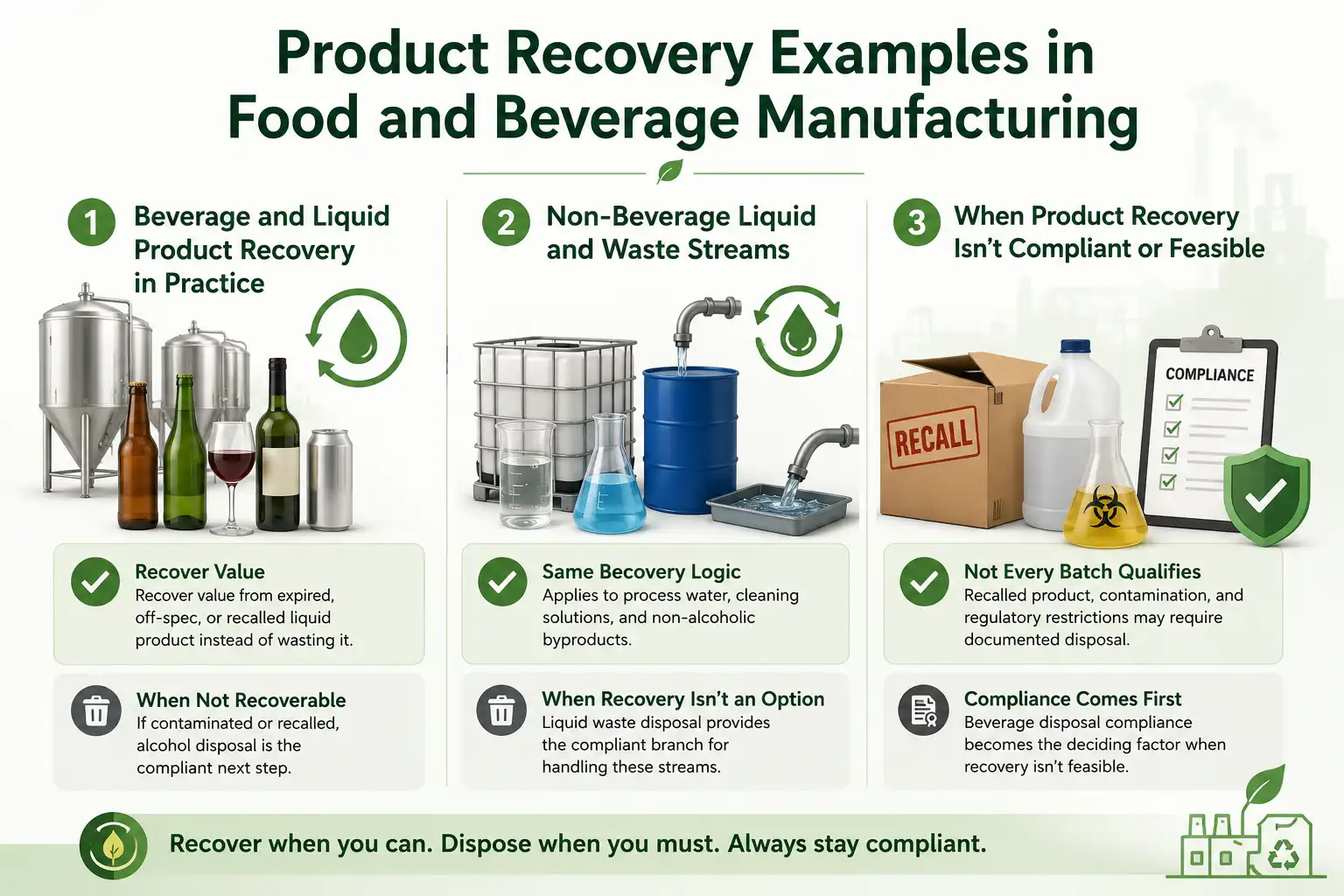
1. Beverage and Liquid Product Recovery in Practice
Breweries, wineries, and beverage manufacturers regularly recover value from expired, off-spec, or recalled liquid product rather than routing it straight to waste. When the beverage genuinely cannot be recovered, due to contamination or a recall, alcohol disposal becomes the compliant next step for that inventory.
2. Non-Beverage Liquid and Waste Streams
The same logic extends past packaged beverages into other liquid streams on a food manufacturing floor, including process water, cleaning solutions, and non-alcoholic byproducts. Where recovery isn’t an option, liquid waste disposal provides the branch for handling them compliantly.
3. When Product Recovery Isn’t Compliant or Feasible
Not every unsaleable batch qualifies for recovery. Recalled product, contamination, and regulatory restrictions sometimes mean documented disposal is the only compliant path, regardless of whether material could technically be reclaimed. That is where beverage disposal compliance becomes the deciding factor.
How Skip Shapiro Enterprises Supports Manufacturers Beyond Recovery
Recovery is not always the end of the story. For product that genuinely cannot be reclaimed, whether due to contamination, recall status, or regulatory restriction, compliant destruction and disposal becomes the responsible path forward.
Skip Shapiro Enterprises provides certified beverage destruction and liquid-waste destruction, recycling, and disposal services nationwide for manufacturers, distributors, and retailers managing expired, damaged, recalled, or otherwise unsaleable inventory.
If your team is sitting on unsaleable beverage or liquid product and isn’t sure whether it can be recovered or needs documented disposal, contact us and our team can help evaluate the right path.
FAQ
1. What is the difference between product recovery and recycling?
Recycling breaks material down into raw inputs for reuse. Product recovery aims higher, reclaiming the highest-value use of the product, its components, or its packaging before recycling or disposal is needed. Note that product recovery is unrelated to “profit recovery,” a separate financial practice involving overpayment-recovery audits.
2. What is reverse logistics in product recovery?
Reverse logistics is the backward movement of returned, excess, or unsaleable product through the supply chain toward a recovery, resale, or disposal destination, the reverse of how goods normally flow to customers.
3. What is the ROI of a product recovery system?
Returns vary by material and process, but recovery generally converts a write-off into reclaimed value while reducing disposal costs, often recouping the investment in assessment and processing infrastructure within the value of material reclaimed.
4. What are product recovery systems in manufacturing?
Product recovery systems are the equipment and processes, including separation, filtration, and thermal recovery systems, manufacturers use to reclaim usable material, components, or energy from unsellable product.
5. How much can product recovery systems save in food manufacturing?
Savings depend on product type and volume, but with manufacturers generating close to $42 billion in surplus food value annually, even modest recovery rates translate into meaningful savings for individual facilities.
6. What are examples of product recovery in food and beverage manufacturing?
Common examples include reclaiming value from expired stock, off-spec batches, damaged packaging, recalled product, and distributor returns across breweries, wineries, bottlers, and food processors.
our expert

Peter W. Klaich Director, Agriculture/Animal Health
Peter Klaich is a leading expert within the agricultural recycling and animal health market arena, known for leading National Sales at Skip Shapiro Enterprises since June 2016. He focuses on advancing sustainable recycling solutions and waste management practices across the agricultural industry.