Call or Text Now
Sustainability is taking center stage in the beer brewing industry, with many recognizing its critical role in preserving our environment. Choosing the right beer keg is a significant decision that directly influences a brewery’s ecological footprint. Traditional methods of beer packaging and distribution often overlook the long-term environmental impacts. However, a shift in mindset is occurring, as more breweries are now seeking sustainable alternatives.
By considering the environmental implications of different types of beer kegs, breweries can contribute to a healthier planet while still delivering quality beer to their consumers.
This guide covers the three main keg material types, their disposal and recyclability profiles. For the full picture on managing brewery waste streams, see our brewery waste disposal and management guide.
Key Takeaways
- Stainless steel kegs, known for their durability and recyclability, significantly reduce waste and energy consumption over their lifecycle compared to less durable alternatives, making them a sustainable choice for breweries committed to environmental stewardship.
- Implementing a keg return and refill program can dramatically cut down on waste and carbon footprint, as reusing kegs eliminates the need for constant production and disposal of single-use containers, thereby aligning brewery operations with sustainable practices.
- Collaboration between breweries, keg suppliers, and recycling programs is essential for fostering a circular economy in the brewing industry, where kegs are continuously reused, repurposed, or recycled, minimizing environmental impact and promoting sustainable resource utilization.
Understanding Different Beer Keg Types
First, we need to answer the question, “What are beer kegs made of?” This is because various aspects such as the material, style, and lock type play an important role in how long a keg lasts and what sustainability implications they may have.
1. Stainless Steel Kegs
Stainless steel kegs are the industry standard for commercial brewing. Their disposal and end-of-life profile is the most straightforward: stainless steel is fully recyclable, and kegs that are no longer serviceable can be processed through standard metal recycling channels. This makes stainless steel the most sustainable long-term keg material from a disposal standpoint.
- Use Frequency: Widely used across the industry due to their durability.
- Sustainability: Highly sustainable due to their reusability and recyclability.
- Durability: Extremely durable, resistant to corrosion and damage.
- Maintenance: Requires regular cleaning but is straightforward to maintain.
- Lifespan: Can last for several decades if properly maintained.
- Beer Freshness: Preserves beer freshness for extended periods.
Pros:
- Durable
- Reusable
- Recyclable
- Maintains beer quality
Cons:
- Heavier than other types of kegs
- Can be more expensive initially
2. Plastic Kegs
Plastic kegs are lighter and less expensive, making them appealing for smaller breweries or short-run distribution. However, their end-of-life disposal profile is more complicated. Plastic keg recycling is inconsistent across regions, and many facilities do not accept food-grade plastic kegs. When plastic kegs reach end of life — or when they contain expired product that needs to be decanted — breweries may find fewer disposal options available than with stainless steel.
- Use Frequency: Gaining popularity, especially for smaller breweries or specific markets.
- Sustainability: Less sustainable due to recycling challenges.
- Durability: Less durable than stainless steel, prone to damage.
- Maintenance: Easy to clean but may have a shorter maintenance lifespan.
- Lifespan: Generally shorter than stainless steel kegs.
- Beer Freshness: Comparable to stainless steel, though depends on the keg’s condition.
Pros:
- Lightweight
- Easy to handle
- Cost-effective for short-term use
Cons:
- Less durable,
- Recycling issues
- May have a shorter lifespan
3. Wooden Kegs
Wooden kegs carry a historical charm and have a unique place in the brewing world, particularly in aging select beers. These kegs are used primarily for cask ales and specialty aging — they are not part of mainstream commercial keg disposal workflows. Their biodegradability is a genuine end-of-life advantage, but they are rarely part of bulk expired beer disposal scenarios.
- Use Frequency: Less common today but used for specific beer types like cask ales.
- Sustainability: Biodegradable and often sourced from sustainable forestry.
- Durability: Less durable than metal alternatives, susceptible to damage.
- Maintenance: Requires careful maintenance to prevent contamination.
- Lifespan: Shorter than stainless steel, depends on care and maintenance.
- Beer Freshness: Can impact the beer’s flavor, adding unique characteristics.
Pros:
- Adds unique flavors
- Biodegradable
Cons:
- Requires careful maintenance
- Shorter lifespan
- Less common.
| Keg Type | Durability | Maintenance Needs | Typical Lifespan |
|---|---|---|---|
| Stainless Steel | Extremely high; resistant to corrosion and damage; withstands high pressure and harsh conditions | Regular cleaning required with standard industry cleansers; needs periodic inspection for any signs of wear and tear | Up to 30 years or even longer, depending on care and maintenance |
| Plastic | Moderate; more prone to damage and wear compared to stainless steel; sensitive to UV light and extreme temperatures | Easy to clean but may require more frequent replacements; visual inspection needed to detect any cracks or deformities | Typically, 5–10 years, depending on usage and care |
| Wooden | Lower; susceptible to damage from external elements and requires controlled storage conditions | Requires regular and meticulous cleaning to prevent contamination; needs to be kept in a controlled environment to prevent drying out or becoming waterlogged | Typically, 5–10 years, can be longer if properly maintained |
Keg Types: Styles and Sizes
The types of kegs used in commercial brewing vary significantly in size, style, and material – let’s take a closer look:
| Keg Type | Style | Capacity | Material Options | Reusability | Notable Features |
|---|---|---|---|---|---|
| Cornelius Keg | Soda keg style | 5 gallons (18.9 L) | Stainless steel | Reusable | Popular for homebrewing, easy to clean and fill |
| Mini Keg | Small, portable | 1.32 gallons (5 L) | Steel, aluminium | Limited reuse | Compact size, perfect for small gatherings |
| Beer Ball | Spherical | 5.23 gallons (19.8 L) | Plastic | Single use | Lightweight, easy to transport |
| One-Way Kegs | Various (like standard kegs) | Varies | Plastic | Single use | Lightweight, recyclable, no return logistics needed |
| Half Barrel Keg | Standard keg | 15.5 gallons (58.7 L) | Stainless steel | Reusable | Commonly used in commercial brewing |
| Quarter Barrel Keg (Pony Keg) | Short and stout | 7.75 gallons (29.3 L) | Stainless steel | Reusable | Smaller version of the half barrel, easier to handle |
| Slim Quarter Keg | Tall and slim | 7.75 gallons (29.3 L) | Stainless steel | Reusable | Space-saving design, fits in smaller spaces |
| Sixth Barrel | Like slim quarter | 5.16 gallons (19.5 L) | Stainless steel | Reusable | Smaller volume, growing in popularity |
| Eighth Barrel | Smaller version of sixth barrel | 3.875 gallons (14.7 L) | Stainless steel | Reusable | Ideal for small batch brewing |
Note: Keg size has direct implications for decanting logistics. Half-barrel kegs containing expired beer represent a significant liquid volume per unit — and when handling dozens or hundreds of kegs at once, the total volume quickly reaches levels that require professional disposal support rather than informal drain disposal.
Keg Disposal and Decanting
Keg material matters at end of life — but so does the beer inside the keg. When a brewery or distributor is dealing with expired, recalled, or off-spec keg beer, two separate issues need to be resolved:
- What to do with the liquid contents (the beer)
- What to do with the keg itself
1. Handling the Liquid: Expired Keg Beer Disposal
When keg beer has expired, been recalled, or is otherwise unsellable, it cannot simply be poured down the drain in commercial quantities. High Biochemical Oxygen Demand (BOD) levels in beer mean that large-volume drain disposal can violate local discharge permits and trigger surcharges or regulatory action from municipal wastewater authorities.
The appropriate disposal pathway depends on volume:
| Volume | Likely Appropriate Approach |
|---|---|
| A few kegs (small retail or tap room) | Controlled drain disposal may be acceptable — check local discharge permits |
| Dozens of kegs (distributor or mid-size brewery) | Professional liquid waste removal recommended |
| Hundreds of kegs (large-scale recall or spoilage event) | Documented beverage destruction required; retain a certified disposal partner |
For the compliance and documentation requirements around beverage destruction specifically, Shapiro’s beverage destruction services are built for exactly this type of event.
2. Keg Decanting: What It Involves
Before a keg can be returned to a supplier, recycled, or scrapped, its contents must typically be removed — a process known as decanting. Decanting keg beer safely requires:
- Using compressed air rather than CO2 where possible to push product out, reducing gas-related risks
- Ensuring adequate ventilation when CO2 is in use
- Using appropriate PPE — eye and hand protection at minimum
- Larger drain hoses to reduce drain times and minimize accident risk during high-volume decanting
- Staying within working pressure limits as exceeding a keg’s rated working pressure creates safety hazards
For breweries managing occasional end-of-line kegs, in-house decanting with proper protocols is feasible. For recall events or large spoilage scenarios involving significant volumes across multiple SKUs, professional keg decanting and liquid disposal services eliminate safety risk, compliance exposure, and operational disruption.
3. Handling the Keg Itself After Decanting
Once emptied, keg disposal or recovery depends on the material:
- Stainless steel kegs: Return to supplier if in serviceable condition; recycle through metal recycling channels if beyond use
- Plastic kegs (one-way or damaged): Check regional plastic recycling acceptance; some must go to general waste
- Wooden kegs: Compost or repurpose; rarely applicable in large-volume disposal events
Keg Recyclability and Environmental Impact
Type of keg material affects more than just performance during service — it shapes what your end-of-life options look like and how much disposal will cost you. Here’s how stainless steel, plastic, and wooden kegs compare across the factors that matter most when product reaches end of life.
1. Carbon Footprint, Durability and Lifespan
Stainless steel kegs require significant energy to produce but offset this through decades of reuse. Plastic kegs have a lower production footprint but shorter lifespan and recycling challenges. Wooden kegs are biodegradable but not suited to high-volume commercial distribution.
| Keg Type | Durability | Typical Lifespan |
|---|---|---|
| Stainless Steel | Extremely high | Up to 30 years |
| Plastic | Moderate | 5–10 years |
| Wooden | Low | 5–10 years |
2. Reusability: Embracing Return and Refill Programs
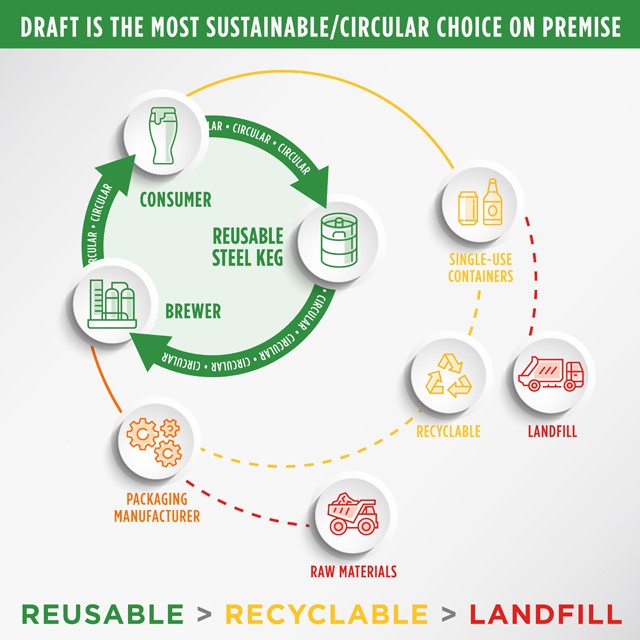
Reusability is a cornerstone of sustainable practices, and keg return and refill programs play a crucial role in this. Breweries that implement and promote these programs encourage a circular economy where kegs are continuously reused, minimizing waste and reducing the need for new kegs. This practice is essential in driving the industry towards more sustainable operations.
Choosing the Right Keg for Your Brewery
The right type of keg isn’t just a matter of sustainability; it’s also a strategic business decision that influences operations, branding, and bottom lines. Here’s a breakdown of the critical aspects’ breweries must weigh:
1. Size and Volume Considerations
Overall, smaller kegs may be apt for limited edition brews or smaller-scale distribution, ensuring less product waste and better turnover. Conversely, larger kegs could be more efficient for breweries with higher output or well-established distribution channels, offering economies of scale. Each brewery must assess their volume needs carefully to optimize supply and minimize surplus.
2. Transportation and Distribution
The type of keg a brewery uses can significantly sway transportation emissions. However, the bigger picture includes the distance of distribution channels and the keg’s return journey for refilling—factors that could nullify the benefits of lighter kegs if logistics aren’t managed with an eye for efficiency.
3. Cost Analysis
While initial costs are a tangible factor in decision-making, breweries must also consider the long-term sustainability benefits of their keg choices. Stainless steel kegs, though costlier upfront, could prove more economical over years of use, thanks to their durability and the minimal need for replacement. Plastic kegs may offer a lower initial investment but could incur higher costs in the long run if they require more frequent replacement due to lower durability.
4. Brand Image
Opting for more sustainable types of beer kegs can bolster a brewery’s image as an environmentally conscious brand. It’s crucial for breweries to align their keg selections with their sustainability goals to maintain authenticity in their brand image. This alignment not only attracts consumers who value eco-friendly practices but also instills a sense of purpose and responsibility within the brand’s ethos.
Best Practices for Sustainable Keg Management
1. Maintenance Tips for Keg Longevity:
- Proactive cleaning using eco-friendly cleaners after each use
- Regular inspection to catch wear, corrosion, or seal failure early
- Proper storage in controlled environments to prevent premature aging
- Careful handling to avoid dents or damage that compromise pressure integrity
- Timely repairs to extend functional life and defer disposal events
Good maintenance directly reduces the frequency of unplanned keg disposal events — and the cost and complexity that comes with them.
2. Keg Tracking and Inventory Controls
One of the most practical steps breweries can take to reduce the volume of expired keg beer they need to dispose of is implementing reliable keg tracking. Kegs that go missing in distribution — or that sit with a retailer or distributor past their product’s expiry — become disposal problems. A well-managed return program with keg tracking reduces the volume of expired product that accumulates before it can be addressed.
3. Engagement in Recycling Programs:
By engaging with keg and beer recycling programs, breweries can ensure their containers live on, even after reaching the end of their beer-holding days. This is where cooperation with recycling initiatives can be a huge win-win.
Strategic Collaborations:
It’s important to note that, when discussing sustainable practices, alcohol disposal is a key aspect. Breweries must have proper protocols in place for disposing of alcohol that can’t be sold, ensuring that this process is done responsibly and in an environmentally friendly manner.
Aligning with organizations like Shapiro that specialize in organic waste disposal and recycling, including beverage destruction services for the alcoholic beverage industry,, can provide breweries with the expertise to optimize their sustainability efforts. Through collaboration, breweries can create a closed-loop system that reflects their commitment to the environment while maintaining the integrity of their product. the integrity of their product. the integrity of their product.
FAQ
1. What is a keg coupler?
A keg coupler is a device that connects the gas and beer lines to a keg, allowing CO2 in and beer out. Each coupler is designed to fit a specific valve type — matching the correct coupler to the keg is essential for a proper seal.
2. Do all kegs use the same taps?
No, all kegs do not use the same taps. There are different types of keg couplers (taps) required for different keg styles, which correspond to the variety of valve designs used by keg manufacturers. It’s important to match the correct coupler to the keg to create a proper seal and dispense the beer effectively.
3. How many beers in a keg?
The number of beers in a keg varies depending on the size of the keg and the size of the serving. Here’s a quick breakdown using U.S. standard 16oz pints 12oz servings: The number of beers in a keg varies depending on the size of the keg and the size of the serving. Here’s a quick breakdown using U.S. standard 16oz pints 12oz servings: The number of beers in a keg varies depending on the size of the keg and the size of the serving. Here’s a quick breakdown using U.S. standard 16oz pints 12oz servings:
| Keg Size | Volume (gallons) | Pints (16 oz) | 12 oz Beers |
| Full Keg (Half-Barrel) | 15.5 | 124 | 165 |
| Pony Keg (Quarter-Barrel) | 7.75 | 62 | 82 |
| Sixth Barrel (Sixtel) | 5.16 | 41 | 55 |
| Cornelius Keg (Corny) | 5.0 | 40 | 53 |
4. What are the different types of kegs?
The main types of kegs are stainless steel, plastic, and wooden. Within those materials, kegs also vary by size and style, ranging from the standard half-barrel (15.5 gallons) down to mini kegs (5 liters) and Cornelius kegs used for homebrewing.
5. What are little kegs called?
Small kegs go by a few names depending on their size.
A quarter-barrel keg (7.75 gallons) is commonly called a pony keg, while a sixth-barrel (5.16 gallons) is often referred to as a sixtel.
The smallest commercially available option is the mini keg, which holds just 5 liters (about 1.32 gallons) and is designed for home use or small gatherings.
Cornelius kegs — holding 5 gallons — are another compact option popular among homebrewers and craft operations.
6. Are kegs better than cans?
It depends on the context.
Kegs are more efficient for high-volume serving environments like bars and restaurants — they produce less packaging waste per pint and maintain beer freshness well when properly pressurized.
Cans are better suited for retail distribution, individual serving, and portability, and they offer stronger UV protection than bottles.
7. What kind of beers come in kegs?
Almost every commercially produced beer style is available in kegs — from lagers and ales to IPAs, stouts, and sours.
Half-barrel kegs are the standard format for most commercial distribution, while craft breweries frequently use sixth-barrel and quarter-barrel kegs for smaller batch or specialty releases.
Cask ales are one of the few styles still closely associated with wooden kegs, where the vessel itself contributes to the conditioning process. If a beer is brewed at commercial scale and distributed to bars or restaurants, it almost certainly comes in a keg format.
our expert

Peter W. Klaich Director, Agriculture/Animal Health
Peter Klaich is a leading expert within the agricultural recycling and animal health market arena, known for leading National Sales at Skip Shapiro Enterprises since June 2016. He focuses on advancing sustainable recycling solutions and waste management practices across the agricultural industry.