Call or Text Now

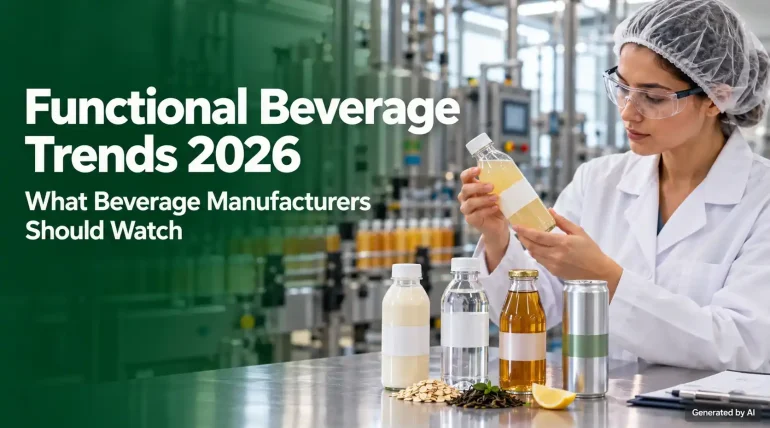
Functional beverage trends move fast, and it isn’t always easy to tell which ones deserve a place in your next formula.
Functional drinks are beverages formulated with ingredients meant to offer specific benefits beyond ordinary refreshment, such as enhanced hydration, protein intake, energy, focus, or digestive support.
Each new trend also raises practical questions about what can go into the drink and what you can say about it on the label.
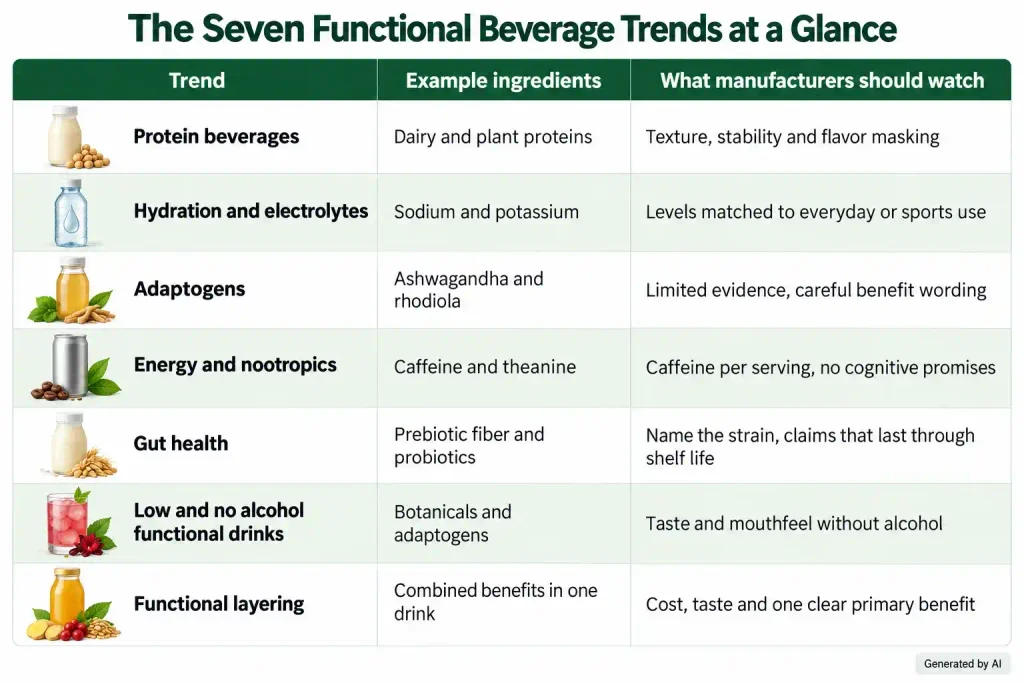
Our guide to functional beverage trends in 2026 helps you sort through seven areas, namely protein, hydration, adaptogens, energy and nootropics, gut health, low- and no-alcohol drinks and functional layering, and it flags what to watch in each one so you can decide where to focus.
The Seven Functional Beverage Trends at a Glance
What Counts as a Functional Beverage?
In plain terms, it’s a drink built around functional ingredients that are meant to do a little more than quench thirst. Those ingredients usually aim to provide benefits such as better hydration, protein, energy, calm or digestion. A seltzer with added electrolytes and a protein shake in a bottle can both sit under the functional drinks umbrella, even though they look nothing alike on the shelf.
There’s one decision you’ll want to make early, and it’s whether your product will be sold as a conventional beverage or as a liquid dietary supplement. The FDA guidance on liquid dietary supplements and beverages lays out the factors that separate the two, and the answer can change which ingredients and claims are allowed.
Note: This is not legal advice, but it generally makes sense to confirm the category before the formula is final.
Functional Beverage Trends for 2026
Of all the top beverage trends circulating this year, these seven are the ones most worth following if you’re developing or updating a product.
Protein Beverages Move Beyond the Gym
Protein used to be a gym bag topic. The 2025 IFIC Food & Health Survey found that 70% of Americans try to consume protein, up from 62% in 2021, and 38% name “good source of protein” as the top sign of a healthy food. Those are food-wide figures rather than beverage sales, but they help explain why protein beverages are being taken well past sports nutrition and into everyday ready-to-drink formats.
When developing a new formula, keep in mind that texture and stability are the usual hurdles, and flavor masking can add another, so it pays to test early.
Hydration and Electrolytes as an Everyday Category
Hydration once meant a sports bottle at the finish line. Now more brands position electrolyte drinks for a quiet afternoon at the desk as well as for training.
The National Restaurant Association’s 2026 forecast places personalized hydration among its five biggest beverage trends for the year, with smart water and electrolyte-infused drinks being quite popular. That makes the everyday hydration beverage sector worth following closely.
If you’re working in this category, match the electrolyte levels to the intended use, since sports recovery and daily sipping call for different profiles. And of course, show sodium and the other electrolytes clearly per serving, because shoppers do compare them on the label.
Adaptogens and Stress Support Drinks
Ashwagandha and rhodiola are turning up in calm and stress support drinks, and adaptogen drinks are still best described as an emerging area.
The evidence is mixed. NCCIH on ashwagandha says some preparations may help with stress and sleep, although the evidence on anxiety is unclear and it may be safe for up to three months. It also notes that long term safety is unknown and that cases of liver injury have been reported.
That said, the practical takeaway is to word benefits carefully, and the conventional food rules we cover in the manufacturers section below still apply.
Energy Drinks and Nootropic Beverages for Focus
Energy drinks are the established caffeine category, but the newer focus is on “clean energy” drinks that pair caffeine with theanine (an amino acid found in tea) for a smoother lift. That pairing is just one example within nootropic beverages, an emerging group of drinks formulated with ingredients marketed for focus and mental clarity.
Demand for energy itself is easier to see. In the same IFIC survey, 40% of Americans named energy or less fatigue as the top benefit they want from their diet, and that has held for four years in a row.
When you label one of these drinks, state caffeine per serving clearly and steer clear of cognitive performance promises.
Gut Health Drinks Built on Prebiotics and Probiotics
Prebiotic sodas and kombucha lead the way here, with probiotic drinks close behind. According to the IFIC survey, 37% of Americans look for digestive or gut health benefits from their diet, which is up 7 points since 2022. Probiotics deserve a careful hand, because different strains do different things and there isn’t one general benefit to promise.
It’s best to name the strain and keep claims within what the product can support through its shelf life, since live cultures can change over time.
Low and No Alcohol Functional Drinks
Gallup’s latest poll shows that 54% of U.S. adults say they drink alcohol, a record low for the second year running and down from 62% in 2023.
So what does that mean for a drink? Brands are exploring alcohol-free drinks and mocktails that add botanicals or adaptogens, aimed at the moments when someone might otherwise pour a glass of wine. This still looks like a developing space, and it’s hard to say yet how large it may become.
For anyone formulating here, taste and mouthfeel need to hold up for the occasion the drink replaces, and adaptogen claims call for the same care we mentioned earlier.
Functional Layering and Multiple Benefits in One Drink
Some brands stack benefits in a single drink, such as hydration plus energy or protein plus gut support. It can look appealing on paper. However, each additional functional ingredient brings more cost along with more taste and stability work, and a crowded label can blur what the drink is really for.
So the real question is whether a second benefit earns its place. The general advice is to lead with one clear primary benefit and let anything else play a supporting role.
What Is Driving Functional Beverage Development
Several forces are pushing the functional beverage industry forward, and you can see them across the functional beverage market and in wider beverage market trends once you look at what shoppers say.
- Wellness. Many shoppers now fold wellness into their daily routines, and EY’s survey found that 52% would pay more for drinks that support their health and wellness goals.
- Moderation. More people are cutting back on sugar and on alcohol, which opens the door to low-sugar formulas and alcohol free options that still feel like a treat.
- Younger shoppers. They tend to be more open to new formats, so newer functional drinks may find their first audience here.
- Clean label. Shoppers increasingly read ingredient lists, so a short and recognizable list can shape how credible a functional drink feels.
- Taste. The IFIC survey shows taste has been the top purchase driver for food and beverages since 2006, so a functional benefit can’t carry a drink that doesn’t taste good.
What Beverage Manufacturers Should Watch
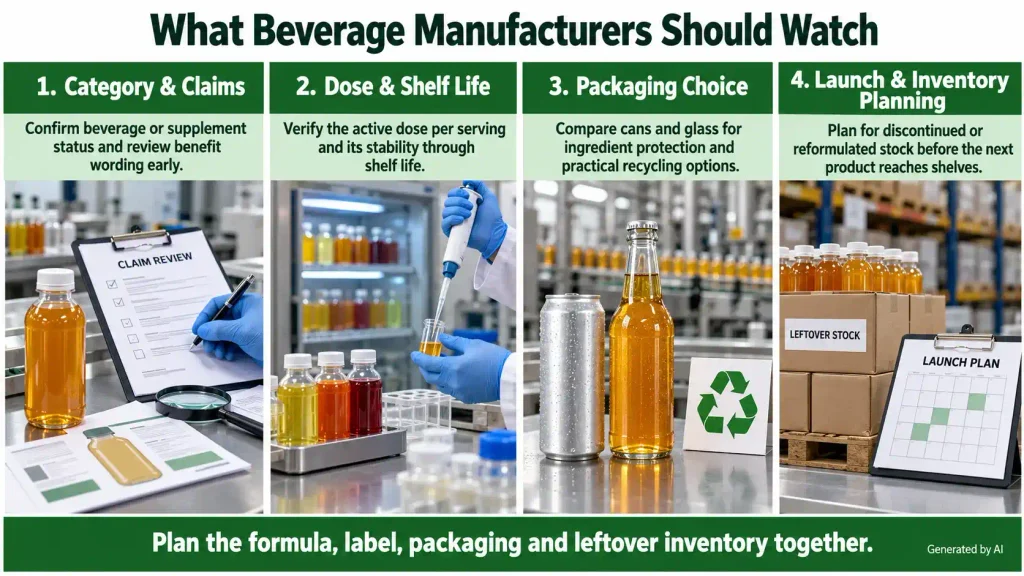
For food and beverage manufacturers, these trends affect both the formula and the label, and they shape how large a portfolio you can realistically carry. Here are four things we’d keep in view.
Benefit Claims and Product Category
The FDA explains that structure and function claims on conventional food products focus on effects derived from nutritive value, and the agency doesn’t approve them in advance. That puts the wording on your shoulders. The category you choose, beverage or liquid supplement, decides which claims apply, so aim to review benefit wording early in development.
Dose and Consistency Through Shelf Life
A benefit claim only holds up if each serving contains enough of the active ingredient, and if that amount stays put through shelf life. That’s why you should set the dose for every active ingredient up front and plan stability testing around it. If the dose can’t support a benefit, it’s better to leave that benefit off the label.
Packaging Format, Cans or Glass
Many functional sodas and energy drinks launch in aluminum cans, while kombucha and some premium functional drinks often use glass. The format can affect how well sensitive ingredients hold up, and it also changes how easily the package is recycled.
Learn more about the process of glass bottle recycling for beverage companies.
Portfolio and Launch Cycles
Fast moving trends tend to bring more launches and more formula changes. Along the way, discontinued or reformulated products leave inventory that needs a plan, and beverage reformulation waste is something many teams only think about once the new formula is already on the shelf.
Building that thinking into your launch calendar early generally makes each change less stressful.
Final Thoughts
Functional beverages tend to reward a clear benefit and good taste, and they ask for careful claims along the way.
When a launch ends or a formula changes, we at Shapiro help manufacturers plan for unsellable product through our beverage destruction services, and our beverage waste management guide is a good place to start.
Frequently Asked Questions
What are functional beverages?
Functional beverages are drinks formulated with ingredients meant to offer specific benefits beyond ordinary refreshment, such as enhanced hydration, protein intake, energy, focus, or digestive support.
What are the biggest functional beverage trends in 2026?
The main functional beverage trends in 2026 are protein beverages, everyday hydration, adaptogens, energy and nootropics, gut health, low- and no-alcohol drinks, and functional layering.
Do adaptogen drinks work?
It depends on the ingredient and the dose. For ashwagandha, NCCIH says some preparations may help with stress and sleep, while evidence on anxiety is unclear and long-term safety is unknown, so benefit wording needs care.
What is functional layering?
Functional layering means combining more than one benefit in a single drink, such as hydration with energy or protein with gut support. Each added ingredient brings cost and formulation work, so one clear primary benefit usually helps.
Can functional beverages make health claims?
Structure and function claims may be possible, but they must fit the product’s category, and for conventional foods they focus on effects derived from nutritive value. FDA doesn’t approve them in advance, so you should review the wording early with your regulatory team.
our expert

Peter W. Klaich Director, Agriculture/Animal Health
Peter Klaich is a leading expert within the agricultural recycling and animal health market arena, known for leading National Sales at Skip Shapiro Enterprises since June 2016. He focuses on advancing sustainable recycling solutions and waste management practices across the agricultural industry.