Call or Text Now
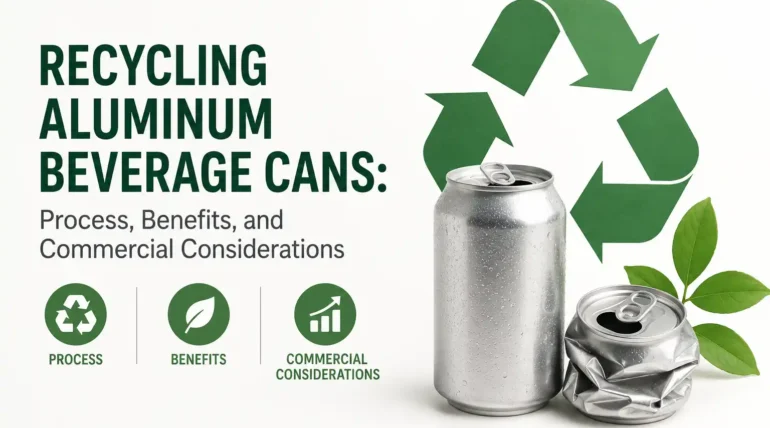
Did you know that producing recycled aluminum only takes around 5% of the energy needed to make new aluminum?
Not only does this reduce carbon emissions, but it also saves businesses money, making it a win-win for the environment as well as your bottom line.
While aluminum beverage cans are one of the most valuable recyclable packaging materials, the recycling process is different for households and beverage companies managing commercial volumes. And while empty cans can usually enter standard recycling streams, full, expired, damaged, or recalled beverages often require controlled beverage destruction and recycling services.
Keep reading to learn about the importance of recycling aluminum beverage cans, the process, and the challenges of large-scale recycling operations.
Key Takeaways
- Aluminum beverage cans are highly recyclable and can be reused repeatedly without losing quality.
- Aluminum beverage can recycling follows several key steps, including collection, sorting, baling, shredding, melting, and manufacturing new products.
- Full, damaged, or recalled beverage containers often require specialized destruction and depackaging processes before recycling.
- Commercial aluminum recovery depends on proper handling, contamination control, documentation, and efficient recycling strategies.
Why Aluminum Beverage Can Recycling Matters
Aluminum is one of the most recyclable materials in the beverage packaging industry. In fact, around 75% of all the aluminum ever produced is still in circulation today, highlighting the material’s long-term value and reusability.
For beverage brands and commercial operations, aluminum can recycling plays an important role in reducing the need for virgin material extraction, lowering energy consumption, and supporting more sustainable production cycles. Compared to producing new aluminum, recycling existing materials requires significantly less energy, making it both cost-effective and environmentally responsible.
Large-scale aluminum recovery also helps beverage companies meet sustainability targets, reduce landfill waste, and manage unsold, expired, damaged, or recalled products responsibly.
How Are Aluminum Beverage Cans Recycled?
|
Step |
What Happens |
Why It Matters |
|
Collection |
Cans are gathered from recycling or commercial recovery streams. |
Keeps material out of landfill and moves it toward recovery. |
|
Sorting |
Non-aluminum materials and contaminants are removed. |
Protects recycling quality and reduces processing issues. |
|
Baling |
Cans are compressed for efficient transport. |
Improves logistics and handling. |
|
Shredding |
Cans are broken into smaller pieces. |
Prepares material for decoating and melting. |
|
Decoating |
Paint and coatings are removed. |
Improves aluminum purity. |
|
Melting |
Aluminum is melted in a furnace. |
Converts scrap into reusable metal. |
|
Casting and rolling |
Metal is formed into ingots or sheets. |
Creates material for new products and potentially new cans. |
|
Manufacturing new products |
Recycled aluminum is used to create new cans or other products. |
Supports a circular supply chain and reduces the need for virgin aluminum. |
The beverage can recycling process involves several stages, from collection and sorting to melting and manufacturing new products.
- Collection: Aluminum cans are collected from businesses, warehouses, distribution centers, or recovery facilities. This process is supported by clear in-house separation protocols, designated recycling containers, and routine pickups to ensure materials are properly recovered instead of sent to landfill.
- Sorting and contamination control: The aluminum cans go through a strict sorting and contamination control process to remove non-aluminum materials, liquids, labels, plastics, and other contaminants. Proper sorting helps maintain recycling quality, improve efficiency, and reduce issues during processing.
- Baling and transport: Once sorted, the cans are compressed into dense bales for easier storage and transportation. Baling improves logistics efficiency by reducing the space required to move large commercial volumes to recycling facilities.
- Shredding: The cans are fed into industrial shredding equipment, where they’re broken into smaller pieces. Shredding increases surface area and prepares the material for the next stages of processing and melting.
- Decoating: During decoating, paints, inks, and protective coatings are removed from the shredded aluminum using high heat or specialized treatment processes. This step improves the purity and quality of the recycled aluminum.
- Melting: The cleaned aluminum is melted in high-temperature furnaces to convert the scrap material into reusable molten metal. Because recycled aluminum requires significantly less energy than producing new aluminum, this step offers major environmental and operational benefits.
- Casting into ingots or slabs: After melting, the aluminum is cast into large ingots or slabs that can be reused in manufacturing. These forms make the material easier to process into new products.
- Rolling into sheet aluminum: The ingots or slabs are rolled into thin aluminum sheets that meet the specifications required for beverage packaging and other commercial applications.
- Manufacturing new cans or other aluminum products: Finally, the recycled aluminum sheets are used to manufacture new beverage cans or other aluminum products, helping support a more circular and sustainable supply chain.
Consumer Can Recycling vs. Commercial Beverage Can Recycling
|
Factor |
Consumer Can Recycling |
Commercial Beverage Can Recycling |
|
Volume |
Small household quantities. |
Pallets, truckloads, mixed loads, and recurring programs. |
|
Product condition |
Usually empty cans. |
Empty, full, expired, damaged, recalled, or unsaleable cans. |
|
Main concern |
Proper rinsing and bin placement. |
Logistics, destruction, recovery, documentation, and brand protection. |
|
Contamination risk |
Food or liquid residue. |
Liquid contents, mixed packaging, leaking cases, and damaged freight. |
|
Documentation |
Usually not required. |
Often required for compliance, audits, chain of custody, and brand protection. |
|
Best solution |
Local recycling program. |
Managed beverage destruction and material recovery partner. |
The difference between aluminum beverage can recycling for consumers and businesses is huge.
One of the biggest differences is volume. While consumer waste is produced in smaller quantities, commercial operations may manage pallets, truckloads, mixed loads, and recurring recovery programs.
Another notable difference is that consumer cans are typically empty. Commercial streams, on the other hand, often include full beverages from expired, damaged, recalled, or unsellable products. This affects the recycling process, as these products must undergo specialized processing to separate the liquid waste from the aluminum.
Commercial recycling also requires more detailed logistics, product destruction, material recovery, chain of custody tracking, and documentation to help ensure compliance, accountability, and operational efficiency.
Let’s see how this may look in the real world:
Consumers: An individual may go to the grocery store, pick up a few cans of their favorite soda, and share it with their family. They then place the empty cans in recycling, where they are collected through curbside pickup or a local community recycling program, depending on where they live.
Businesses: Let’s say a company produces energy drinks and the products are recalled. Rather than simply placing the products in recycling like consumers might, the company must follow a documented disposal and recovery process to prove the products were properly removed from the market. Since the containers still contain liquid, they often require full beverage container destruction before the aluminum can enter the recycling stream.
What Makes Aluminum Beverage Cans Valuable for Recycling?
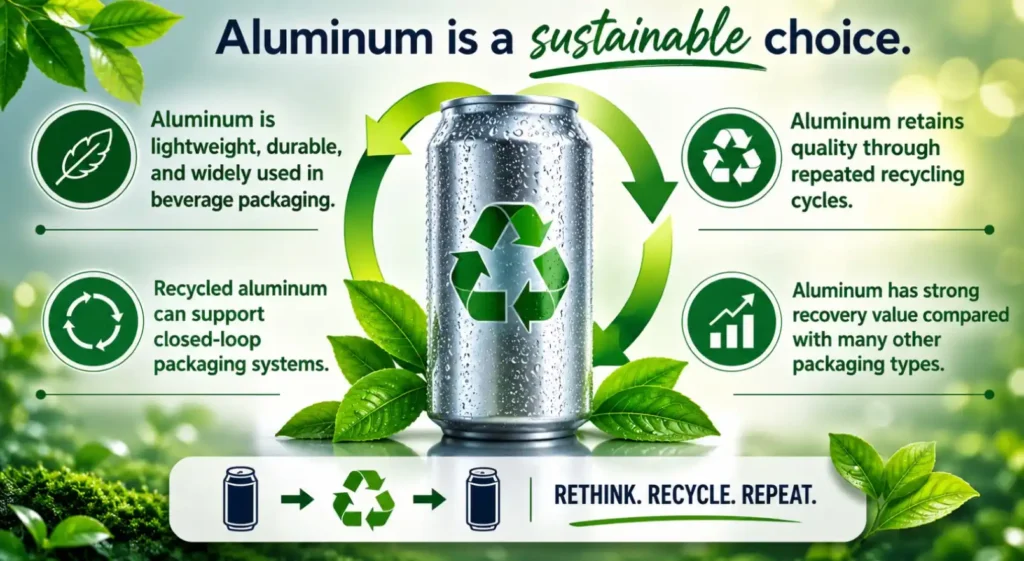
We’ve already discussed why recycling aluminum beverage cans is important, but the following image highlights why it is particularly beneficial for recycling and long-term reuse.
What Happens When Aluminum Beverage Cans Are Full or Unsaleable?
Full or partially full cans cannot be treated the same way as clean, empty post-consumer cans.
Rather than focusing only on the aluminum itself, full beverage waste management must account for every component of the product, including the liquid contents, packaging materials, and disposal requirements.
These products typically undergo a depackaging process to separate the liquid contents from the aluminum containers. From there, the aluminum enters the recycling stream and follows the recovery process discussed above, while the liquid contents must undergo a separate recycling or treatment process depending on the material and regulatory requirements.
For expired, damaged, recalled, or off-spec beverage products, businesses may also require detailed documentation, traceability measures, and chain-of-custody controls to help ensure compliance, accountability, and proper product removal from the market.
Common Challenges in Recycling Aluminum Beverage Cans at Scale
Companies recycling beverage cans at scale may come face to face with several operational challenges. This isn’t meant to discourage recycling efforts but rather help businesses prepare for common obstacles and develop strategies to overcome them.
- Liquid residue and contamination: Liquids can create significant processing challenges. Not only must beverage contents undergo careful separation from the packaging, but full beverage products also carry the risk of spills, leakage, and contamination of surrounding recyclable materials.
- Mixed packaging materials: Between labels, adhesives, plastic carriers, shrink wrap, and mixed-material lids, aluminum beverage packaging is not always composed of pure aluminum alone. These materials require careful separation and additional processing steps to help maintain the quality of recovered aluminum.
- Damaged or crushed cases: Damaged pallets, crushed cans, or compromised packaging can make handling and transportation more difficult. In some cases, crushed products may leak, increase contamination risks, or require additional sorting before entering the recycling stream.
- Full cans and unsellable products: As discussed above, full beverage containers require additional processing steps compared to empty post-consumer cans. However, many companies underestimate how recalled, expired, damaged, or off-spec beverages can change recycling requirements, logistics planning, and destruction procedures.
- Transportation and storage constraints: Recycling beverage products at scale involves more than simply transporting materials to a recovery facility. Companies must consider transportation efficiency, local regulations, temporary storage capacity, and strategies to avoid operational bottlenecks. In situations like product recalls, businesses often need rapid response plans to manage large volumes efficiently.
- Documentation and compliance requirements: Documentation and compliance can become complex, especially when regulations vary depending on the beverage type, location, and disposal method. Businesses may need detailed records, chain-of-custody documentation, and proof of destruction or recovery to maintain beverage disposal compliance.
- Coordinating destruction, depackaging, and material recovery: Managing multiple service providers and recovery processes at once can be challenging. Companies often need coordinated systems that efficiently handle product destruction, liquid separation, aluminum recovery, transportation, and compliance reporting together.
How Beverage Companies Can Improve Aluminum Can Recovery
By now we know that recycling aluminum beverage cans is important for environmental sustainability, sustainable beverage packaging, a company’s bottom line, and long-term resource recovery efforts.
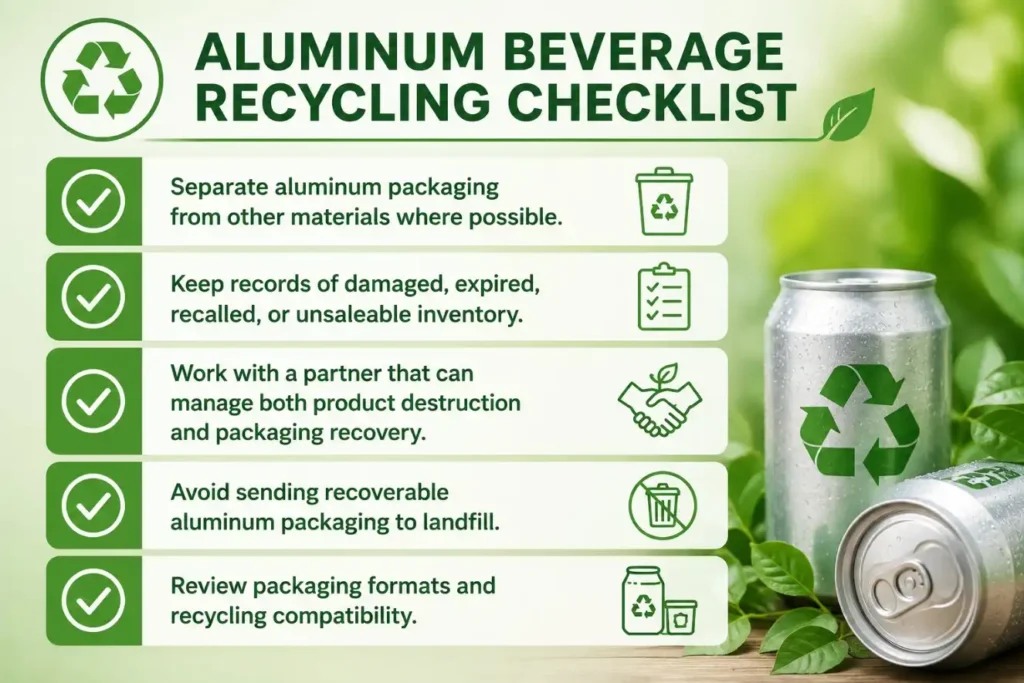
However, effective aluminum recovery requires more than simply placing cans into the recycling stream. Companies need clear processes, proper handling procedures, and recovery strategies that support both operational efficiency and sustainability goals.
Here’s a practical checklist to help improve your recycling strategy:
When to Work With a Beverage Destruction and Recycling Partner
Not sure whether your company should work with a beverage destruction and recycling partner?
There are many reasons businesses seek these partnerships, and every situation comes with its own operational requirements and recovery challenges.
If any of these situations sound familiar, working with a specialized recovery partner may make the process much easier:
- You need help managing expired canned beverages.
- Your company needs a better process for handling damaged aluminum beverage cans.
- Your canned products have been recalled and you need a quick recovery solution.
- You have full pallets of unsellable inventory that you’re unsure how to manage.
- You need assistance handling mixed beverage loads to support proper material recovery.
- Your company has strict documentation and chain-of-custody requirements.
- You need guidance on aluminum packaging recovery after product destruction.
If you can relate, our team at Shapiro can help coordinate secure beverage destruction and aluminum packaging recovery for commercial volumes of expired, damaged, recalled, or unsellable canned beverages.
FAQs about Recycling Aluminum Beverage Cans
1. Can aluminum beverage cans be recycled?
Yes, aluminum beverage cans are highly recyclable and can be recycled repeatedly without losing quality. In fact, a large percentage of aluminum ever produced is still in circulation today because of its strong recovery value and recyclability.
2. How are aluminum beverage cans recycled?
Aluminum beverage cans are typically collected, sorted, baled, shredded, decoated, and melted before being turned into new aluminum products. In commercial recovery operations, full or damaged beverage containers may also require depackaging and liquid separation before the aluminum enters the recycling stream.
3. Is recycling aluminum beverage cans better than making new aluminum?
Yes, recycling aluminum requires significantly less energy than producing new aluminum from raw materials. This helps reduce energy consumption, lower carbon emissions, and support more sustainable manufacturing practices.
4. Can full aluminum beverage cans be recycled?
Yes, full aluminum beverage cans can often be recycled, but they usually require additional processing steps compared to empty cans. The liquid contents must first be separated through depackaging or beverage destruction processes before the aluminum can be recovered.
5. What should beverage companies do with expired canned drinks?
Expired canned beverages should be handled through a controlled recovery and destruction process that separates the liquid contents from the packaging materials. This helps support proper disposal, regulatory compliance, and aluminum recovery whenever possible.
6. What is the difference between empty can recycling and full beverage container destruction?
Used beverage can recycling focuses primarily on recovering clean aluminum materials, while full beverage container destruction involves separating liquids, managing unsellable products, and handling additional compliance requirements. Full containers often require specialized destruction, depackaging, and documentation processes before the aluminum can be recycled.
7. Are aluminum cans recycled into new cans?
Yes, recycled aluminum is commonly used to manufacture new beverage cans and other aluminum products. Because aluminum retains its quality through repeated recycling cycles, it’s well suited for closed-loop recycling systems.
8. How can beverage companies improve aluminum can recovery?
Beverage companies can improve aluminum recovery by separating materials properly, reducing contamination, maintaining clear documentation, and working with experienced recovery partners when handling commercial volumes. Developing clear recycling and product destruction processes can also help improve efficiency and sustainability outcomes.
our expert

Peter W. Klaich Director, Agriculture/Animal Health
Peter Klaich is a leading expert within the agricultural recycling and animal health market arena, known for leading National Sales at Skip Shapiro Enterprises since June 2016. He focuses on advancing sustainable recycling solutions and waste management practices across the agricultural industry.