Call or Text Now
This article was co-authored in collaboration with Bioleader, a provider of compostable food packaging solutions supporting businesses in reducing waste and adopting more eco-friendly practices.
In recent years, sustainability has become a cornerstone of business practices across various industries. The foodservice sector, which traditionally relied heavily on plastic and non-recyclable packaging, is undergoing a major transformation. One of the most significant changes is the growing adoption of compostable food packaging. This shift is not only driven by increasing environmental awareness but also by regulatory pressures, consumer demand for eco-friendly products, and the desire to reduce food waste. By 2025, compostable packaging solutions like bagasse-based containers and compostable plastic cups are poised to play an essential role in the global sustainability movement.
The Rising Demand for Compostable Packaging
As plastic pollution has reached alarming levels, more industries are seeking alternatives. The foodservice industry, known for generating significant waste, is at the forefront of this shift. Compostable food packaging is emerging as the solution to the widespread use of single-use plastics, offering a more sustainable and environmentally friendly option.
Why the Shift is Happening Now
The shift towards compostable food packaging is being driven by several factors:
- Environmental Impact of plastic and bottled waters: Traditional plastic can take hundreds of years to degrade, filling landfills and polluting oceans. Compostable materials, on the other hand, break down naturally within months, leaving behind no harmful residues.
- Government Regulations: Countries and regions around the world are tightening regulations around single-use plastics. Many governments are now enforcing bans on plastic packaging, providing a significant push for businesses to adopt compostable alternatives.
- Consumer Demand: Consumers are becoming increasingly aware of the environmental impact of plastic, prompting a shift in purchasing habits. More customers are demanding sustainable and eco-friendly packaging options, and businesses must respond to this growing demand.
The Role of Compostable Food Containers in Sustainability
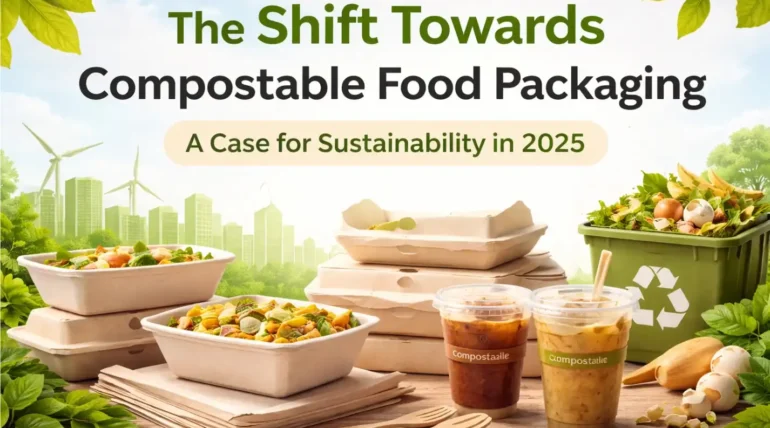
Compostable food containers, such as those made from bagasse (sugarcane pulp) and other plant-based materials, offer a significant reduction in environmental impact. Unlike plastic, which is derived from non-renewable fossil fuels, bagasse-based containers are made from the byproduct of sugarcane production, a renewable resource. These containers not only reduce reliance on plastic but also promote the use of agricultural waste, contributing to a more sustainable foodservice industry.
Practical Benefits of Compostable Packaging
The adoption of compostable food packaging brings numerous advantages for foodservice businesses and the environment. The benefits of switching to compostable packaging extend far beyond environmental impact and can improve operational efficiency and brand reputation.
1. Waste Reduction
One of the most significant benefits of compostable packaging is food waste reduction. When compostable materials are disposed of properly, they break down naturally and contribute to the creation of nutrient-rich compost, rather than contributing to landfill waste. For foodservice businesses, this means a more sustainable waste management system and a cleaner, greener operation.
2. Consumer Appeal and Brand Loyalty
In today’s competitive foodservice industry, consumers are increasingly looking for brands that prioritize sustainability. Offering compostable food containers is an effective way to appeal to eco-conscious customers and build brand loyalty. Businesses that make the switch to compostable packaging demonstrate their commitment to sustainability, attracting customers who are willing to support brands with environmentally friendly practices.
3. Regulatory Compliance
With stricter environmental regulations emerging globally, adopting compostable packaging helps businesses stay ahead of the curve. Many cities and countries have already introduced plastic bans, and more are expected to follow. By switching to bagasse food containers, businesses ensure compliance with current and future regulations, avoiding fines and contributing to the reduction of plastic pollution.
4. Cost-Effectiveness in the Long Run
While the initial investment in compostable food containers may be higher than traditional plastic options, the long-term benefits outweigh the costs. Over time, as the demand for sustainable products increases, economies of scale will drive down the cost of compostable packaging. Additionally, businesses that adopt compostable packaging early can gain a competitive edge, positioning themselves as leaders in sustainability.
Challenges and Solutions for Transitioning to Compostable Packaging
While the benefits of compostable or edible food packaging are clear, businesses face challenges when transitioning from traditional packaging. Understanding these challenges—and finding solutions—is key to making a smooth shift toward sustainable practices.
1. Higher Initial Costs
Compostable packaging materials, particularly those made from plant-based materials like bagasse, can be more expensive than plastic. This can present a barrier for some businesses, especially small operators, who may be concerned about higher upfront costs. However, as demand grows and production processes become more efficient, the price of compostable packaging is expected to decrease.
2. Disposal and Composting Infrastructure
For compostable packaging to be truly effective, it needs to be processed in industrial composting facilities. Without proper disposal infrastructure, compostable materials may end up in landfills, where they can still take longer to break down. To address this challenge, foodservice businesses can collaborate with local waste management providers to ensure that their compostable materials are processed correctly.
3. Consumer Education
Another challenge businesses face is educating consumers about how to properly dispose of compostable packaging. While many consumers understand the environmental benefits of compostable materials, they may not know where or how to dispose of them correctly. Restaurants and foodservice providers can play a key role in educating their customers by providing clear signage and information about how to dispose of compostable packaging responsibly.
Case Studies of Successful Adoption
Several companies have successfully adopted compostable food packaging and seen positive results. For example, many fast-casual chains have switched to using bagasse-based containers and compostable plastic cups for their takeout orders. This not only aligns with their sustainability goals but also enhances their brand reputation among environmentally conscious consumers.
Bioleader has been a pioneer in providing biodegradable food containers, including compostable plastic cups and bagasse-based containers, helping businesses make the transition to sustainable packaging solutions. By offering these products, Bioleader is supporting the global shift towards more sustainable foodservice operations.
The Future of Compostable Packaging
Looking ahead to 2025 and beyond, the adoption of compostable food packaging is expected to accelerate. With global concerns about plastic pollution and the increasing demand for sustainable alternatives, businesses that switch to compostable packaging will be well-positioned to lead in the market.
As food waste technology improves and innovation continues, new compostable materials will likely emerge, making sustainable packaging even more accessible and cost-effective. Additionally, the push for compostable food containers and food waste management will continue to be driven by consumer demand, government regulations, and environmental considerations.
Conclusion: The Road Ahead
In conclusion, the transition to compostable food packaging is an essential step toward a more sustainable future for the foodservice industry. Bioleader’s bagasse food containers and compostable plastic cups are just the beginning of this movement, offering businesses a way to meet consumer demand, comply with regulations, and reduce their environmental impact. As we move towards 2025 and beyond, it’s clear that compostable packaging will continue to play a crucial role in creating a more sustainable world.
Baily Ramsey, an accomplished marketing specialist, brings a unique blend of anthropological insight and marketing finesse to the digital landscape. Specializing in educational content creation, she creates content for various industries, with a particular interest in environmental initiatives.