Call or Text Now
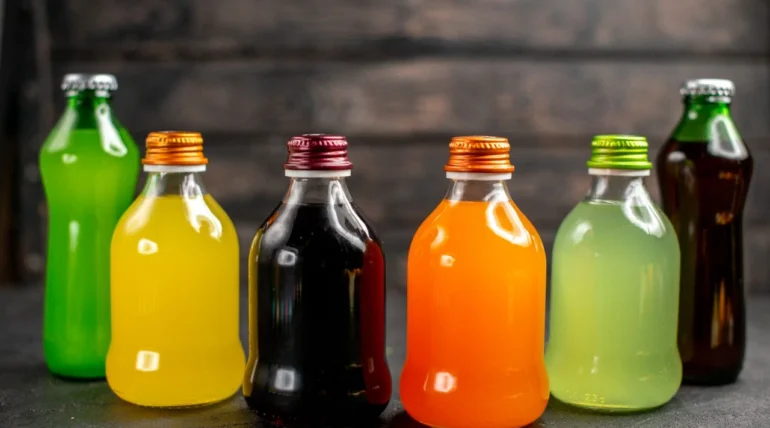
When beverages are expired, recalled, damaged, or no longer marketable, businesses cannot treat them like ordinary waste. This not only applies to how they must be separated from other waste, but also to how they are managed after they leave your facility.
And while some companies may not be directly involved in every step of the process, their products must undergo full beverage container destruction.
Because this process supports compliance, protects brand reputation, and reduces landfill exposure, it’s undeniable that it plays a critical role for businesses across the beverage industry.
For companies managing unsellable inventory, leveraging professional beverage destruction services from Shapiro can help streamline the process while maintaining compliance and brand protection.
To better understand how this process works in practice, we’re providing an in-depth, step-by-step breakdown of product destruction, along with practical tips for each stage.
Key Takeaways
- Full beverage container destruction is a specialized process designed to securely destroy unsellable beverages while separating liquids from packaging for proper recycling or recovery.
- A thorough intake and load assessment ensures materials are accurately identified from the start, helping streamline planning and prevent issues throughout the destruction process.
- Secure pickup and transportation rely on careful coordination and standardized preparation to ensure materials are handled safely, compliantly, and delivered without delays.
- A verified chain of custody ensures full traceability from pickup to destruction, supporting compliance and audit readiness throughout the process.
- Container destruction and liquid separation ensure both the product and its packaging are effectively processed, enabling safe handling and efficient downstream recovery.
What Is Full Beverage Container Destruction?
Full beverage container destruction is the controlled industrial process of safely destroying unsellable beverages. It involves removing full cans, bottles, cartons, pouches, or kegs from circulation, separating liquids from packaging, documenting the destruction, and directing recoverable materials into the appropriate downstream recycling or reuse streams.
It’s important to note that this unique waste stream requires different handling than other processes. Rather than just processing beverage packaging as in empty container recycling, full beverage container destruction involves separating the liquid from the packaging so that both materials can be properly managed.
When compared to general waste hauling, there are also key differences. Secure destruction ensures that products are permanently destroyed under controlled conditions to prevent recovery, misuse, or unauthorized distribution, while general waste hauling simply involves transporting everyday waste for disposal.
For a broader overview of how this process fits into larger waste strategies, you can also explore our beverage waste management guide.
When Do Companies Need Full Beverage Container Destruction?
Companies may need beverage destruction services when beverages can no longer be sold or safely distributed. In these situations, the products must be carefully handled and properly documented to confirm they were destroyed and not reintroduced into the market.
Common situations include:
- Expired inventory
- Beverage recall disposal
- Damaged pallets or leaking loads
- Quality failures or off-spec products
- Labeling or packaging errors
- Seasonal product resets
- Discontinued SKUs
- Distributor returns
- Overproduction
How Full Beverage Container Destruction Works, Step by Step
As promised, we’re breaking down the product destruction process into six detailed steps, along with best practices to support greater operational efficiency.
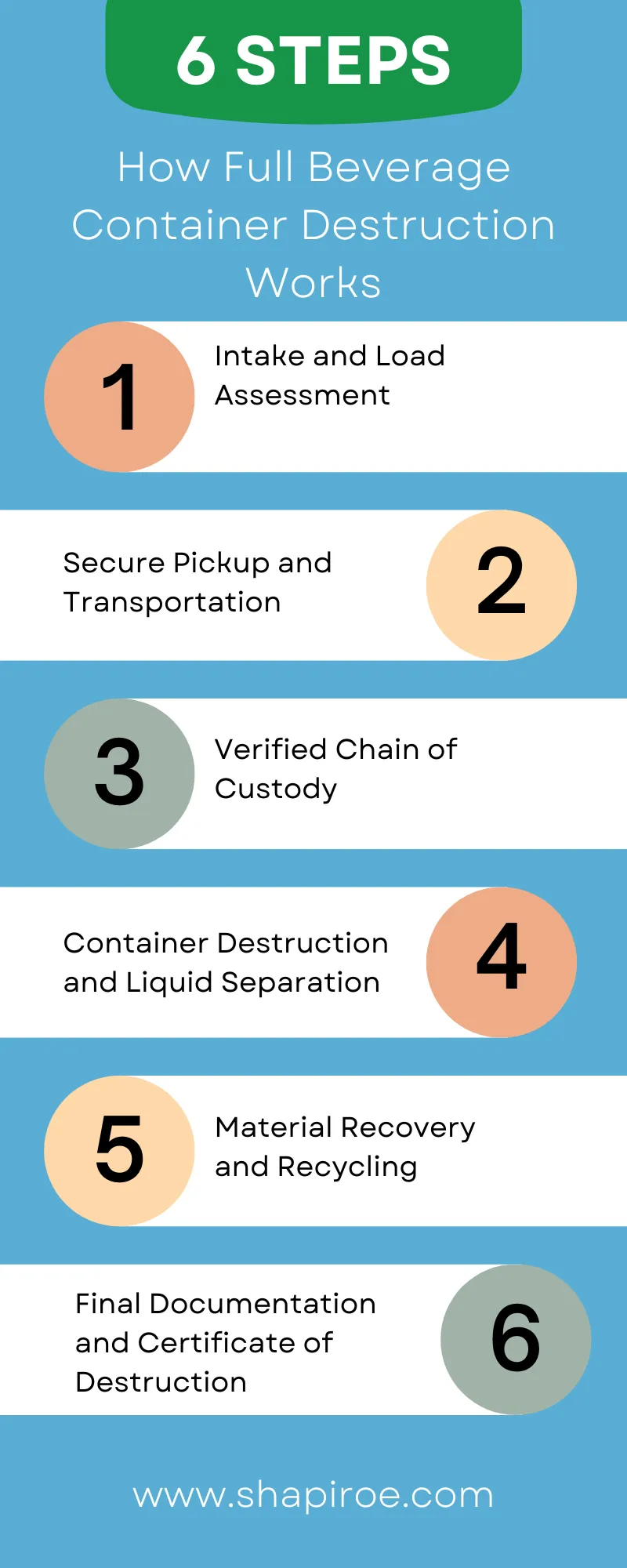
1. Intake and Load Assessment
Before the full beverage waste is transported and destroyed, an evaluation must take place.
This process typically occurs where the waste is stored, not at the destruction facility, allowing key factors to be assessed upfront to guide how the waste will be handled, transported, and destroyed.
These include:
- Product type
- Package type
- Volume
- Contamination or recall status
The waste management team will also evaluate storage conditions and determine how materials are currently organized, whether palletized, loose, or mixed. This step may involve an on-site walkthrough or coordination with facility staff to ensure accurate documentation and visibility into the waste stream.
Since there can be a huge variation in the materials that need to be processed, these details play a critical role in determining how the beverage container destruction process will be handled. For instance, aluminum containers are infinitely recyclable, while contaminated materials or containers with foil linings may require specialized handling or separate processing streams.
After evaluating these factors, the beverage destruction company develops a tailored strategy to determine whether on-site, near-site, or off-site processing is the most appropriate option.
Best practice: Ensure materials are clearly identified and accurately documented during assessment. Early clarity prevents reclassification, delays, and inefficiencies later in the destruction process.
2. Secure Pickup and Transportation
Since full beverages must be handled separately from ordinary waste, they require a specialized transportation strategy. This involves careful logistics planning, taking into account the waste type, volume, packaging format, and any potential contamination or recall risks.
Very careful logistics are required during this stage from both the waste-generating company and the transportation provider. On the company’s side, waste should be stored according to the waste management partner’s guidelines to prevent leaks and ensure materials are properly prepared for pickup at the scheduled time.
On the transportation side, routes should be optimized to minimize handling time, reduce risk exposure, and ensure timely delivery to the designated destruction facility while maintaining secure transport conditions throughout.
For compliant transportation, secure waste haulers must stay up to date with evolving regulations. Since laws vary depending on cities and states, this means complying with local, state, and federal requirements, particularly when materials are transported across city or state lines.
Best practice: Standardize packaging and staging requirements across pickup sites. Consistent preparation reduces handling time and minimizes the risk of spills or damage during loading.
3. Verified Chain of Custody
Maintaining a chain of custody for beverage destruction is essential throughout the entire process. From pickup to final processing, destruction providers track and document each step to ensure unsellable beverages are securely handled and delivered to an authorized destruction facility.
This traceability helps confirm that the materials were not reintroduced into the marketplace. Once processing is complete, companies typically receive a Certificate of Destruction for beverages, which verifies that the products were fully destroyed and handled in compliance with regulatory and brand protection requirements.
As a result, full product destruction:
- Reduces compliance risk and minimizes the potential for legal penalties.
- Supports recall response efforts by ensuring that only safe, high-quality products reach customers.
- Improves operational efficiency by removing the guesswork from full beverage destruction.
Best practice: Standardize your documentation process across all stakeholders to ensure consistency at every transfer point. Clear, uniform records make it easier to validate compliance, resolve discrepancies, and streamline audits.
4. Container Destruction and Liquid Separation
As mentioned, one of the reasons full beverage destruction differs from empty containers is that the liquid must first be separated from the packaging. To do this, destruction facilities use industrial depackaging systems, such as shredders, screw compactors, or other crushing and separation equipment that break open containers and release their contents.
These systems allow the liquid to be safely captured while the packaging materials are separated for further processing. Once extracted, beverage liquids may be directed to approved treatment pathways, such as anaerobic digestion, where microorganisms break down organic material in the absence of oxygen to produce biogas and nutrient-rich digestate.
This step ensures both the product and its packaging are properly destroyed and prepared for the next stage of material recovery.
Best practice: Communicate any known product anomalies, such as damaged packaging, pressurized containers, or atypical formulations, in advance. This allows the destruction facility to adjust processing methods and avoid disruptions during separation.
5. Material Recovery and Recycling
After liquids and packaging are separated, the remaining materials are directed into the appropriate recycling or recovery streams whenever possible. This step helps divert waste from landfills while recovering valuable materials.
Materials typically pass through sorting systems to remove contaminants, separate mixed materials, and ensure they meet recycling specifications. This process may be performed either manually or through automated systems, depending on material type and facility capabilities.
Common recovery pathways include:
- Aluminum containers, which can be melted down and recycled indefinitely.
- PET and other plastics, which are processed into recycled plastic feedstock.
- Glass containers, which are crushed and reused in glass manufacturing.
- Corrugate and secondary packaging, which are recycled into new paper products.
When recycling is not feasible, materials may be directed to beneficial reuse or other approved waste management solutions to minimize landfill disposal.
Best Practice: Work with your waste partner to understand which materials are most recoverable and how they should be directed into recovery streams. Aligning on recovery goals helps improve recycling rates and ensures materials are directed into the most effective downstream processes. to beneficial reuse or other approved waste management solutions to minimize landfill disposal.
6. Final Documentation and Certificate of Destruction
As you may have guessed, beverage waste management ends with final documentation confirming that the products were properly destroyed. Once the process is complete, you should receive a Certificate of Destruction, which includes key details such as the date of destruction, description of materials destroyed, and method of destruction.
In addition to verifying that the beverages were securely processed, this documentation provides a clear audit trail of the destruction process, along with proof of compliance and brand protection. These records help businesses demonstrate proper handling during audits, recalls, and regulatory reviews.
Best practice: Store Certificates of Destruction and supporting documentation in a centralized, easily accessible system. Having organized records readily available ensures faster audits, simplifies compliance verification, and reduces risk during recalls or regulatory reviews.
What Happens to the Liquid and the Packaging?
As we’ve mentioned, the destruction and recycling process differs depending on the specific material being processed. Here’s a quick overview of how these materials are typically handled:
- Liquids are sent to waste processing facilities, where they may be treated through methods such as anaerobic digestion, which converts organic material into renewable energy like biogas and nutrient-rich digestate that can be used in agriculture.
- Aluminum cans are separated and sent to metal recycling facilities, where they are melted down and remanufactured into new aluminum products.
- Plastic bottles are sent to local Material Recovery Facilities, where they are sorted, cleaned, and processed into recycled plastic that can be used to manufacture new products.
- Glass containers are collected, crushed, melted down, and processed into new glass products.
- Mixed packaging materials, such as multi-layer cartons, are directed to specialized processing facilities that separate the different material layers for recycling or other approved recovery methods.
Full Beverage Container Destruction vs. Depackaging vs. Beverage Waste Management
Wait, these aren’t all the same?
No. While there may be some overlap, there are key differences between these terms. The following chart breaks them down:
| Term | Definition |
|---|---|
| Full Beverage Container Destruction | The secure destruction of full, packaged beverages ensures unsellable products are permanently removed from circulation. |
| Depackaging | A processing method that separates the product from its packaging, commonly used for food and beverage waste. |
| Beverage Waste Management | The overall system for handling beverage waste, including transportation, destruction, recycling, regulatory compliance, and documentation. |
Why Shapiro Is Built for Complex Full Beverage Container Projects
With over 30 years of experience in beverage destruction, our team at Shapiro has securely destroyed more than 1 billion full beverage containers.
Our nationwide processor network, verified chain of custody, and compliant workflows demonstrate our commitment to regulatory compliance and sustainability. To date, we’ve received no citations from local, state, or federal regulatory agencies.
If you’re interested in learning how we can help your company, explore our beverage destruction services today.
FAQs about Full Beverage Container Destruction
Full cans, bottles, and cartons are destroyed using industrial depackaging equipment that separates the liquid from the packaging. The liquid is then sent for treatment or energy recovery, while the packaging materials are directed to appropriate recycling streams.
Yes. Recalled beverages can be processed through full container destruction to ensure they are securely destroyed, removed from circulation, and documented for compliance purposes.
Liquids are typically sent to approved waste processing facilities where they may be treated through methods such as anaerobic digestion, wastewater treatment, or other recovery processes that convert organic material into energy or safely process it.
Yes. When you work with our team at Shapiro, we provide you with a Certificate of Destruction once the process is complete, verifying that your products were securely destroyed and properly documented.
Yes. Full beverage container destruction can support sustainability goals by separating liquids from packaging and directing materials into recycling or recovery streams, helping reduce landfill waste and improve resource recovery.
Full beverage container destruction can handle a wide range of beverage types, including soft drinks, juices, alcoholic beverages, energy drinks, and other liquid products packaged in cans, bottles, cartons, or pouches.
Yes. While depackaging focuses on separating products from their packaging, full beverage container destruction involves securely destroying unsellable beverages and ensuring that both the liquid and packaging are properly processed and documented.
Yes. Depending on the specific needs of a business, beverage destruction can be performed on-site, near-site, or at an off-site facility to ensure secure handling and efficient processing.
Project timelines can vary depending on volume, location, and specific requirements, but our team works to accommodate your schedule and can often mobilize quickly once the project details are confirmed.
our expert

Peter W. Klaich Director, Agriculture/Animal Health
Peter Klaich is a leading expert within the agricultural recycling and animal health market arena, known for leading National Sales at Skip Shapiro Enterprises since June 2016. He focuses on advancing sustainable recycling solutions and waste management practices across the agricultural industry.