Call or Text Now
Beer is one of the most popular and oldest beverages in the world.
For example, did you know that the first records of brewing date back to 2400 BCE?
Throughout the years, new brewing techniques and ingredients have been introduced in the beer-making process.
However, some ingredients in beer, such as hops and malts, are prone to expiry. As beer ages, its taste, aroma, and quality may diminish, rendering it less enjoyable for consumption.
But does beer really expire? How can you tell if your brew has reached its expiration date? And when it does — especially at commercial scale — what are your disposal and recycling options?
Whether you’re a a small-scale or a commercial brewery manager, the right approach to expired beer disposal depends heavily on your volume, your obligations under applicable regulations, and the resources available to you.
Let’s explore everything about expired beer, including signs of expiration, responsible disposal practices, and — for commercial operators — how professional beverage destruction services can help you manage expired inventory.
Is Expired Beer Considered Hazardous Liquid Waste?
Yes, expired beer qualifies as hazardous liquid waste.
Here are the risks that this type of liquid waste imposes:
- Biochemical Oxygen Demand (BOD): This measures the amount of oxygen required to decompose organic matter in water. Expired beer, with its organic components, can contribute to BOD levels in wastewater. High BOD levels can deplete oxygen in water bodies, posing risks to aquatic life. At commercial scale, for example, a single pallet of expired packaged beer introduces far more BOD load than a consumer pouring a few bottles down a drain. That’s why breweries, distributors, and retailers handling bulk expired inventory need a structured, compliant disposal plan — not just a drain.
- Total Suspended Solids (TSS): This refers to the concentration of solid particles in water. Suspended solids (including the ones from expired beer) can cause water pollution unless they’re disposed of according to the regulations (as per the Clean Water Act).
- pH levels: These indicate the acidity or alkalinity of a liquid. Beer is acidic (with a pH range of 3.5 to 4.5), and the disposal of expired beer can impact the overall pH balance of water sources.
How to Tell if Beer is Expired?
You can either manually check the contents of a beer bottle (or a can) or just check the expiration date. Let’s see what each of these methods entail:
Manual Checkup
To determine if the beer has expired, a manual checkup is essential. Consider the following factors:
1. Appearance
The very first sign you can check is the beer’s appearance. Is the liquid cloudy or dusty?
This indicates the presence of sediment (in the form of yeast) that’s breaking down the beer.
Another thing to check is if the beer has changed its color (from light to dark). However, if the color is changed, but the beer still tastes okay, you can still drink it.
2. Smell
Take a whiff of the beer. Look out for the following unusual odors:
- Skunk-like smell: This smell indicates beer that’s been exposed to UV light for long periods. Usually, this can happen if beer is stored improperly in direct sunlight, causing bacteria to grow in the bottle.
- Urine or cardboard smell: This odor occurs when the beer is past its expiration date and is slightly oxidized.
- Grassy or apple-like smell: This indicates the presence of acetaldehyde.
3. Taste
Give it a sip. Outdated beer may have off-flavors or a flat taste, lacking the crispness of a fresh brew.
The reason behind this is the oxidation that can happen over time (yes, oxygen, even in small quantities, is still present in the bottle).
Some more common off flavors that can result from oxidation are:
- Cardboard
- Toffee
- Caramel
- Grain
- Skunk
4. Carbonation
The level of carbonation indicates whether the beer is past its prime. Does it have foam and bubbles when poured into a glass?
If the answer is no, then you’re probably dealing with an old beer.
Note: Beer that’s been chilled in the freezer can also lack body and flavor.
Beer Expiration Date
Unopened beer bottles, cans, and growlers can last up to:
- 5-9 months past their official expiration date if stored at room temperature
- 2-3 years past their official expiration date if stored in a refrigerator
However, opened beer can last only up to a day, regardless of its expiration date.
Beer expiration dates provide important information about its freshness.
A beer product typically has two expiration dates:
- Sell before date: This is the date before which the product can be sold.
- Best before date: This date indicates until when the beer has optimal taste and qualities (is best to consume).
So how exactly do you read a beer expiration date code?
Expiration date code
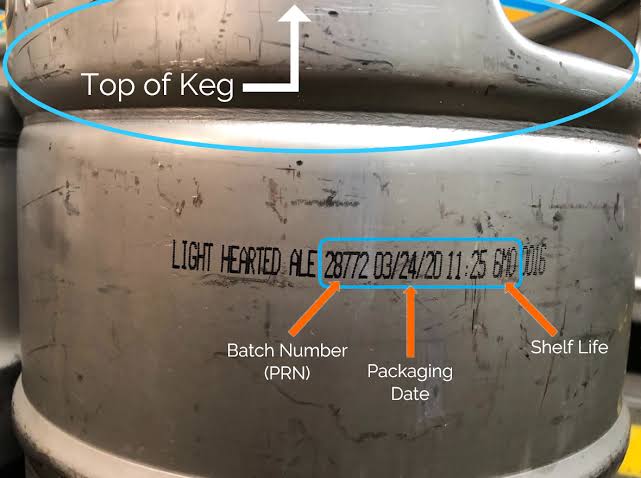
When it comes to the “sell before date” (also referred to as a pull date), here’s what you need to know:
| Date Code Location | Date Code Format | Date Code Meaning |
| Located on the primary packaging (the beer bottle or can) | SEPT3023 B08221836 | SEPT (Month) 30 (Day) 23 (Year) B (Production day of the week; B=Tuesday) 08 (Production site; 08=Trenton) 22 (Production line) 18 (Hour) 36 (Minutes) |
| Located on the secondary packaging (the carton that holds the beers) | SEPT3023 B0822183622222 | SEPT (Month) 30 (Day) 23 (Year) B (Production day of the week; B=Tuesday) 08 (Production site; 08=Trenton) 22 (Production line) 18 (Hour) 36 (Minutes) 22222 (SKU) |
The above production site codes are taken from Molson Coors. To understand the production site code for other beer brands, please refer to their official sites.
When it comes to the best-before dates, these are usually placed on the bottle shoulder (for bottles) or bottom of the can (for cans). This is an example of how these codes look:
BBD OCT 2023
| BBD | OCT | 2023 |
| Best Before Date | Month *Pull Date is always the last day of the month. In this case, this is Oct 31 | Year |
Beer bottles and cans also have a batch code, which consists of 14 characters, explained in the table below:
L 7 016 484 C A 22 00
| L | 7 | 036 | 484 | C | A | 23 | 00 |
| Lot | Year | Julian date | Mexico | Brewery (Toluca) | Product line (10) | Hour | Minutes |
What Makes Beer Go Bad?
A few things can make beer go bad, including:
- Oxidation — even small amounts of oxygen in sealed containers react with beer over time, altering flavor
- Temperature — extreme heat or cold degrades beer quality during long-term storage
- Light exposure — UV light degrades hop compounds, producing the characteristic skunky flavor
- Natural disintegration of hops — occurs over time regardless of storage conditions
Beer Storage Tips
Here are a few storage tips you can follow to keep your beer fresh for as long as possible:
- Keep beer cool (2–4°C / 35–39°F) but do not freeze
- Avoid direct sunlight; cans offer better UV protection than bottles
- Store beer products upright to minimize sediment contact and oxidation
- Know your beer type — stouts can be aged, lagers are best consumed fresh
What to do With Expired Beer? Disposal and Recycling Options by Scale
Not all expired beer disposal situations are the same.
A homebrewer with a few stale bottles faces a very different challenge than a brewery managing thousands of cases of recalled or off-spec product. For example, during the early months of COVID-19, breweries across the U.S. had to handle 10 million gallons of unopened beer — translating into roughly $1 billion in losses. The operational and compliance burden of that volume required structured, professional intervention — not informal disposal.
For Individual Consumers and Small-Scale Operators
If you’re dealing with small quantities of expired beer at home or at a small retail level, options include:
- Pouring down the drain in small quantities: Acceptable for household volumes, but should be done gradually to avoid BOD spikes in local systems
- Using expired beer in cooking, gardening, or cleaning: Expired beer retains some utility as a marinade, fertilizer, or cleaning agent for certain surfaces
- Contacting your local waste authority: For guidance on larger household volumes or unusual disposal situations
For Breweries, Distributors, and Retailers
At commercial scale, informal disposal is rarely compliant or practical. Common responsible approaches include:
- Distilling expired beer into ethanol: Companies like Boston Beer (which has collected $5.8 million worth of returned beer from retailers and distributors in Q1 2020) distill recycled beer into ethanol. The ethanol can then be blended into gasoline.
- Donating expired beer: For breweries facing expired beer kegs, donating these products can be a beneficial solution. This helps free up time and resources that would otherwise be used for disposal, enabling them to focus on producing fresh brews meant for direct-to-consumer sales.
- Producing hand sanitizer, whiskey and fertilizer: Distilleries can use their expired beer to produce hand sanitizer, whiskey and even use it as a fertilizer. This is a great approach to making use of expired alcohol via effective ways to disposal of alcohol while also saving on costs and taxes.
- Professional beverage destruction: For recalled product, off-spec inventory, or any expired beer that cannot be reused or donated, certified beverage destruction is typically the most compliant and operationally sound option. Shapiro’s beverage destruction services handle collection, transportation, documented destruction, and compliance reporting — covering the full chain of custody from pickup to certificate of destruction.
For breweries managing broader waste streams alongside expired product — including spent grains, wastewater, and packaging — our brewery waste disposal and management guide provides a full operational overview.
Expired Beer Side Effects and Health Risks
Drinking expired beer can have negative side effects, leading to potential health risks. Additionally, it can have significant environmental impacts. Here are the main downsides of improper expired beer handling:
Water Pollution
Improper disposal of expired beer can contribute to water pollution as it:
- Introduces harmful substances and pollutants into aquatic environments
- Disrupts the delicate balance of aquatic ecosystems
- Affects the health of marine life and water quality
Ocean Fauna Disruption
The harmful components in beer can lead to potential disruptions in the natural behaviors and habitats of all marine organisms. In turn, this can disrupt the delicate balance of marine ecosystems and lead to serious negative consequences for oceanic fauna.
Health Complications
As beer ages, its taste, quality, and safety can be compromised. Consuming expired beer can also lead to various health complications. Expired beer health risks include gastrointestinal issues, allergic reactions, and other health problems.
Avoiding expired beer and following proper disposal practices can help safeguard both our health and the environment.
So, what are the standard expired beer disposal procedures?
Commercial Expired Beer Disposal and Beverage Destruction: Procedure and Compliance Considerations
For commercial operators, expired beer disposal isn’t just a logistics question — it’s a compliance one. Under the Resource Conservation and Recovery Act (RCRA), you remain responsible for the waste you generate from cradle to grave. That means informal drain disposal or unsupported donations can create regulatory exposure.
Here’s what a compliant commercial expired beer disposal process looks like — and how Shapiro manages it:
- Collection: First, we collect expired beer from breweries, distilleries, retailers, and distributors. Our dedicated team works closely with our clients to schedule pickups and ensure a smooth and timely collection process.
- Safe transportation: After collection, the expired beer is transported to our certified processing facilities.
- Legalities and financial management: Disposing of expired beer involves navigating various legal and financial intricacies. At Shapiro, we handle all necessary permits, licenses, and regulatory requirements to ensure compliance with waste management regulations. Our team is well-versed in the complexities of waste disposal, allowing our clients to focus on their core business operations.
- Recycling and destruction: Once the expired beer reaches our processing facilities, we implement advanced brewery waste recycling methods. Throughout the years, we have built a nationwide network of certified facilities that allow for efficient and secure disposal and recycling. Our goal is to maximize the recycling potential, minimizing waste sent to landfills.
Expired Beer Disposal Best Practices
When it comes to unmerchantable beer disposal, adhering to government regulations and guidelines is essential for responsible waste management.
So, how to dispose of old beer responsibly? Let’s explore some of the main best practices that ensure safe and compliant beer disposal. For a more comprehensive overview of alcohol disposal compliant options, as well as related practices like wine disposal safe, legal and efficient options, businesses can better navigate regulatory and operational requirements:
- Follow government regulations: Familiarize yourself with the guidelines outlined by relevant authorities. This way, you will avoid any legal complications and ensure proper handling and disposal of expired beer.
- Certified associations’ recommendations: Stay informed about the latest guidelines and best practices issued by reputable associations to ensure your beer disposal process meets industry standards.
- Safe emptying of kegs: Some best practices include using compressed air instead of CO2 for pushing beer from kegs, ensuring a well-ventilated area when using CO2, and using appropriate personal protective equipment (PPE), such as eye and hand protection.
- Use larger drain hoses: Using larger drain hoses can significantly decrease drain times during beer disposal. Additionally, it’s essential to secure hose drain ends adequately to prevent accidents and ensure a smooth process.
- Be mindful of working pressure: During the emptying process, it is crucial not to exceed a keg’s working pressure. Higher pressure can lead to safety risks and damage to equipment.
- Seek expert advice: Navigating the complexities of beer disposal, especially when dealing with hazardous waste, requires expert advice. Under the Resource Conservation and Recovery Act (RCRA), you are responsible for the waste you generate from “cradle to grave.”
Need help managing expired beer disposal at scale? At Shapiro, we have years of experience in compliant, efficient beverage destruction and recycling. Contact us today and get our expert guidance.
FAQs About Expired Beer Recycling
1. Is beer classified as hazardous waste?
Expired beer is not classified as hazardous waste in the traditional sense — it won’t trigger the same handling requirements as chemical solvents or industrial byproducts. However, it does pose environmental risks when disposed of improperly in large quantities, primarily due to its high BOD. This means it can deplete oxygen in waterways and strain municipal wastewater systems if discharged in significant volumes without treatment. For commercial operators, these risks translate into real regulatory exposure even without a formal hazardous waste classification.
2. Can I do anything with expired beer?
Yes — expired beer doesn’t have to go straight to disposal. At small scale, it can be used in cooking, as a garden fertilizer, or donated to vinegar producers. At commercial scale, options include distillation into ethanol, conversion into hand sanitizer or industrial alcohol, and composting. When none of these reuse pathways are viable — particularly for recalled or TTB-regulated product — certified beverage destruction is the appropriate route.
3. Where can you get reliable advice on disposing of unwanted beer?
For individual consumers, local waste authorities can provide guidance on what’s acceptable under regional discharge rules. For breweries, distributors, and retailers the most reliable source of advice is a waste management partner with specific beverage industry experience. Shapiro’s team works with beverage businesses across the U.S. on expired product disposal, keg decanting, and documented beverage destruction. Contact us to discuss your specific situation.
4. Can I drink beer 2 years out of date?
Technically, beer that is two years past its best-before date is unlikely to be dangerous — it won’t become toxic in the way some foods do. However, the taste, aroma, and carbonation will have degraded significantly, and the experience will be far from what the brewer intended.
5. How do you know when beer has actually expired?
The most reliable indicator is the best-before date printed on the bottle, can, or carton. Beyond that, there are physical signs: flat or absent carbonation when poured, a cloudy or unusually dark appearance, and off-putting smells like vinegar, wet cardboard, or skunk. A flat taste lacking the crispness of a fresh brew is the final confirmation.
6. Does it matter how expired beer was stored when deciding how to dispose of it?
Storage conditions affect reuse viability more than disposal method. Beer stored properly in cool, dark conditions may still be suitable for composting or ethanol conversion even past its date. Beer that has been exposed to heat, light damage, or contamination may have fewer viable reuse pathways and is more likely to require direct disposal or certified destruction.
8. Do breweries need documentation when disposing of expired beer?
For small quantities and informal disposal, documentation is not typically required. However, for commercial volumes — and especially for recalled product, TTB-regulated inventory, or any situation where alcohol tax credits may be involved — proper documentation is essential. This includes chain-of-custody records, volume reconciliation, and in many cases a certificate of destruction issued by a certified disposal partner. Without these records, breweries can face audit exposure and potential tax liability.
our expert

Peter W. Klaich Director, Agriculture/Animal Health
Peter Klaich is a leading expert within the agricultural recycling and animal health market arena, known for leading National Sales at Skip Shapiro Enterprises since June 2016. He focuses on advancing sustainable recycling solutions and waste management practices across the agricultural industry.