Call or Text Now
Whether you’re a director of operations in manufacturing, a plant engineer, or work in one of the many companies that generate waste, depackaging and anaerobic digestion processes are likely no new topics for you.
However, navigating complex waste streams is no small task. From expired goods and off-spec products to recalls and damaged packaging, selecting the right depackaging system varies depending on the product, packaging type, and level of contamination.
As an experienced waste management company, Shapiro ensures performance across technologies, vendors, and facility types—and we’re here to guide you in choosing the right technology for high volumes of waste.
Key Takeaways
- Anaerobic digestion contamination thresholds ultimately determine whether depackaged material is accepted, making downstream AD requirements the primary driver of depackaging system selection.
- Waste stream characteristics, such as packaging mix, moisture, viscosity, and contamination levels, directly impact system performance and technology fit.
- Different depackaging technologies offer distinct tradeoffs in throughput, contamination control, energy use, and maintenance, so there is no one-size-fits-all solution.
- Total lifecycle considerations, including sanitation, maintenance burden, downtime risk, and integration with AD or wastewater systems, often outweigh upfront equipment cost.
How Anaerobic Digestion Systems Impact Depackaging Technology Selection
Anaerobic digestion (AD) systems are highly sensitive to contamination. While depackaging technology determines how effectively materials are separated, it’s the AD facility’s contamination threshold that ultimately determines whether processed material is accepted or rejected.
AD operators set strict limits on contaminants such as plastics, metals, and fibers to protect digester performance and downstream equipment. If a depackaging system cannot consistently meet those specifications, the material simply won’t be accepted.
The economic impact of this is significant. Rejected loads lead to lost capital investment, added transportation costs, and disposal fees, while also disrupting operations and reducing overall recovery value.
Bottom line: Before evaluating system features or cost, identify your AD partner’s contamination threshold. Food depackaging equipment must be selected to meet that requirement first—everything else is secondary.
Why Depackaging System Selection Is More Complex Than It Appears
In addition to considering anaerobic digestion requirements, companies must evaluate several other factors when selecting a depackaging machine, including:
1. Waste Characteristics That Drive Technology Fit
Different waste sources have unique characteristics that affect depackaging system selection, including:
- Viscosity: In food waste streams, viscosity affects how easily material flows after depackaging, which directly influences technology selection for anaerobic digestion. An experienced waste management partner can help assess viscosity challenges and identify the most appropriate depackaging approach.
- Packaging type diversity: Depackaging system selection also depends on the range of packaging materials present. From aluminum cans and plastic bottles to cardboard cartons and sustainable beverage packaging, different materials break down differently and require technologies capable of effectively separating organics without excessive wear or contamination.
- Contamination levels: After depackaging, residual packaging contaminants may remain in the organic material. The type and level of contamination, such as plastic fragments, fibers, or chemical residues, will determine whether a depackaging system can consistently meet anaerobic digestion acceptance thresholds.
- Product–liquid separation needs: Some waste streams require effective separation of liquids from solids to meet anaerobic digestion feedstock requirements, prevent downstream handling issues, and optimize digestion performance. Food waste depackaging systems must be matched to the desired moisture content and end-use of the recovered organics.
2. Regulatory & Food-Safety Considerations
Choosing the right depackaging equipment also requires careful consideration of regulatory requirements and the acceptance standards of your anaerobic digestion partner. Because food waste laws vary by location, local and regional compliance requirements must be factored into equipment selection.
This may include:
- Limits on residual contaminants, including plastics and microplastics, as well as quality control standards
- AD feedstock acceptance thresholds
- Documentation and traceability requirements
3. Why “Machine Comparisons” Aren’t Enough
If you’re doing side-by-side machine comparisons, there are some risks to be aware of. Why?
Because machine comparisons often rely on vendor-biased data, ideal operating conditions, and unrealistic assumptions about waste consistency. They rarely account for slurry quality requirements, contamination tolerance, or real-world operational factors such as maintenance, labor, and waste variability—each of which can determine whether material is accepted by an AD facility.
Core Depackaging Technologies Manufacturers Evaluate
| System Type | Typical Contamination | Best For | Maintenance | Approx. Cost Range |
|---|---|---|---|---|
| Screw Press | 3–5% | Consistent products | Low | $75–150K |
| Hammermill | 5–10% | Mixed packaging | High | $150–300K |
| Paddle | 2–4% | Wet/soft waste | Medium | $100–200K |
| Hydropulper | <2% | Strictest AD specs | Medium | $200–500K |
Manufacturers must evaluate different types of depackaging systems before selecting the option that best fits their needs.
At Shapiro, we guide clients through this process by assessing their unique requirements before recommending the most appropriate treatment approach. That said, it’s also important to understand the key differences between these technologies, as outlined below.
1. Screw Press/Extrusion Systems
A screw press is a mechanical device that uses a rotating screw to compress material and separate organic content from packaging. This type of depackaging system is especially useful in industries that require liquid-solid separation, including wastewater treatment, food processing, and pulp and paper production.
This process is recognized for its energy efficiency and low operating costs due to its simple design. However, screw presses often have limited processing capacity and higher sensitivity to certain materials.
2. Hammermill/High-Impact Mills
Hammermills, or high-impact mills, use high-speed rotating hammers or impact elements to apply repeated impact forces that reduce material size, rupture packaging, and release organic content for downstream separation.
Hammer mills are known for their efficiency, versatility in material handling, and adjustable output sizes. That said, they typically require higher energy input due to continuous high-speed rotation and can increase the risk of contamination from packaging fragmentation.
3. Paddle/Agitation Systems
Paddle, or agitation, systems use rotating paddles or agitators to break open packaging and release organic content while minimizing size reduction of contaminants.
These systems are valued for their lower energy requirements, reduced wear on components, and ability to preserve larger packaging fragments for easier downstream separation. On the other hand, paddle/agitation systems may offer lower throughput and can be less effective when processing rigid or heavily packaged materials compared to high-impact depackaging technologies.
4. Wet Depackaging Systems (“Hydropulpers”)
Wet depackaging systems, commonly referred to as hydropulpers, use water and mechanical agitation to pulp organic material and separate it from packaging through slurry formation and screening.
These systems are well suited for processing mixed or heavily packaged food waste and are effective at producing a clean organic slurry for downstream processes such as anaerobic digestion wastewater treatment. However, hydropulpers typically require significant water input, higher energy consumption, and additional wastewater handling compared to dry depackaging technologies.
How Manufacturers Compare Depackaging Systems: The Real Evaluation Criteria
The commercial food waste recycling process is far from black and white.
There are multiple factors to consider before choosing the right depackaging system for your business.
1. Throughput vs. Actual Load Variability
While depackaging systems are often rated for a specific throughput, real operational capacity can vary significantly based on incoming material.
Inconsistent loads, changes in packaging composition, and fluctuations in moisture content can reduce effective throughput and create peak-cycle surges that strain equipment. Understanding the difference between rated capacity and real-world performance is essential for selecting a system that can operate reliably under variable conditions.
2. Contamination Tolerance & Residue Quality
Depackaging systems vary in their ability to manage contamination and maintain organic residue quality. Some technologies can increase the risk of plastic fragmentation or allow aluminum and foil contamination to pass through with the organic output, which can impact downstream processing.
Understanding anaerobic digestion acceptance thresholds and contamination limits is critical to ensuring the recovered material meets operational and regulatory requirements.
3. Cleaning & Sanitation Requirements
Cleaning and sanitation requirements play a critical role in depackaging system selection, particularly in food-related applications.
Food safety standards and allergen control protocols may require frequent cleaning cycles, which can increase operational complexity and impact ongoing operating expenses. Evaluating how easily a system can be cleaned and sanitized helps ensure compliance while minimizing downtime and Opex.
4. Maintenance Burden & Downtime Risk
Maintenance requirements and downtime risk vary widely across depackaging technologies. Systems with high-impact or high-speed components often rely on wear parts that require regular replacement, increasing the likelihood of unplanned stoppages.
Evaluating mechanical complexity and maintenance demands by system type helps manufacturers reduce downtime, manage long-term costs, and maintain consistent operations.
5. Anaerobic Digestion System Compatibility and Feedstock Requirements
Are your depackaged materials compatible with anaerobic digestion system requirements?
AD system compatibility depends on meeting specific anaerobic digestion feedstock and contamination requirements. Manufacturers should confirm slurry specifications, moisture content, pH, and C:N ratios with their AD partner and request lab analysis protocols upfront.
Sending 5-gallon samples for testing before committing to major equipment purchases helps validate what qualifies as AD-ready feedstock and ensures required documentation, such as COAs and contamination reports, is in place.
When working with a waste management partner, this process is typically handled on your behalf, ensuring your feedstock aligns with downstream waste management solutions for optimal performance.
6. Anaerobic Digestion Wastewater Treatment Integration for Co-Located Operations
For manufacturers with on-site wastewater treatment that includes anaerobic digestion, depackaging system selection directly impacts downstream AD performance and hydraulic loading.
For instance, wet depackaging technologies, such as hydropulpers, introduce additional process water that must be managed within existing infrastructure while staying within discharge permits and BOD/COD limits.
This highlights the importance of evaluating depackaging systems against a comprehensive checklist—where AD compatibility is one factor among others such as real-world throughput, maintenance demands, cleaning requirements, and overall operational fit.
Recommended Decision Framework for Manufacturers
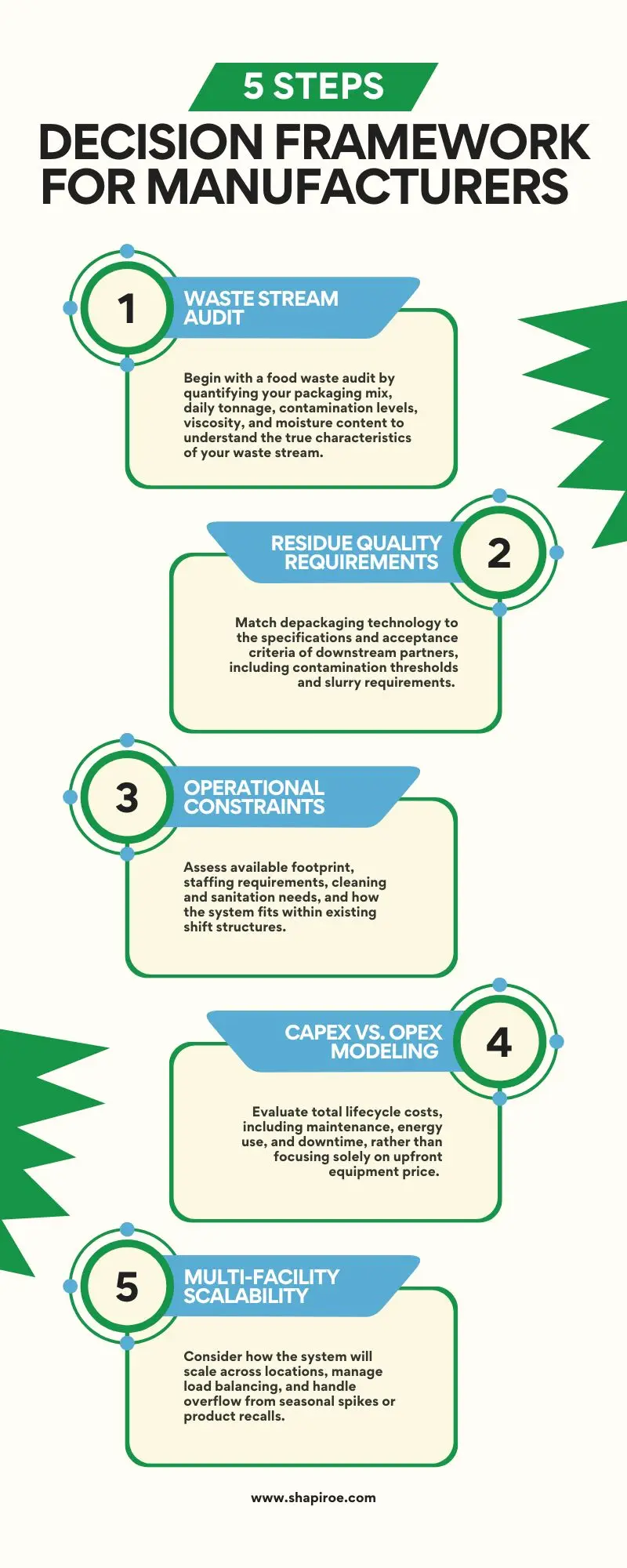
Not sure how to choose between different depackaging machines?
Follow these 5 steps:
Step 1 — Waste Stream Audit
Begin with a food waste audit by quantifying your packaging mix, daily tonnage, contamination levels, viscosity, and moisture content to understand the true characteristics of your waste stream.
Step 2 — Residue Quality Requirements
Match depackaging technology to the specifications and acceptance criteria of downstream partners, including contamination thresholds and slurry requirements.
Step 3 — Operational Constraints
Assess available footprint, staffing requirements, cleaning and sanitation needs, and how the system fits within existing shift structures.
Step 4 — CapEx vs. OpEx Modeling
Evaluate total lifecycle costs, including maintenance, energy use, and downtime, rather than focusing solely on upfront equipment price.
Step 5 — Multi-Facility Scalability
Consider how the system will scale across locations, manage load balancing, and handle overflow from seasonal spikes or product recalls.
Where Shapiro Fits into the Depackaging Technology Selection Process
Working with an experienced waste management partner helps ensure you select the right depackaging system, implement an effective strategy, and reduce your environmental impact.
With Shapiro’s national food waste programs, companies can address the food waste crisis using innovative solutions such as anaerobic digestion.
To help companies prepare for AD systems, we offer:
- System-neutral evaluations across multiple technologies and vendors
- Feedstock optimization for digesters and composters
- Contamination-reduction strategies
- Logistics orchestration for multi-facility manufacturers
- Audit-ready documentation (including Certificates of Destruction)
- Chain-of-custody support
Need to determine which depackaging system fits your packaging mix and residue requirements? Shapiro can help evaluate your options and guide you toward the right solution.
Designing Your Depackaging & Organics Strategy
Selecting the right depackaging system is only one part of a successful organics strategy.
To maximize environmental and operational outcomes, manufacturers should align technology choices with the broader food waste management hierarchy, prioritizing waste reduction, reuse, upcycling, and recycling wherever possible.
When managed effectively, packaged food waste can be converted into higher-value organic streams that support circular outcomes such as anaerobic digestion.
That said, a well-designed depackaging approach follows a clear food waste recycling guide, helping manufacturers evaluate systems, manage contamination, and integrate packaged food waste into broader recycling and food waste upcycling pathways. With the right planning and partners, depackaging becomes a strategic enabler of circularity rather than a standalone operational decision.
Contact Shapiro to start designing a depackaging and organics strategy that supports circularity at scale.
FAQs about Depackaging System
Manufacturers must consider factors like packaging mix, required residue/slurry quality, downstream partner specs, real-world throughput variability, contamination tolerance, footprint/utilities, cleaning/sanitation needs, maintenance/downtime risk, and total lifecycle cost.
There is no single best technology, as slurry quality depends on the depackaging approach, system configuration, and downstream requirements. The “cleanest” slurry is ultimately defined by how well the system aligns with an AD partner’s contamination and performance standards.
Start with a waste stream audit, control inbound material (supplier specs/training), choose tech that avoids shredding packaging, use proper screening/separation, run routine QC checks, and validate with AD partner testing before scaling.
Operating costs are often driven by energy use, wear parts (hammers/screens/liners), downtime, and labor for maintenance and cleanup—so lifecycle cost can be materially higher than the purchase price suggests.
Yes. Depackaging machines that handle food or food waste generally must meet food-safety cleaning standards to prevent contamination, pest attraction, and cross-contact, especially when the output may be reused, donated, or processed further.
Packaging mix affects technology selection based on factors like material rigidity, contamination levels, moisture, and viscosity.
Depackaging technologies that produce a consistent, pumpable organic stream tend to work best with anaerobic digestion, with selection influenced by feedstock consistency, contamination tolerance, and how well the system integrates with downstream AD requirements.
Get the AD partner’s acceptance specs (contamination thresholds, slurry %, moisture, pH, C:N), follow their lab protocols, and send representative samples for testing. You should also maintain documentation like COAs and contamination reports if required.
our expert

Peter W. Klaich Director, Agriculture/Animal Health
Peter Klaich is a leading expert within the agricultural recycling and animal health market arena, known for leading National Sales at Skip Shapiro Enterprises since June 2016. He focuses on advancing sustainable recycling solutions and waste management practices across the agricultural industry.