Call or Text Now
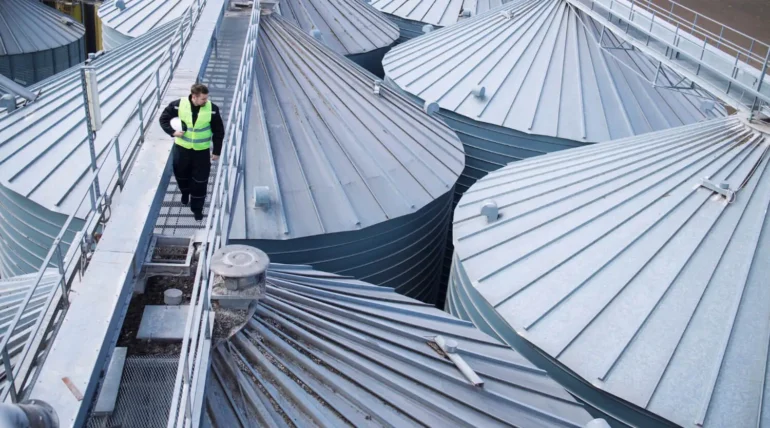
The Linden Renewable Energy Facility opening has been pushed to late this year or early next year, an important update for companies tracking project timelines and planning their energy strategies.
As stated in our previous coverage of the Linden facility announcement, this project is set to transform how food waste is managed in New Jersey, and staying up to date with the latest changes is key to staying compliant and achieving sustainability goals.
For NJ and metro-area businesses counting on the facility’s processing capacity, this development remains a promising step forward as compliance pressure around organics diversion increases and landfill cost volatility continues to challenge long-term planning.
That’s why we’ve created a readiness guide to help operations and facility managers, sustainability leaders, and compliance officers prepare effectively for what’s ahead.
Linden Renewable Energy Facility: What It Is
The Linden NJ Renewable Energy Project uses anaerobic digestion to turn food waste to energy. It’s set to be the nation’s largest food waste-to-biogas facility, generating pipeline-quality renewable natural gas that can power homes and businesses while reducing landfill dependence. Located in Linden, New Jersey, and developed by Captona, SJI, and RNG Energy Solutions, this project is positioned to play a significant role in strengthening the region’s renewable energy infrastructure and organics diversion efforts.
Quick Facts
- Designed to process up to 1,475 tons per day of organic waste.
- Expected to produce 3,783 dekatherms per day of renewable natural gas (the energy equivalent of about 30,200 gallons of gasoline daily).
- At full capacity, the Linden power plant is projected to avoid an estimated 120,000 metric tons of CO₂e annually.
- Expected to generate 200–300 cubic yards per day of digested solids that can be sold as a soil amendment.
- Under NJAC 7:26K, certain businesses must recycle food waste if they generate at least 52 tons per year and are located within 25 road miles of an authorized facility with available capacity.
Opening Timeline: What the Shift Means for Planning
With the Linden Cogeneration Plant in New Jersey’s timeline shifting from March 2026 to late this year or early next year, companies should evaluate how the revised opening fits into their waste management strategy.
Preparing three to six months in advance allows for smoother vendor onboarding, routing adjustments, and internal process updates.
What to Do 90–120 Days Before Go-Live
If you’re planning to use the Linden facility for anaerobic digestion of food waste, here’s how to prepare:
- Conduct an internal organics audit: A food waste audit helps identify waste sources and volumes, allowing you to build a more effective landfill diversion strategy tailored to your operations.
- Develop a contamination reduction plan: Proper separation of food waste is essential. This may require team training, clearly labeled bins, and standardized handling procedures to minimize contamination.
- Prepare hauling and storage logistics: Establish a clear plan for on-site storage and transportation. A waste management partner can help determine the right pickup frequency based on your waste generation levels.
- Set up documentation systems: Put clear waste logs, hauling records, and diversion tracking in place ahead of launch so you’re ready to demonstrate compliance with NJAC 7:26K from day one.
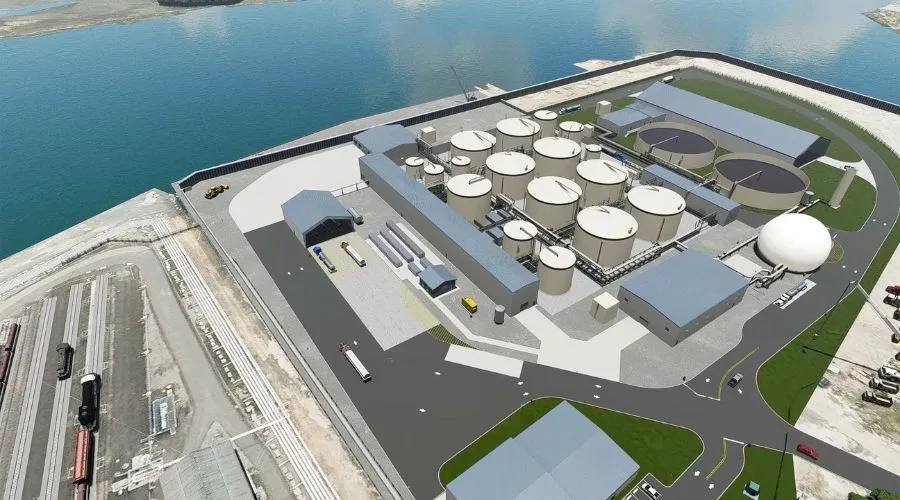
Source: SJI Renewable Energy Ventures
What This Facility Changes for NJ Businesses (Beyond Compliance)
As we mentioned above, the opening of the Linden Renewable Energy Facility brings significant environmental expectations. For New Jersey businesses that choose to participate, it’s also an opportunity to support the regional circular economy and demonstrate a clear commitment to long-term sustainability.
In addition, companies can expect:
- Reduced landfill dependence: Sending waste to landfills carries consequences, including pollution, greenhouse gas emissions, and resource depletion. By using the Linden Cogeneration Plant in Linden, NJ, businesses can divert food waste from landfills, strengthen brand credibility, support compliance efforts, and potentially reduce long-term disposal costs.
- Stronger ESG reporting: Landfill diversion is measurable and trackable, making it easier to document progress toward ESG goals. By prioritizing diversion and transparent reporting, companies can attract sustainability-focused investors, mitigate regulatory and reputational risk, and reinforce their environmental commitments.
Does Your Business Fall Under NJ Food Waste Requirements?
According to NJAC 7:26K requirements, certain large food waste generators in New Jersey are required to recycle their food waste. While the Linden Renewable Energy Facility can help companies meet these requirements, the first question is often: does this law apply to my business?
Here are the key factors that determine applicability:
- Threshold: Your business generates an average projected volume of 52 tons or more of food waste per year.
- Location: Your business is located within 25 road miles of an authorized food waste facility, which refers to a Class C recycling center within New Jersey that is permitted to accept, store, process, or transfer food waste or compostable material under the Recycling Rules (N.J.A.C. 7:26A).
- Facility acceptance: The authorized recycling facility has available and permitted capacity to accept your specific food waste stream at the time of generation.
Simple Self-Check
So ask yourself:
- Do we generate 52 tons or more of food waste per year?
- Are we located within 25 road miles of an authorized food waste recycling facility?
- Can we reliably source-separate food waste from other waste streams?
If you answered yes to all of the above, your business likely falls under NJAC 7:26K requirements and should begin preparing for compliance.
What “Source-Separated” Means in Practice
Large waste generators should source separate and recycle their food waste. But what does that actually mean?
According to N.J.A.C. 7:26K, “‘Source separate’ or ‘source separated’ means that food waste is separated from the solid waste stream at the point of generation. Source separated includes, if applicable, separating different types of food waste (for example, vegetative, meat, and dairy) from each other for the purpose of recycling.”
For that reason, a key part of ensuring compliance is providing proper staff training, designated collection containers, and clear signage to prevent contamination and ensure food waste stays out of the general trash stream.
The #1 Failure Point: Contamination (and How to Prevent Rejected Loads)
From plastics and cutlery to packaging and mixed liquids, contamination remains a major challenge in organic waste management.
That’s why having a strong internal contamination-control system isn’t just a “nice to have.” It’s a critical part of an effective diversion strategy.
Here’s what you should know:
Set Up a “Frontline” System
So what’s your first line of defense?
Let’s take a look:
- Bin placement map: You may have plenty of waste bins throughout your facility, but if they’re not positioned in high-waste areas, they become a missed opportunity. Consider foot traffic patterns, points of waste generation, and accessibility when optimizing placement, often near prep stations, break rooms, loading docks, and other high-volume areas.
- Staff training: Never assume everyone on your team automatically knows where waste should go. Provide clear training that establishes company-wide standards, including proper handling procedures, separation requirements, and contamination prevention.
- Signage language: To reduce sorting mistakes, use color-coded signs and universally recognized symbols on all bins. Even after training, clear signage reinforces expectations and minimizes contamination.
Spot checks + feedback loop: Conduct routine waste audits and spot checks to identify contamination issues early. Share findings with frontline teams and adjust training or bin placement as needed to continuously improve performance.
Depackaging Reality (For Manufacturers/Retailers)
Food waste depackaging is key to ensuring proper separation, recycling, and disposal. However, the process can be complex, as different packaging materials require different handling methods.
And since many food products arrive in packaging, manufacturers and retailers must ensure materials are properly depackaged before the organic waste can be recycled. In fact, many anaerobic digestion facilities require waste to be depackaged and free of contamination prior to acceptance, making proper separation essential.
Businesses can either invest in on-site depackaging systems or partner with an experienced waste management provider that offers depackaging services to streamline the process and ensure compliance.
Logistics Planning for Food Waste Diversion (NJ + Metro Region)
Switching from landfill disposal to organics recycling for renewable natural gas (RNG) production often requires operational adjustments, including changes to pickup frequency, container types, and routing schedules.
Facilities may also need to manage odors and leachate more proactively and plan for seasonal spikes or volume surges that can affect storage and transportation logistics.
To help you prepare for these changes, let’s take a closer look at storage and handling best practices, as well as how to plan for recalls and unusual volume events.
Storage & Handling Checklist (Practical)
Before you begin using the Linden Facility to convert waste into RNG energy, confirm the following:
- Containers are sealed, leak-proof, and equipped with secure lids.
- Bins and storage areas follow a routine wash-down and cleaning schedule.
- Pest prevention measures are in place around storage zones.
- Food waste is stored in shaded or temperature-conscious areas to minimize odors and material breakdown before pickup.
Recalls and Unusual Events
Even if your facility generates a fairly consistent amount of waste, unexpected spikes can happen. Product recalls, expired beverage loads, mislabeled inventory, or damaged shipments can quickly increase volumes beyond your normal routine.
That’s why it’s important to have a clear plan in place before these situations arise. Establish straightforward, compliant workflows for temporary storage, documentation, and coordination with your waste management partner so you can respond quickly without disrupting operations.
What Documentation You Should Keep (Compliance + Audit Readiness)
If you’re diverting food waste to anaerobic digestion, documentation serves as your proof of compliance with regulations like NJAC 7:26K.
That said, your business should keep:
- Weight tickets and scale receipts: Documentation showing the quantity of food waste transported and processed.
- Hauling manifests and bills of lading: Records confirming proper transport to an authorized facility.
- Invoices and service agreements: Proof of contracted organics recycling services.
- Diversion reports: Monthly or quarterly summaries tracking landfill diversion volumes.
- Photos of bin signage and placement: Evidence of proper source-separation setup.
- Training logs: Documentation of employee training sessions related to food waste separation and contamination prevention.
- Contamination incident records: Notes on rejected loads, contamination findings, or corrective actions taken.
- Corrective action documentation: Internal updates made to procedures, signage, or training following contamination events.
Keeping these records organized and accessible ensures you’re prepared for regulatory inquiries, internal audits, or ESG reporting reviews.
A “Ready Folder” Template
Looking for an audit-ready folder checklist?
Start by creating a dedicated digital or physical folder labeled “NJAC 7:26K – Organics Compliance” and include the following:
- Current service agreement with your authorized recycling facility or hauler
- Weight tickets and scale receipts (organized by month)
- Hauling manifests or bills of lading
- Monthly diversion summary reports
- Invoices for organics services
- Dated photos of bin placement and signage
- Employee training logs and materials
- Contamination incident reports (if applicable)
- Corrective action documentation
- Contact information for your waste partner and facility
Keeping this folder updated ensures you’re prepared for inspections, internal audits, ESG reviews, or regulatory inquiries at any time.
What NJ Businesses Should Do Now
Ready to start preparing for the opening of the Linden Renewable Energy Facility?
If so, here’s a practical checklist to help your company get ready:
5-Step Readiness Checklist
Step 1: Conduct a 30–60 day internal food waste volume audit.
Step 2: Confirm whether you meet NJ large generator thresholds.
Step 3: Review hauling contracts for organics capabilities.
Step 4: Implement contamination controls and staff training.
Step 5: Set up documentation workflows for diversion tracking.
Conclusion: The Bigger Picture: Infrastructure Is Catching Up to Regulation
New Jersey’s organics infrastructure is expanding, and the Linden Renewable Energy Facility is an important part of that growth. It opens the door for businesses to reduce food waste costs, lower environmental impact, and support a long-term shift in how food waste is managed across the Northeast.
While the facility is expected to open late this year or early next year, that window should be viewed as an opportunity to prepare rather than a firm deadline. Some businesses may begin planning three to six months ahead of launch, while others may get involved later.
Either way, what matters most is having the right training, storage systems, and compliance documentation in place so you can transition smoothly when the time is right.
As a feedstock provider to this facility, we can help you build a practical, tailored strategy, covering everything from collection logistics to documentation. If you’re interested in learning more, contact us today.
FAQs about the Linden Renewable Energy Facility
The Linden Cogeneration Plant in Linden, NJ is expected to open late this year or early next year.
Renewable natural gas (RNG) is a clean energy source made through anaerobic digestion, a process in which microorganisms break down food waste in an oxygen-free environment to produce biogas that is then refined into pipeline-quality fuel.
Under NJAC 7:26K, a large food waste generator is a business that generates 52 tons or more of food waste per year and is located within 25 road miles of an authorized recycling facility with available capacity.
If no authorized facility within 25 road miles has the permitted capacity to accept your material, the recycling requirement generally does not apply until appropriate capacity becomes available.
Businesses can reduce contamination by implementing staff training, clear signage, proper bin placement, and routine spot checks to reinforce correct separation practices.
Businesses should maintain service agreements, weight tickets, hauling manifests, diversion reports, training logs, and records of contamination incidents and corrective actions.
our expert

Peter W. Klaich Director, Agriculture/Animal Health
Peter Klaich is a leading expert within the agricultural recycling and animal health market arena, known for leading National Sales at Skip Shapiro Enterprises since June 2016. He focuses on advancing sustainable recycling solutions and waste management practices across the agricultural industry.